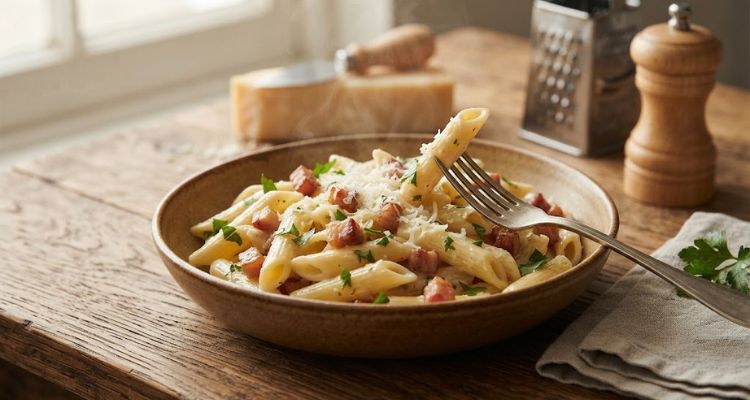
James Martin’s penne carbonara crisps sliced pancetta in olive oil, then tosses hot drained penne through a bowl of whisked egg yolks, Parmesan and double cream, with the crisp pancetta and chopped parsley stirred in at the end. It uses fresh penne, takes under 20 minutes, and serves four. There are six ingredients and no sauce to cook on the hob.
The recipe comes from BBC’s Home Comforts, from the “Home Cooking in a Hurry” episode, where Martin’s pitch was that proper home-cooked food can beat convenience food for speed. This proves it: the pasta boils while the pancetta crisps, and the sauce is mixed cold in a bowl and cooked only by the heat of the drained pasta.
That’s also where the technique lives. You drain the hot pasta and stir it straight into the cold egg-cream-Parmesan mixture, where the residual heat gently sets the egg yolks into a silky coating without scrambling them. The trick is continuous stirring: stop and the eggs cook in clumps rather than making a smooth sauce.

James Martin Penne Carbonara
Course: Lunch, DinnerCuisine: BritishDifficulty: Easy4
servings5
minutes15
minutes780
kcal20
minutesJames Martin’s quick carbonara from BBC’s Home Comforts: crisp pancetta tossed through fresh penne coated in an egg yolk, Parmesan and cream sauce. Six ingredients, no sauce pan, under 20 minutes. Comfort pasta at its fastest. Serves four.
Ingredients
1 tbsp extra virgin olive oil
300g/11oz pancetta, sliced
3 free-range egg yolks
50g/1¾oz Parmesan, grated, plus extra for serving
100ml/3½fl oz double cream
salt and freshly ground black pepper
350g/12oz fresh penne pasta
3 tbsp chopped fresh flatleaf parsley
Directions
- Crisp the pancetta:Heat a frying pan until hot, add the oil and pancetta and cook for 3-5 minutes until crisp. Remove and drain on kitchen paper.
- Mix the sauce:Whisk the egg yolks, Parmesan and cream in a bowl and season with salt and pepper.
- Cook the pasta:Cook the penne in salted boiling water according to the packet instructions.
- Combine:Drain the pasta and add it straight to the cream mixture, stirring continuously until smooth. Add the crisp pancetta and parsley and stir until well combined.
- Serve:Spoon into warmed bowls and sprinkle with extra Parmesan.
FAQs
Why add cream? Isn’t that not a real carbonara?
It depends who you ask, and Italian purists would say no. A traditional Roman carbonara uses only egg yolks, pecorino Romano, guanciale and black pepper, with no cream at all. Martin’s version is a British comfort-food carbonara, and he adds 100ml of double cream deliberately, because it makes the sauce more forgiving and less likely to scramble.
The cream acts as an insurance policy: it lowers the temperature at which the egg yolks set, giving you a wider window to stir everything together without ending up with scrambled egg pasta. It also makes the sauce richer and silkier. It’s not traditional, but it’s practical, and Martin frames this as home comfort food rather than an authenticity exercise.
How do I stop the eggs scrambling?
Speed and stirring. The sauce (egg yolks, cream and Parmesan) is mixed cold in a bowl, and the hot drained pasta goes straight into it, not onto the hob. The heat of the pasta alone gently cooks the egg into a silky coating. Stir continuously the moment the pasta hits the bowl, so the heat distributes evenly rather than cooking the eggs in one hot spot.
If your pasta isn’t hot enough (maybe it sat in the colander too long), the sauce won’t thicken properly. If it’s too hot and you stop stirring, you get curds. The fix is confidence: drain, tip, stir without stopping, and the residual heat does the rest in about 30 seconds.
Can I use dried pasta instead of fresh?
Yes, and Martin says so himself: dried spaghetti works well in place of the fresh penne. The difference is texture rather than technique. Fresh pasta is softer and cooks faster (2-3 minutes versus 10-12 for dried), so the sauce clings differently, but the method is identical.
Spaghetti is the classic Italian shape for carbonara, so dried spaghetti is actually closer to the original. Rigatoni, bucatini or any tubular shape that traps the sauce also works. If you want a one-pot pasta supper in a similar vein, his beef ragu with linguine uses fresh pasta too, though the ragu is a longer project.
Is 300g of pancetta too much for four people?
It’s generous, but it’s doing the heavy lifting on flavour since there are so few other ingredients. The pancetta crisps up and shrinks considerably, and it’s providing all the meaty, salty, savoury depth in the dish. Think of it as the main protein rather than a garnish.
If you’d rather use less, 200g still gives good coverage. Guanciale (cured pork cheek) is the traditional Italian choice and gives a richer, fattier result, while smoked streaky bacon is the most available swap. Martin uses pancetta across his Home Comforts recipes, including his maple pancetta cauliflower cheese and his ultimate macaroni cheese.
Why warm the bowls?
Because a cold bowl cools the pasta instantly, which thickens the sauce from silky to claggy before anyone’s taken a bite. Warming the bowls keeps the pasta at serving temperature and the sauce loose and glossy for longer, which matters with a carbonara since there’s no reheating it.
Run the bowls under hot water or put them in a low oven for a few minutes while the pasta cooks. It’s a small restaurant habit that makes a real difference to the finished plate. Martin mentions it here, and it applies equally to any sauced pasta.
What should I serve alongside or after?
Martin lets it stand alone, which makes sense for a quick weeknight supper. A simple green salad dressed with lemon is the classic Italian partner for carbonara, cutting through the richness of the egg, cream and pancetta.
If you’re making a full meal, the carbonara is rich enough to serve as the main, so follow it with something light: fruit, or a sharp, citrusy dessert. For a full Home Comforts evening, his cherry trifle or apple charlotte make a proper finish after a bowl of creamy pasta.