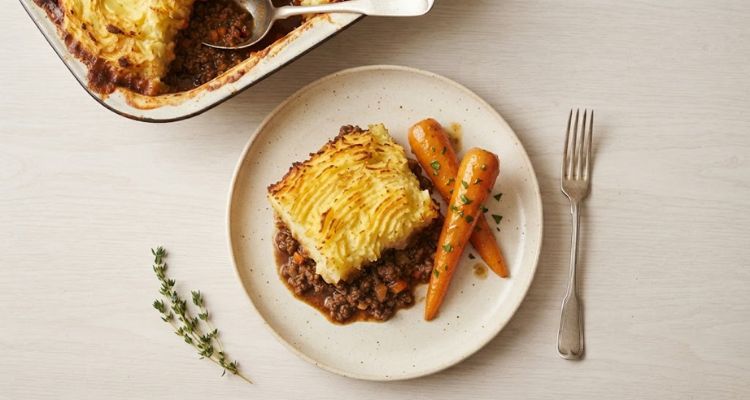
James Martin’s perfect cottage pie fills a baking dish with slow-simmered beef mince in red wine and beef stock, topped with mash made from baked potatoes rather than boiled, then grills it golden at 220°C (200°C fan, gas 7). It serves four with glazed whole carrots alongside. The filling simmers for 30 minutes, the potatoes bake for up to 1½ hours, and the assembled pie bakes for another 10-15 minutes.
The recipe comes from BBC’s Home Comforts. The word “perfect” isn’t throwaway: Martin bakes the potatoes instead of boiling them, which drives off the water and gives a drier, fluffier mash that browns properly on top and doesn’t make the crust soggy. It’s the single detail that separates his cottage pie from every other one.
The filling is built for depth too. You brown the mince in batches, cook out tomato purée, reduce red wine by a third before the stock goes in, and hit it with Worcestershire sauce. That layered, wine-dark base is closer to his beef bourguignon than to a tin of mince with gravy granules.

James Martin Perfect Cottage Pie
Course: Dinner, LunchCuisine: BritishDifficulty: Easy4
servings25
minutes2
hours1250
kcal2
hours25
minutesJames Martin’s proper cottage pie from BBC’s Home Comforts: slow-simmered beef in red wine and stock under a baked-potato mash, grilled golden. Served with butter-glazed whole carrots. The crispy edges are the best bits. Serves four.
Ingredients
8 medium baking potatoes
1 tbsp vegetable oil
600g/1lb 5oz beef mince
2 onions, finely chopped
3 garlic cloves, finely chopped
4 sprigs thyme, leaves picked and finely chopped
1 celery stick, finely diced
2 tbsp tomato purée
dash Worcestershire sauce, to taste
9 carrots, unpeeled, trimmed (1 finely chopped, 8 left whole)
100ml/3½fl oz red wine
500ml/18fl oz beef stock
50g/1¾oz caster sugar
125g/4½oz butter
150ml/5fl oz milk
salt and freshly ground black pepper
Directions
- Bake the potatoes:Preheat the oven to 190°C/170°C fan/gas 5. Prick the potatoes all over, rub with a little oil and bake for 1-1½ hours until tender.
- Start the filling:Heat a large pan until hot, add the oil and fry the mince in batches until browned. Add the onions, garlic, thyme and celery and fry for a couple of minutes until softened.
- Build the sauce:Add the tomato purée and cook for 1-2 minutes, then add a dash of Worcestershire sauce and the finely chopped carrot. Pour in the red wine and cook until reduced by a third, then add the stock, bring to a simmer and cook for 30 minutes until tender and thickened.
- Glaze the carrots:Meanwhile, put the 8 whole carrots in water with a pinch of salt, the sugar and a knob of butter. Bring to the boil, simmer gently for 30-40 minutes until soft.
- Season the filling:Tip the mince into a bowl and season with salt, pepper and as much extra Worcestershire sauce as you like. Set aside to cool.
- Make the mash:When the potatoes are cool enough to handle, halve them, scoop out the flesh and pass through a ricer or mash with a fork. Beat in half the remaining butter and the warmed milk until smooth and creamy. Season.
- Assemble and bake:Turn the oven up to 220°C/200°C fan/gas 7. Pour the cooled mince into a baking dish, spoon the hot mash over the top and fluff with a fork. Dot with butter and bake for 10-15 minutes until golden and piping hot.
- Serve:Serve with the glazed carrots alongside.
FAQs
Why bake the potatoes instead of boiling them?
It’s the whole reason Martin calls this the “perfect” cottage pie. Baked potatoes lose their moisture in the oven, so the flesh is dry and fluffy when you scoop it out, giving a mash that’s lighter, less watery and crisps up much better on top. Boiled potatoes absorb water, which makes for a wetter mash that can turn the crust soggy.
The trade-off is time: baking takes 1-1½ hours versus 15 minutes for boiling. But since the filling simmers for 30 minutes during that same window, and the carrots go on alongside, nothing is wasted. The baked-potato mash browns into that golden, fork-fluffed crust, with crispy edges Martin says are “the best bits.”
Why cool the mince before topping it?
So the mash stays put. If you spoon hot mash onto hot, bubbling mince, the mash sinks into the liquid and the layers merge into a muddy porridge. Cooling the filling first lets it thicken and settle, creating a firm base for the mash to sit on as a distinct topping.
The mash itself goes on hot, straight after mixing, because warm mash is easier to spread and smoother. Cold mash tears and clumps. So the contrast is deliberate: cold, set filling underneath, hot, soft mash on top, then a final blast in a very hot oven to brown and crisp the surface.
Is there really a difference between cottage pie and shepherd’s pie?
Yes, and it’s simple: cottage pie uses beef, shepherd’s pie uses lamb. The names are often used interchangeably, but they shouldn’t be, since the flavour profiles are genuinely different. Martin’s recipe is firmly beef mince, making this a cottage pie.
The confusion goes both ways, and some recipes call any minced-meat-and-mash bake a shepherd’s pie. If you want to make this with lamb mince instead, the method works identically, but the wine and Worcestershire sauce in the filling suit beef’s deeper flavour better than lamb’s.
What does the sugar do to the carrots?
It glazes them. The 50g of caster sugar in the carrot-cooking water dissolves as they simmer, and as the liquid reduces it coats the carrots in a light, sweet glaze that caramelises gently. The knob of butter adds richness and sheen. They come out soft, glossy and sweet, rather than plain boiled.
Martin serves them whole alongside the pie rather than mixing them through the mince, which makes them a proper side in their own right. The one finely chopped carrot goes into the filling for body and sweetness, so you get carrot in two different forms on the same plate.
Can I make it ahead or freeze it?
Yes, and this is one of the best make-ahead suppers you can cook. Assemble the pie fully, with the mash on top, then cool and refrigerate for up to 2 days. Bake from chilled in a hot oven until golden on top and piping hot all the way through, which will take longer than the 10-15 minutes from fresh, more like 25-30 minutes.
It freezes well too: cool completely, wrap tightly and freeze for up to 3 months, then defrost overnight in the fridge before baking. The mash may be slightly less crisp after freezing but the filling is just as good. It’s in the same make-ahead comfort-food spirit as his beef bourguignon and his corned beef hash.
What else goes well with it?
Martin serves it simply with the glazed carrots, which is all a rich, saucy pie needs. A green vegetable alongside, steamed cabbage, peas or broccoli, adds colour and freshness without competing. A sharp green salad dressed with vinegar works too if you want something lighter.
This is the kind of dish that anchors a proper comfort-food supper. Follow it with his sticky toffee pudding or his apple charlotte and you’ve got a full Home Comforts menu that’s entirely make-ahead friendly.