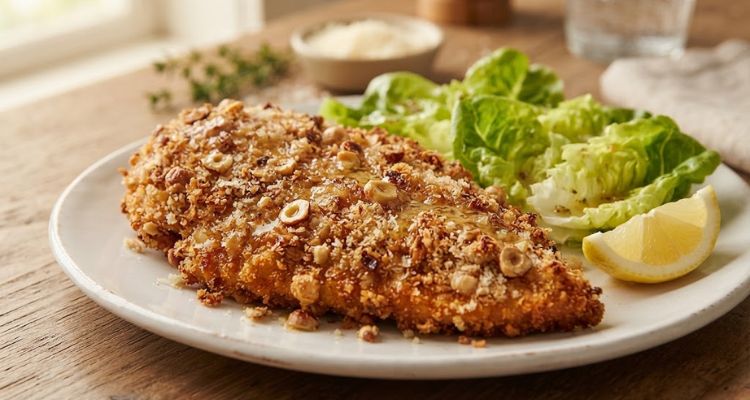
James Martin’s hazelnut and Parmesan-crusted chicken flattens chicken breasts to escalopes, coats them in a crust of blitzed hazelnuts, Parmesan, lemon zest, thyme and panko breadcrumbs, then fries them golden in butter. Five minutes a side, served with a squeeze of lemon and Little Gem leaves, it serves four and takes under 30 minutes.
The recipe comes from BBC’s Home Comforts, from the “Home Cooking in a Hurry” episode, where Martin’s whole pitch was that beautiful home-cooked food can be just as fast as convenience food. This is his case in point: a restaurant-quality chicken escalope that’s quicker than waiting for a ready meal to heat through.
The crust is where the flavour lives. Hazelnuts, Parmesan, lemon zest and thyme are blitzed together in a food processor before the panko is pulsed in briefly, so you get a fine, fragrant coating with crunch rather than a heavy, bready shell. Pulsing the panko only lightly keeps the crumbs coarse enough to crisp properly in the butter.

James Martin Hazelnut And Parmesan-crusted Chicken
Course: Dinner, LunchCuisine: BritishDifficulty: Easy4
servings15
minutes10
minutes850
kcal25
minutesJames Martin’s quick chicken escalope from BBC’s Home Comforts: flattened breasts in a hazelnut, Parmesan, lemon and thyme crust, fried golden in butter and finished with a squeeze of lemon. Faster than a ready meal, and a genuine weeknight winner. Serves four.
Ingredients
4 chicken breasts, boneless and skinless
40g/1½oz shelled hazelnuts
25g/1oz Parmesan, freshly grated, plus extra for serving
2 lemons, zested then cut in half
2 sprigs thyme, leaves only
40g/1½oz Japanese panko breadcrumbs
75g/3oz plain flour
sea salt and freshly ground black pepper
2 free-range eggs, beaten
250g/9oz butter
2 heads Little Gem lettuce, leaves separated
Directions
- Flatten the chicken:Put the breasts between two sheets of greaseproof paper and bash with a rolling pin to about 1cm thick.
- Make the crust:Blitz the hazelnuts, Parmesan, lemon zest and thyme in a food processor to fine crumbs. Add the panko and pulse briefly to just break up the crumbs, then tip onto a plate.
- Dredge:Season the flour on a plate with salt and pepper. Dust the chicken in the flour, dip into the beaten eggs, then press into the hazelnut crumbs, coating each side thoroughly.
- Fry:Heat the butter in a large frying pan. Add the chicken and fry until golden, about 5 minutes each side, basting with the butter as you go. Drain on kitchen paper and finish with a little more grated Parmesan.
- Serve:Lay each escalope on a plate, drizzle over the remaining butter from the pan, squeeze over lemon juice and pile the Little Gem leaves alongside with a lemon wedge.
FAQs
Why flatten the chicken first?
Bashing the breasts to 1cm thick turns them into escalopes, which cook through evenly and quickly, in about 5 minutes a side, without the outside burning before the centre is done. A thick, unevened breast can’t do that, so the flattening is what makes the recipe genuinely fast.
It also gives you more surface area for the crust, meaning a better ratio of crispy coating to tender chicken in every bite. Use a rolling pin between two sheets of greaseproof paper to stop the meat tearing, and aim for a uniform thickness so the whole escalope finishes at the same moment.
Why use panko rather than ordinary breadcrumbs?
Panko crumbs are coarser and lighter than standard dried breadcrumbs, so they fry up into a crispier, more textured crust that stays crunchy longer. Martin pulses them only briefly into the hazelnut mixture, keeping them deliberately rough, because over-blitzing turns them to dust and you lose the crunch.
Ordinary dried breadcrumbs would work in a pinch but give a tighter, flatter coating. Fresh breadcrumbs go too soft. Panko is the right middle ground: enough structure to hold up during the butter-frying, enough lightness to let the hazelnut and Parmesan flavours come through. It’s the same crispy-coating logic behind his double chocolate cherry brownies, where the topping crumbs are kept coarse on purpose.
That’s a lot of butter. Is it all necessary?
It’s generous, and it’s deliberate. Martin fries the escalopes in a bath of foaming butter, basting them as they cook, which gives the crust its golden colour and rich, nutty flavour. The butter is also part of the sauce, since you drizzle the remaining pan butter over the chicken to serve.
If 250g alarms you, you could reduce it somewhat, but you need enough to submerge the bottom third of the escalope for a proper fry. Olive oil or a mix of butter and oil would lower the richness but changes the flavour profile, since the butter is meant to work with the hazelnut and Parmesan in the crust. Martin finishes his beef bourguignon with a knob of cold butter for the same reason: gloss and richness right at the end.
Can I use a different nut?
Yes, though the flavour shifts. Hazelnuts bring a warm, toasted nuttiness that pairs naturally with Parmesan and thyme, which is why Martin chose them. Almonds are the closest swap, giving a milder, more delicate crunch. Walnuts would work but are softer and slightly more bitter.
Make sure whatever nut you use is blitzed to fine crumbs in the food processor, since large pieces won’t adhere to the chicken and fall off in the pan. If you’re cooking for someone with a nut allergy, extra panko and Parmesan alone still make a good crust, just without that toasted-nut depth.
Can I bake these instead of frying?
You can, but expect a different finish. Baking on a rack at a high temperature (around 200°C/180°C fan) gives a reasonably crisp crust without the butter-frying, and is less hands-on. Spray or brush the crumbed escalopes with a little oil before they go in, and give them about 20 minutes.
What you lose is the golden, buttery baste and that rich pan-butter drizzle at the end, which is really Martin’s signature touch here. If you’d rather a hands-off oven chicken altogether, Mary Berry’s chicken traybake takes a completely different route: marinated thighs roasted over vegetables, no crumb coating at all, and just as quick.
What should I serve it with besides the salad?
Martin keeps it simple with just Little Gem leaves, lemon and the pan butter, which lets the crispy chicken be the star. For a more substantial plate, chips or new potatoes are the classic British partners, or a pile of buttery mash to catch the butter sauce. His ultimate macaroni cheese also works as a rich side if you’re feeding a hungry crowd.
A sharp, dressed green salad genuinely is the best foil here, since something clean and acidic cuts through the richness of the nut crust and all that butter. If you want a pudding to follow, his sticky toffee pudding or the lighter apple charlotte both round out a proper Home Comforts supper.