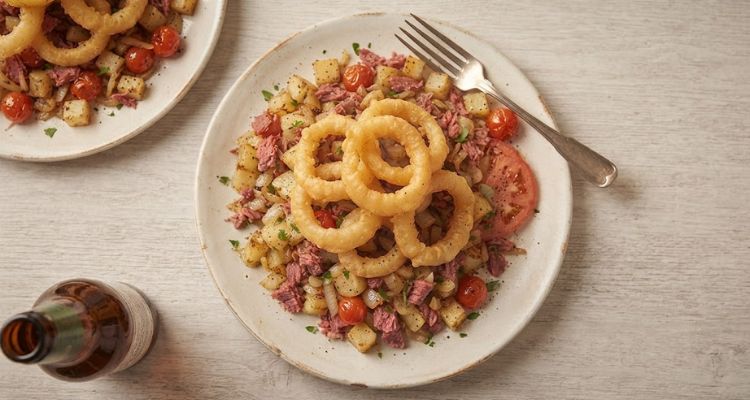
ames Martin’s corned beef hash fries diced potatoes with tinned corned beef, tomatoes, garlic, Worcestershire sauce and Tabasco in butter, then piles beer-battered onion rings on top. The hash takes about 10 minutes in the pan, the onion rings fry at 190°C until golden, and it serves four as a proper cosy night in.
The recipe comes from BBC’s James Martin: Home Comforts, where he pitches it as souped-up Seventies-style comfort food. That’s exactly what it is: the corned beef hash most people grew up on, elevated with a cider-vinegar beer batter for the onion rings and a kick of Tabasco for heat. It’s deliberately retro, deliberately unpretentious and deliberately satisfying.
The beer batter is the upgrade that lifts this above a tin-and-potato fry-up. You whisk flour, caster sugar, salt and cider vinegar with beer to a double-cream consistency, coat the onion rings thickly, and fry them at 190°C until golden and crisp. The vinegar and sugar in the batter give the coating a sharpness and crunch you don’t get from a plain flour dip.
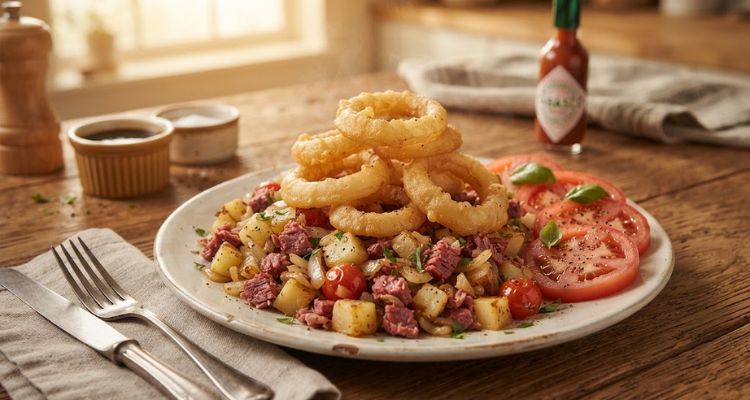
James Martin Corned Beef Hash With Beer-battered Onion Rings
Course: DinnerCuisine: BritishDifficulty: Easy4
servings15
minutes25
minutes690
kcal40
minutesJames Martin’s retro comfort food from BBC’s Home Comforts: a quick corned beef and potato hash with Worcestershire and Tabasco, topped with crisp beer-battered onion rings. Seventies nostalgia done properly. Serves four.
Ingredients
4-5 drops Tabasco
vegetable oil, for deep frying
100g/3½oz plain flour
1 tbsp caster sugar
pinch salt
2 tbsp cider vinegar
150-200ml/5-7fl oz beer or lager
2 onions, 1 cut into 1cm thick slices, 1 chopped
50g/1¾oz butter
1 garlic clove, crushed
4 ripe tomatoes, 2 chopped, 2 sliced
1 x 340g tin corned beef, roughly chopped
1 tbsp Worcestershire sauce
4 floury potatoes, such as Maris Piper, peeled and diced
Directions
- Boil the potatoes:Bring the diced potatoes to the boil in salted water, simmer for 8-10 minutes until just tender, then drain well and set aside.
- Heat the oil:Heat the vegetable oil in a deep-fat fryer to 190°C, or in a deep heavy pan until a breadcrumb sizzles and browns when dropped in. (Hot oil is dangerous; don’t leave it unattended.)
- Make the batter:Whisk the flour, sugar, salt, vinegar and half the beer together to a thick, smooth batter. Add more beer gradually until it reaches the consistency of double cream. You may not need it all.
- Fry the onion rings:Separate the sliced onion into rings, dip each one in batter until coated, and carefully lower in batches into the hot oil. Fry for 3-4 minutes until golden, then drain on kitchen paper.
- Start the hash:Heat half the butter in a frying pan over medium heat and fry the chopped onion for 2-3 minutes until softened.
- Add the potatoes:Add the remaining butter, the garlic and the drained potatoes and fry for 2-3 minutes.
- Finish:Add the chopped tomatoes and the corned beef and stir-fry for 1-2 minutes until the tomatoes soften and the beef is heated through. Add the Worcestershire sauce and Tabasco and season.
- Serve:Spoon the hash onto plates, pile the onion rings on top and garnish with the sliced tomatoes.
FAQs
Why cider vinegar and sugar in the batter?
They’re doing real work beyond the obvious. The cider vinegar adds a sharp, tangy note that cuts through the richness of the deep-fried coating and the fatty corned beef hash underneath, stopping it from tasting one-note heavy. The tablespoon of caster sugar balances that sharpness and helps the batter brown to a deeper gold.
Together they give the onion rings a crunch and flavour that plain flour-and-beer batter alone doesn’t deliver. It’s a small detail, but it’s the kind of trick that separates a professional batter from a homemade one, and it’s the reason Martin’s version feels like a proper upgrade.
What beer should I use for the batter?
Martin says beer or lager, and the lighter and more neutral the better. A standard British lager or pale ale gives the batter lift and flavour without dominating, since the carbonation in the beer is what aerates the batter and helps it fry up light and crisp.
Avoid anything too dark, hoppy or bitter, like a stout or an IPA, which can make the batter taste heavy or harsh. Add the beer gradually and stop when the batter hits the consistency of double cream, which may be before you’ve used all of it. A flatter, slightly warm beer mixes more smoothly than one straight from the fridge.
Is tinned corned beef really worth cooking with?
This is where Martin leans into nostalgia deliberately. Tinned corned beef is a British storecupboard staple that a lot of people grew up eating, and he’s not trying to replace it with something fancier. The whole point is elevating a humble, familiar ingredient rather than pretending it’s something it isn’t.
In the hash, the corned beef only needs heating through, not long cooking, since it’s already cooked in the tin. Chopping it roughly rather than mashing it keeps some texture in the hash. The Worcestershire sauce, Tabasco and garlic do the seasoning work, lifting what’s essentially a tinned product into something with proper depth.
Can I make the onion rings in the oven instead of deep-frying?
Not with this batter, unfortunately. Beer batter needs the fierce, surrounding heat of hot oil to set quickly and puff up crisp, which an oven can’t replicate. In the oven the wet batter would slump off the rings and sit in a soggy puddle.
If you’d rather avoid deep-frying, you could skip the batter entirely and make dry-coated onion rings instead (flour, egg wash, breadcrumbs) baked at a high temperature, though they’d be a different thing from Martin’s beer-battered version. The battered rings are really the upgrade that makes this dish his rather than generic, so they’re worth the effort if you can.
What potatoes should I use?
Martin specifies floury potatoes, naming Maris Piper, and the starchy, floury texture matters for the hash. Floury potatoes break down slightly at the edges as they fry, creating a mix of crisp golden bits and softer, crumbly pieces that bind together with the corned beef and tomato.
Waxy salad potatoes would hold their shape too firmly and give a different, less comforting texture. King Edward, Rooster or any good floury maincrop all work as alternatives to Maris Piper. Dice them evenly so they cook through in the same time, and drain them well after boiling so they don’t steam and go soggy in the pan.
Can I make it ahead?
The hash itself reheats reasonably well, gently in a pan or briefly in the oven until hot, though it loses a little of its fresh, crispy-edged character. The onion rings, however, are strictly a serve-immediately job, since beer batter goes soft within minutes of cooling and can’t be revived.
If you’re cooking for a crowd, make and fry the onion rings last, keeping the hash warm in a low oven while you work through the batches. That way everything comes together hot at the same time, with the rings at their crispest piled on top of the steaming hash.