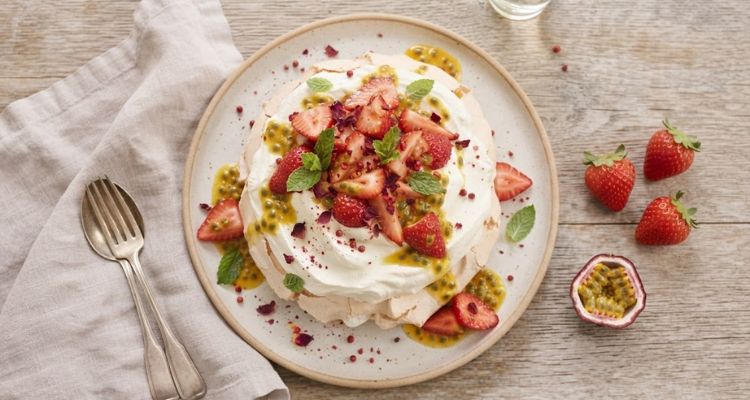
Nigella Lawson’s rose and pepper pavlova is a marshmallow-bellied meringue subtly spiced with black pepper and rosewater, topped with whipped cream, passionfruit-macerated strawberries and their juice. It serves 8 to 12, from her book At My Table.
The flavours sound bold but taste delicate. The idea came from her maternal grandfather, who ate strawberries with a grinding of black pepper, insisting it made their berried freshness sing. Nigella puts the pepper in the meringue instead, pairing it with rosewater.
That combination gives the meringue, in her words, the huskiest hint of Turkish delight: warm, perfumed and barely-there rather than overpowering. The passionfruit juice the strawberries macerate in heightens their flavour and adds its own sour-sweet fragrance.
Nigella Lawson Pavlova
Course: DessertCuisine: BritishDifficulty: Easy8-12
servings25
minutes1
hour275
kcal1
hour25
minutesNigella’s rose and pepper pavlova from At My Table: a marshmallow-centred meringue subtly scented with rosewater and black pepper, topped with cream and passionfruit-macerated strawberries. Serves eight to twelve.
Ingredients
- For the base:
375g caster sugar
2½ teaspoons cornflour
¼ teaspoon ground black pepper
2 teaspoons white wine vinegar
½ teaspoon rosewater
6 large eggs (at room temperature, whites only)
- For the topping:
300g strawberries
3 passionfruit
2 teaspoons caster sugar
300ml double cream
Directions
- Whisk the meringue:Preheat the oven to 180°C/160°C fan/350°F and line a baking sheet with parchment. In a grease-free bowl, whisk the egg whites to firm peaks, then beat in the sugar a spoonful at a time until stiff and shiny. Be patient; it takes time to thicken glossily.
- Flavour and shape:Sprinkle the cornflour, pepper, vinegar and rosewater over the meringue and gently fold in by hand until thoroughly mixed. Mound onto the sheet in a fat disc about 22cm across, smoothing the sides and top.
- Bake:Put it in the oven, immediately turn the temperature down to 150°C/130°C fan/300°F, and bake for 1 hour.
- Cool:Take out and leave to cool, but not anywhere cold, which makes it crack too dramatically. You’ll always get some cracks, so don’t fret. If your kitchen is cold, drape it loosely with a clean tea towel.
- Macerate the fruit:When the meringue is completely cold and you’re ready to eat, turn the base onto a large flat plate, underside up. Hull and cut each strawberry into 3 slices into a shallow bowl. Halve the passionfruit and press the juice and seeds through a sieve over a jug, discarding the seeds. Pour the juice over the strawberries, sprinkle with the 2 teaspoons of sugar, and leave to macerate while you do the cream.
- Assemble:Whip the cream until thick and airy but still soft, and spread over the base in a swirly mound, right to the edges. Spoon the shiny strawberries and their juice over the top, and bear proudly to the table.
Notes
- (rosewater and pepper): Use ½ teaspoon of rosewater for a subtle hint, as too much can be over-perfumed (add more to taste). Both rosewater and ground pepper lose their punch with age, so use freshly opened rosewater and freshly ground pepper, and taste before adding extra.
- (make ahead / store): The meringue base can be made 1 day ahead; store in an airtight container in a cool, dry place (meringue doesn’t keep well in humid or wet weather). Refrigerate leftovers, loosely covered, for up to 1 day. The meringue softens as it stands.
FAQs
Pepper in a pavlova? Does it actually work?
It sounds odd, but it’s exquisite, and it comes from a real family habit: Nigella’s maternal grandfather ate strawberries with a grinding of black pepper, saying it made their freshness sing. She moves the pepper into the meringue instead, where its gentle, perfumed warmth is subtle rather than spicy, a background hum you can’t quite place.
Paired with the rosewater, it gives the marshmallow-centred meringue what Nigella calls the huskiest hint of Turkish delight. It’s delicate, not bold, on the plate. If you can’t taste it, that’s common, so use freshly ground pepper and, next time, Nigella says you can double it to taste.
How do I get the marshmallowy centre and crisp shell?
That contrast, crisp outside, soft marshmallow within, is the hallmark of a good pavlova, and a few things deliver it. Whisking the egg whites and sugar to a stiff, glossy meringue (be patient here) gives structure, while the cornflour keeps the inside soft and marshmallowy and the vinegar stabilises it, much like in her other meringues.
The low, slow bake is key too: you start hot, then immediately turn the oven down and bake gently for an hour, which sets the shell without drying the middle to a hard meringue. Don’t be tempted to bake it hotter or longer, or you’ll lose the soft centre.
Why shouldn’t I cool it somewhere cold, and why does it crack?
A sudden temperature drop makes the meringue contract fast and crack dramatically, so Nigella says to cool it at room temperature, not anywhere cold, and to drape it loosely with a clean tea towel if your kitchen is chilly. Cooling it gently keeps the cracking to a minimum.
That said, some cracks are completely normal and nothing to fret about, as Nigella reassures. A pavlova is meant to look a little rustic and craggy, and the cracks vanish under the cream and fruit anyway. You even turn the base upside down to serve, so the flatter underside is up and the cracked top is hidden.
Why macerate the strawberries in passionfruit juice?
Macerating the sliced strawberries in the sieved passionfruit juice with a little sugar does two lovely things: it draws out the strawberries’ own juices so they turn glossy and intensely flavoured, and it bathes them in the passionfruit’s sour-sweet, tropical fragrance, so the fruit topping tastes of more than just strawberries.
Sieving out the passionfruit seeds keeps the juice smooth (though you could keep a few for looks). Leave the fruit to macerate while you whip the cream, so the juices develop. When spooned over, the swirls of cream catch some of the golden passionfruit juice, which looks as good as it tastes.
Can I change the topping or flavourings?
Yes, pavlova is endlessly adaptable. The rose, pepper, strawberry and passionfruit combination is special, but you can top it with any soft fruit: raspberries, blueberries, mango, kiwi or a mix all work beautifully on the cream. Keep some acidity or sharpness to cut the sweet meringue and cream.
You can also vary the base flavourings: leave out the rosewater and pepper for a classic pavlova, or swap in vanilla or a little citrus zest. One reviewer even used salted caramel essence instead of rosewater. It’s a lighter, fruitier dessert than Nigella’s rhubarb cake. There’s more on the Nigella Lawson recipes page.
Can I make it ahead?
Partly, and it’s the sensible way to tackle it for a dinner party. The meringue base can be made a full day ahead and kept in an airtight container somewhere cool and dry, though crucially not in humid or wet weather, which makes meringue weep and go sticky. So pick a dry day to bake it.
But assemble it only when you’re ready to serve, since once the cream and juicy fruit go on, the meringue starts to soften. Leftovers keep, loosely covered, in the fridge for up to a day, but the base will have softened, becoming more cakey than crisp, still delicious, just different. It’s best eaten freshly topped.