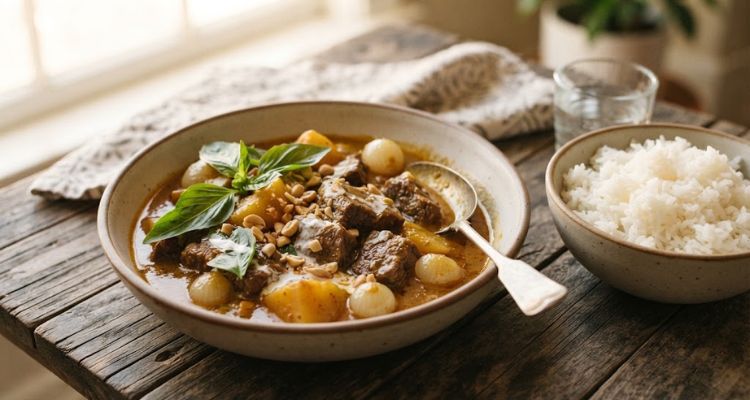
Nigella Lawson’s massaman beef curry is a slow-cooked beef and potato curry in a rich, mellow coconut sauce with massaman paste, tamarind and sugar. It serves 6, from her book Simply Nigella.
Inspired by her Thai travels, it’s one she’s cooked many, many times. She calls it essentially a beef and potato stew, with all the comfort that implies, but the rich, mellow flavours bring a vibrancy that plain description doesn’t convey. Massaman is a relatively mild curry, so the amount of paste won’t blow you away.
Her two firm bits of advice: use authentic Thai pastes, or the curry won’t truly deliver on flavour, and make it largely ahead. She cooks it up to the point the potatoes go in a day or two in advance, adding them on reheating.
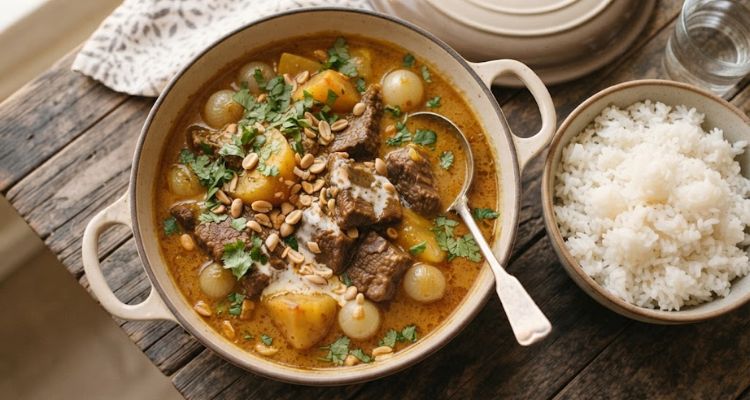
Nigella Lawson Massaman Beef Curry
Course: Dinner, LunchCuisine: BritishDifficulty: Easy6
servings15
minutes2
hours30
minutes520
kcal2
hours45
minutesNigella’s make-ahead curry from Simply Nigella: beef slow-cooked in a rich, mild coconut-and-massaman sauce with tamarind, then finished with potatoes. Serves six.
Ingredients
2½ teaspoons tamarind paste
25g palm sugar or soft light brown sugar
500ml hot water (from a recently boiled kettle)
1 x 400ml can coconut milk
140g / 125ml massaman curry paste (or to taste)
1kg shin of beef off the bone, cut into 4 to 5cm cubes
750g waxy potatoes (peeled)
small bunch Thai basil or coriander, to serve
Directions
- Make the tamarind water: Preheat the oven to 170°C/150°C fan/325°F. Put the tamarind paste and sugar in a measuring jug and add boiling water to the 250ml mark, stirring to dissolve.
- Fry the paste: In a large, heavy, tight-lidded casserole (Nigella’s is 24cm), spoon in the thick cream from the top of the coconut can. Add the curry paste and heat, stirring, until bubbling (some oil may separate, which is fine).
- Build the curry: Add the jug contents (water, tamarind, sugar) and the rest of the coconut milk, stir, then add the beef. Stir well and bring to a bubble. As soon as it bubbles, clamp on the lid, turn off the heat and transfer to the oven for 2 hours.
- Cool and rest: Out of the oven, cool, then refrigerate for at least 1 day (up to 3), to let the beef tenderise and the flavours develop.
- Add the potatoes: About 45 minutes before eating, heat the oven to 200°C/180°C fan/400°F. Cut the potatoes into beef-sized chunks and add to the pot. On the hob, add 250ml boiling water, bring to a bubble, cover and transfer to the oven for 30 minutes, until bubbling hot and the potatoes are tender.
- Serve: Sprinkle with shredded Thai basil, or scatter with chopped coriander, and bring straight to the table.
Notes
- (use authentic Thai paste): Nigella feels strongly that unless you use authentic Thai curry pastes, you won’t get a curry that truly delivers on flavour. Massaman is mild, so the quantity won’t overwhelm.
- (make it ahead): It’s at its very best made mostly in advance. Cook to the point before the potatoes go in, 1 to 2 days ahead, and add them on reheating.
- (make ahead / store): Cook for the 2 hours, then cool, cover and refrigerate within 2 hours, for up to 3 days.
- (freeze): Freeze the cooled curry (before potatoes) in an airtight container for up to 3 months. Defrost overnight in the fridge before reheating and adding the potatoes.
FAQs
What is a massaman curry, and is it very spicy?
Massaman is a rich, mild, mellow Thai curry with Indian and Malay influences, built on coconut milk and warming spices (cinnamon, cardamom, star anise) rather than fierce heat. It’s balanced with the “holy trinity” of sweet, sour and salty: sugar, tamarind and the salty paste. The result is comforting and aromatic rather than fiery.
Nigella reassures that it’s a relatively mild curry, so the amount of paste she uses “won’t blow you away”. It’s a great curry for those who find Thai green or red curries too hot. If you want more heat you can add a little chilli, but the point of massaman is its gentle, deep, rounded flavour, essentially a glorious beef and potato stew.
Why does Nigella insist on authentic Thai curry paste?
Because with a curry this simple, the paste carries most of the flavour, so its quality makes or breaks the dish. Nigella feels strongly that unless you use a genuine Thai massaman paste, you won’t get a curry that truly delivers. Authentic pastes have the proper depth of spices, aromatics and balance that generic “curry paste” lacks.
Look for a good Thai brand (often from Thai or Asian shops, or the world-food aisle), and check the amount to your taste, as pastes vary in strength and saltiness. Some pastes contain shrimp paste or fish sauce, so check the label if cooking for vegetarians or allergies. It’s worth seeking out a good one.
Why make it ahead, and why add the potatoes later?
Both are deliberate and make the curry better. Nigella says it’s at its very best made mostly ahead: resting the cooked beef in the sauce in the fridge for a day or two lets the meat become meltingly tender and the flavours deepen and meld, as all good stews do. So it’s the rare dish that improves with waiting.
The potatoes are added only at the reheating stage, 30 minutes before serving, so they cook fresh in the curry and stay intact and tender rather than turning to mush over the long cook and the days of resting. This two-stage approach also makes it brilliant for entertaining: most of the work is done well in advance.
What cut of beef should I use, and can I substitute it?
Nigella uses shin of beef (beef shank), a tough, well-worked cut full of connective tissue that becomes meltingly tender and gelatinous over the long, slow cook, giving a rich, unctuous sauce. It’s ideal for slow braising and worth asking your butcher for.
If you can’t get shin, other slow-cooking cuts work: beef chuck, shoulder or stewing/braising steak all suit it, cut into large 4 to 5cm cubes so they don’t dry out. Avoid lean, quick-cooking cuts like steak, which would go tough. Large chunks are key, as they hold up over the 2 hours plus reheating without falling apart.
What do I serve it with?
Plain steamed rice, ideally jasmine or Thai fragrant rice, is the classic partner to soak up the rich coconut sauce. The potatoes already make it substantial, so rice and perhaps a simple vegetable or a crunchy Thai-style salad are all it needs. Flatbread or naan works too.
A scatter of toasted peanuts (traditional in massaman) adds crunch, and the Thai basil or coriander on top brings freshness against the richness. It’s a cosy, warming one-pot in the comforting spirit of Nigella’s sweet potato curry. There’s more on the Nigella Lawson recipes page.
Can I freeze it?
Yes, and it freezes very well, which suits its make-ahead nature. Freeze the cooled curry before the potatoes go in, in an airtight container, for up to 3 months. Then defrost it overnight in the fridge and reheat, adding the fresh potatoes at that stage to cook through, exactly as in the make-ahead method.
Freezing the beef curry without the potatoes is best, since cooked potatoes can go watery or grainy once frozen and thawed. So it’s ideal for batch cooking: make a big pot, freeze portions of the beef curry, and finish each with fresh potatoes when you want to eat. Loosen with a splash of water when reheating if needed.