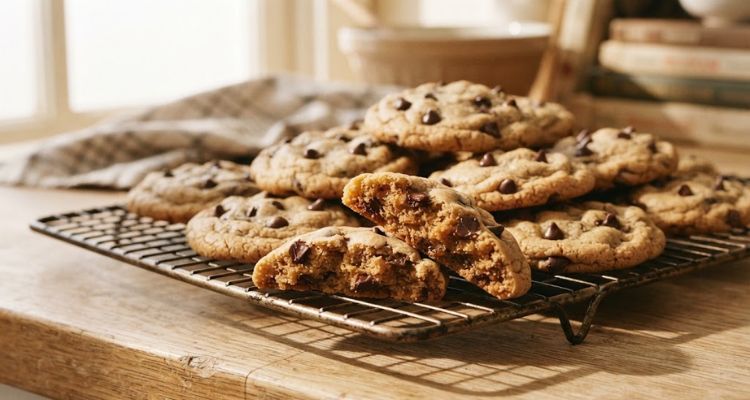
Nigella Lawson’s flourless peanut butter chocolate chip cookies are made from just a handful of ingredients, no flour, with smooth peanut butter, brown sugar, an egg and dark chocolate chips. The batch makes 16, from her book Simply Nigella.
She says she can’t seem to stop making them, and as she makes them, so they get eaten. They’re extraordinarily easy to throw together, and, incidentally, naturally gluten-free and dairy-free, since there’s no flour or butter at all.
One caveat she flags: check the peanut butter label if you truly need them gluten-free (say, for a coeliac), as brands vary, and health-food-shop-type peanut butter, the kind that separates, doesn’t work here.

Nigella Lawson Peanut Butter Chocolate Chip Cookies
Course: DessertCuisine: BritishDifficulty: Easy16
servings10
minutes10
minutes150
kcal30
minutesNigella’s flourless cookies from Simply Nigella: smooth peanut butter, brown sugar, egg and dark chocolate chips beaten together and baked. Naturally gluten-free and dairy-free. Makes 16.
Ingredients
225g smooth peanut butter
½ teaspoon bicarbonate of soda
pinch of fine sea salt
1 large egg
1 teaspoon vanilla extract (or paste)
50g dark chocolate chips (Nigella uses Dove’s Farm, small and free from gluten, milk and soya)
Directions
- Mix the base: Preheat the oven to 180°C/160°C fan/350°F. In a bowl, beat together the peanut butter, brown sugar, bicarbonate of soda and salt.
- Add egg: Beat in the egg and vanilla, but not too vigorously, just gently to mix.
- Add chocolate: Stir or fold in the chocolate chips, then line 1 or 2 baking sheets with parchment.
- Shape: Scoop heaped tablespoons of dough onto the sheets, 5 to 6cm apart.
- Bake: Bake for 10 minutes, until slightly darker around the edges. They’ll look undercooked but will be the perfect texture once cooled.
- Cool: Leave on the sheets for 10 minutes, as they’re very fragile, then transfer gently to a wire rack to cool (another 10 minutes; Nigella caves in after 5).
Notes
- (use smooth peanut butter): Stick to smooth (not chunky), and avoid health-food-shop-type peanut butter (the kind that separates), which doesn’t work here. Check the label if you need them strictly gluten-free, as brands vary.
- (texture over time): They’re crisper freshly cooked and soften if left overnight, though some prefer them that way.
- (make ahead): Freeze dough mounds solid on a lined sheet, then bag and freeze for up to 3 months. Bake from frozen, adding 1 minute.
- (store): Store in an airtight container at cool room temperature for up to 1 week.
- (freeze): Freeze baked cookies in a bag or airtight container (parchment between layers) for up to 3 months. Defrost on a wire rack for about an hour.
FAQs
How are they flourless, and are they gluten-free?
There’s genuinely no flour in them at all. The peanut butter does the structural work that flour normally would: its fat, protein and body, bound with the egg and sugar, hold the cookies together as they bake. That makes them naturally gluten-free and, since there’s no butter either, dairy-free too, with no special swaps needed.
Nigella does add one important caveat: if you’re baking them for someone who strictly needs gluten-free (a coeliac, say), check the peanut butter label, as brands vary and some aren’t certified gluten-free. She uses Dove’s Farm chocolate chips, which are free from gluten, milk and soya. Otherwise they’re an easy win for allergy-friendly baking.
What kind of peanut butter should I use?
Smooth (creamy) peanut butter, and Nigella is specific that the natural, “health-food-shop-type” peanut butter, the kind where the oil separates and you stir it, doesn’t work here. Those natural butters are drier and oilier and won’t bind the dough properly, so the cookies can fall apart or leak oil.
Use a standard smooth commercial peanut butter (the stable, emulsified kind). Stick to smooth rather than chunky, since chunky adds bits of nut that change the texture of what should be a soft, even cookie. If you only have chunky, it’ll work but will be nubbly. The peanut butter is the main ingredient, so its flavour and quality really show.
They looked underbaked when I took them out. Is that right?
Yes, exactly right. After just 10 minutes they’ll be only slightly darker around the edges and will look undercooked and soft in the middle, but Nigella promises they’ll be the perfect texture once cooled. Take them out anyway; baking them until they look done all over makes them dry.
Crucially, they’re very fragile straight from the oven, so you must leave them on the baking sheet for 10 minutes to firm up before moving them, or they’ll break. They finish setting as they cool. Then transfer gently to a wire rack. Patience is the only hard part, which Nigella cheerfully admits to failing at.
Should I eat them fresh or keep them?
Both are good, and it’s a matter of preference. Freshly baked and cooled, they’re crisper, which Nigella seems to lean towards. Left overnight in an airtight container, they soften and turn slightly chewier, and she notes there are those who actively prefer them that way.
Either way, they keep perfectly well in an airtight container at cool room temperature for up to a week, “good luck with that”, as Nigella says, since they tend to vanish. So make a batch and decide which texture you like. They’re in the same quick, naturally gluten-free cookie family as her triple chocolate cookies.
Can I make the dough ahead or freeze them?
Yes to both, which makes them brilliantly convenient. You can freeze the raw dough: scoop it into mounds, freeze them solid on a lined sheet, then bag them and freeze for up to 3 months, baking straight from frozen with 1 extra minute. So you can have a couple of fresh cookies whenever the craving hits.
Baked cookies also freeze for up to 3 months, packed in a bag or an airtight container with parchment between the layers, then defrosted on a wire rack for about an hour. Handle them carefully when freezing baked, as they’re delicate. For a gooier baked pudding version instead, Nigella’s cookie dough pots are the one. There’s more on the Nigella Lawson recipes page.
Can I change the chocolate or add anything?
Yes, it’s a flexible base. Dark chocolate chips give a good bittersweet contrast to the sweet, salty peanut butter, but milk or a mix work too, or chopped chocolate for bigger pockets. Nigella uses small chips so they distribute well through the small amount of dough.
A sprinkle of flaky sea salt on top before baking plays beautifully against the peanut butter, salted-caramel style. You could press a few extra chocolate chips or chopped peanuts onto the tops too. Don’t overload them with add-ins, though, since the dough relies on the peanut butter to hold together, so too much would make them crumble.