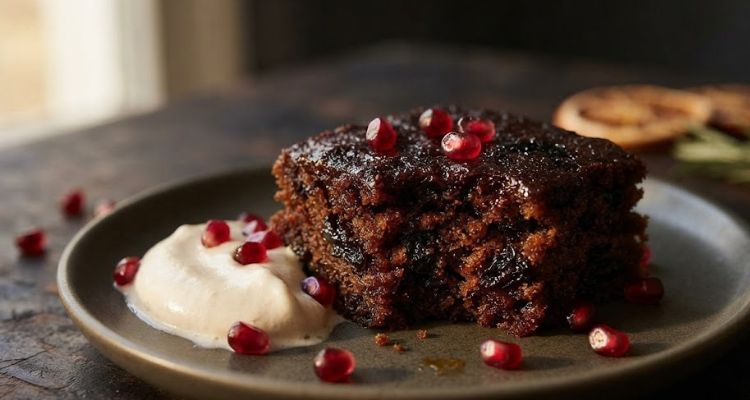
Nigella Lawson’s luscious vegan gingerbread is a dark, sticky, deeply spiced tray cake made with golden syrup, black treacle, muscovado and oat milk, with finely chopped prunes standing in for the eggs. It bakes at 170°C for 50 to 55 minutes and cuts into 12 to 18 pieces.
She’s openly proud of this one in Cook, Eat, Repeat (2020), made for her BBC Christmas special, and says you’d never miss the butter or eggs. The cleverness is in the prunes, which melt into the crumb and give both flavour and the binding that eggs would normally provide.
The bit that trips people is telling when it’s done. It’s so damp that a skewer comes out with crumbs even when baked, so Nigella has you touch the top instead: it should spring back a little. Then, harder still, you wait a day before cutting.
Nigella Lawson Luscious Vegan Gingerbread
Course: DessertCuisine: BritishDifficulty: Easy12-18
servings20
minutes50
minutes235
kcal1
hour15
minutesA squidgy, dairy-free, egg-free gingerbread from Cook, Eat, Repeat (2020), melted in one pan on the hob. Built on golden syrup, black treacle and muscovado, with a whisper of black pepper for edge.
Ingredients
150ml vegetable oil
200g golden syrup
200g black treacle
125g dark muscovado sugar
75g pitted soft prunes (about 8 in number)
30g fresh ginger
2 tsp ground cinnamon
2 tsp ground ginger
1 tsp ground allspice
⅛ tsp ground cloves
¼ tsp ready-ground black pepper
¼ tsp fine sea salt
250ml oat milk
300g plain flour
1 tsp bicarbonate of soda
2 x 15ml tablespoons warm water
2 tsp regular cider vinegar
Directions
- Line the tin: Heat the oven to 170°C/150°C fan (325°F). Line a 23cm square tin with baking parchment so it covers the base and comes up the sides, weighting it down while you melt everything together.
- Melt the wet: Measure the oil in a jug and pour it into a fairly wide, heavy-based saucepan (Nigella uses a 22cm one). Measure the golden syrup and treacle in the oily jug so they slide out easily, and add them to the pan.
- Add sugar, prunes and ginger: Tip in the muscovado, finely chop and add the prunes, then peel and finely grate in the fresh ginger. Sprinkle in the ground spices and salt, and warm over gentle heat, whisking just to combine. Don’t over-whisk, or you’ll beat in air.
- Add the oat milk: Once it’s melted and mixed, take the pan off the heat while it’s warm rather than boiling, and whisk in the oat milk until incorporated.
- Whisk in the flour: Add the flour in 3 or 4 batches, patiently whisking out any lumps. The only lumps left should be bits of prune, which melt into the gingerbread as it bakes.
- Add the fizz: Dissolve the bicarbonate of soda in the warm water, in a cup bigger than you’d think, then add the cider vinegar and quickly whisk the fizzing mixture into the pan.
- Bake: Pour carefully into the lined tin and bake for 50 to 55 minutes, starting to check at 45. A skewer won’t help much because it’s so damp, so touch the top instead: it should bounce back a little when done.
- Rest, then wait: Cool in the tin on a rack. For the best flavour, wrap the tin in baking parchment then foil and leave a day or two before cutting.
FAQs
Why do I have to wait a day before eating it?
Because it genuinely gets better. Nigella calls this out as a warning, and she’s right: freshly cooled, the gingerbread is good, but a day or two wrapped up lets it turn stickier, squidgier and more deeply spiced as the flavours settle and the moisture redistributes. It’s the same maturing that classic parkin and gingerbread need.
Wrap the whole tin first in baking parchment, then in foil, and leave it somewhere cool. Don’t cut into it early or you lose that dense, sticky texture that’s the entire point. If you’re baking for Christmas, this is a cake to make well before you need it, which is one less thing to do on the day.
What do the prunes do, and can I leave them out?
Don’t leave them out, because they’re structural, not just flavour. In a normal gingerbread the eggs bind everything and hold the crumb together; here the finely chopped prunes do that job, melting into the batter as it bakes and giving the cake its moist, holding-together density. Nigella uses them precisely because they replace the eggs.
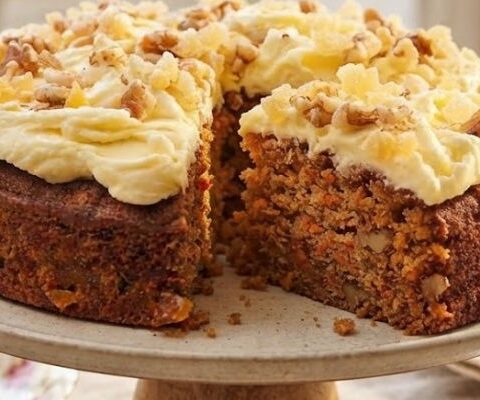
They also add a dark, fruity depth that suits the treacle and muscovado. You won’t see them as whole pieces in the finished cake; they disappear into the crumb. If you like this kind of moist, oil-based spiced cake, ginger and walnut carrot cake works a similar warm-spice register in a different form.
Can I make it gluten-free?
No, and this is worth knowing before you try. Nigella’s team tested the recipe with gluten-free flour and it didn’t work: the cake sank in the centre and turned very dense, because with no eggs and no gluten there’s nothing left to give it structure. It’s one of the few bakes in the book she couldn’t make gluten-free.
So this one needs regular plain flour to hold together. If you need a gluten-free spiced pudding instead, you’re better off with a recipe designed around that from the start, rather than swapping the flour here and hoping. The prunes are already doing the work of the missing eggs, and they can’t also do the work of the missing gluten.
Why the fizzing bicarb-and-vinegar step at the end?
That’s your leavening, and with no eggs to help the cake rise, it matters. Dissolving the bicarbonate of soda in warm water and adding cider vinegar sets off an acid-and-alkali reaction, and whisking that fizzing mixture straight into the warm batter traps the bubbles that lift the gingerbread as it bakes.
Speed is the point. Use a cup bigger than you think you need, because it foams up fast, and get it into the pan while it’s still active rather than letting it settle. This is also why you don’t over-whisk earlier: you want the lift to come from this reaction, not from beaten-in air.
What can I serve it with?
On its own with tea or coffee is how Nigella eats it most, but she also treats it almost as a sticky toffee pudding for dessert. She suggests a toffee sauce or a drizzle of date molasses, a dollop of oat-milk crème fraîche or any plant-based cream, and a scatter of pomegranate seeds to cut the sweetness. In the book she pairs it with her pomegranate-poached quinces.
A warm square with cold plant cream is the easiest crowd-pleaser. For another Nigella dessert that’s meant to be served warm and spoonable, her chocolate raspberry pudding cake plays the same role in chocolate; or for a festive showstopper alongside it, her prodigious pavlova brings a lighter contrast to the table.
How long does it keep, and can I freeze it?
This one you can trust to Nigella’s own notes, not guesswork. Wrapped in baking parchment and foil, or in an airtight container, it keeps in a cool place for up to 5 days, and given how much it improves with age, that’s a feature rather than a limit.
It freezes well too. Wrap the whole cake tightly, still on its parchment, in a double layer of food wrap and then foil, or pack slices into an airtight container. The whole cake freezes for up to 3 months, slices for up to 1 month. Unwrap and defrost on a wire rack at room temperature before serving.