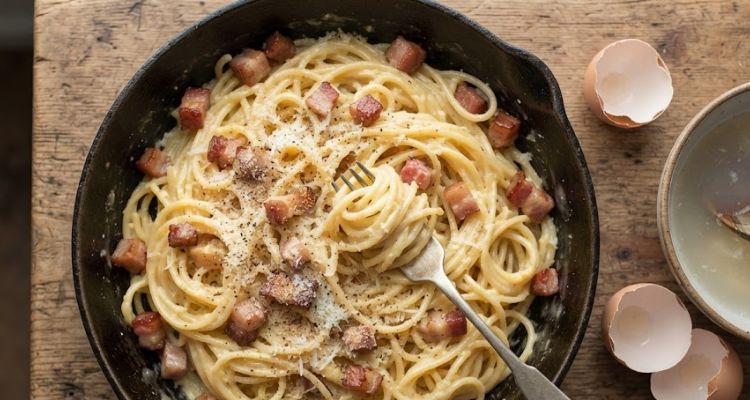
Nigella Lawson’s spaghetti carbonara tosses spaghetti with crisp pancetta, egg yolk, a whole egg and parmesan, loosened by a splash of dry white vermouth reduced down with the bacon fat. It serves two, or one very hungry person, in about 15 minutes.
She calls it her favourite, “along with all my other favourites,” in How to Eat (1998), and her most regular dinner for two. She keeps the ingredients in the house at all times. There’s no cream and no garlic, which is unusual, and the vermouth is her distinctive touch.
The whole dish turns on one moment: once the beaten egg goes in, the pan must stay off the heat. Put it back on the hob and you get scrambled eggs. Left alone, the residual warmth sets everything into a glossy sauce.

Nigella Lawson Spaghetti Carbonara
Course: Dinner, LunchCuisine: BritishDifficulty: Easy2
servings5
minutes15
minutes815
kcal20
minutesA storecupboard supper from How to Eat (1998), Nigella’s most-cooked dinner for two. What sets it apart is the dry vermouth cooked down with the pancetta, and a grating of fresh nutmeg in the egg.
Ingredients
salt for the pasta cooking water, as desired
200g spaghetti
2 tsp olive oil
100g guanciale or pancetta, in one piece
4 tbsp (60ml) dry white vermouth or wine
1 egg yolk
1 whole egg
4 tbsp freshly grated parmesan
a grind of pepper and fresh nutmeg
1 mounded tbsp (about 20g) unsalted butter
Directions
- Boil the pasta: Get a large pan of water boiling, salt it well (Nigella says it should be as salty as the Mediterranean), and once it’s back to the boil add the spaghetti.
- Crisp the pancetta: Cut the rind off the pancetta or guanciale and put it in the pan with the oil over medium to high heat while you dice the rest. Add the dice and fry for about 5 minutes, maybe more, until it starts to crisp. Lift out the rind.
- Reduce the vermouth: Pour in the vermouth and let it bubble for about 3 minutes, until it reduces to roughly 2 teaspoons of syrupy, wine-infused bacon fat. Take the pan off the heat.
- Mix the eggs: With a fork, beat the egg yolk, whole egg, parmesan, a grind of pepper and some fresh nutmeg together. The pancetta and cheese bring enough salt, so don’t add more.
- Bring it together: When the pasta’s ready, set the pancetta pan back on the heat and drop in the butter. Scoop out a cupful of pasta water, drain the spaghetti and tip it into the pan. Toss well, then turn off the heat, lifting the pan off the hob if you’re on electric.
- Finish off the heat: Pour the egg mixture over the pasta and turn it quickly so every strand is coated. Don’t put it back on the heat, or the eggs scramble. The heat left in the pasta and pan sets them into a thickly creamy sauce. Loosen with a tablespoon or so of pasta water, added gently, as you toss.
FAQs
Why do I save the pasta water, and how much should I use?
The starchy water is what makes the sauce cling rather than sit in a puddle. As the pasta boils it sheds starch into the water, and a spoonful of that stirred through the eggs and cheese emulsifies the fat into a smooth, glossy coating. Nigella has you remove a cupful before draining, which is more than enough.
She’s specific that you add it a tablespoon or so at a time, going gently, as you toss. Tip it all in at once and the sauce turns thin and watery. In our kitchen two tablespoons is usually the sweet spot, but add it slowly and stop the moment the pasta looks silky rather than dry.
Can I use pancetta instead of guanciale, and what’s the rind for?
Nigella gives you both, guanciale or pancetta, whichever you can get, in one piece rather than pre-cubed. Guanciale is the traditional cured pig’s cheek and richer, but pancetta is far easier to find and works fine. Buying it in a piece lets you cut your own chunky dice, which crisp better than thin supermarket cubes.
The rind goes into the pan first, with the oil, to render its fat and flavour before you lift it out. Nigella likes to eat it; you don’t have to. If you can only find ready-cubed pancetta, skip the rind step and just crisp the cubes. The same crisp-pancetta base runs through pasta risotto with peas and pancetta, another quick weeknight pasta for two.
What does the vermouth do, and can I leave it out?
This is Nigella’s signature move, and most carbonara recipes don’t have it. You bubble the dry white vermouth down with the pancetta until it reduces to about two teaspoons of syrupy, wine-infused fat, which deepens the savoury base before the eggs ever go near it. Dry white wine works just as well in its place.
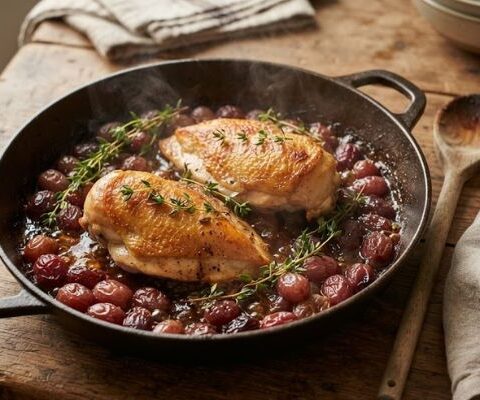
If you’d rather cook without alcohol, you can leave it out, though you lose that layer of tang and the dish leans more purely on the bacon and cheese. Note there’s no garlic here either, which surprises people. For another Nigella dish built on a splash of fortified wine, her chicken with red grapes and Marsala uses the same reduce-to-a-syrup trick.
There’s no cream. Is that right for carbonara?
It’s right, and it’s the point. Traditional carbonara has never contained cream; the creaminess comes from egg emulsified with cheese and a little starchy water. Nigella uses one egg yolk plus one whole egg and four tablespoons of parmesan, which is exactly what gives you that thick, clinging sauce without a drop of dairy beyond the butter.
The extra yolk is doing quiet work. Yolks are where the richness and the emulsifying power sit, so the yolk-plus-whole-egg combination is richer than two whole eggs but still light enough to coat rather than clog. Skip the cream and trust the egg; that’s the whole technique.
What cheese should I use, and do I need to add salt?
Freshly grated parmesan, four tablespoons of it, and grate it yourself rather than using the pre-grated tubs, which are drier and don’t melt as smoothly into the sauce. Pecorino is the more traditional Roman choice if you have it, sharper and saltier, but Nigella writes it as parmesan.
On salt, Nigella tells you not to add any to the egg mixture, because the pancetta and cheese already carry plenty. Where you do want salt is the pasta water, and generously, since that’s your one chance to season the spaghetti itself from the inside. Taste before you reach for the salt at the table.
Is it really enough for two, and can I scale it up?
Nigella is honest that it makes two platefuls and leaves it to you whether that feeds two people or one very hungry one. With 200g of spaghetti it’s a proper dinner for two alongside a salad, or a generous solo bowl on a bad day. It’s built to be fast, not stretched.
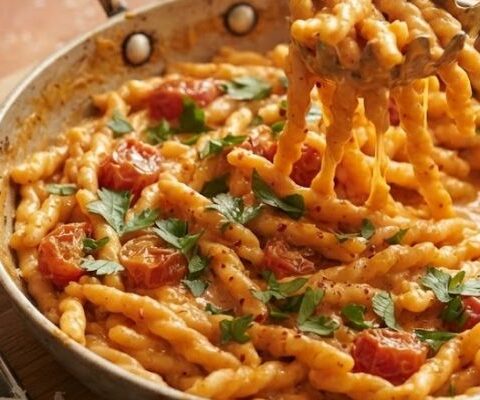
Scaling up works, but carbonara gets harder to control in big batches because the eggs need to catch the pasta’s heat quickly before it cools. Cook no more than double in one pan, and work fast when the egg goes in. If you want another pasta that comes together in the time it takes to boil, gemelli with anchovies, tomato and mascarpone is the same kind of quick supper.