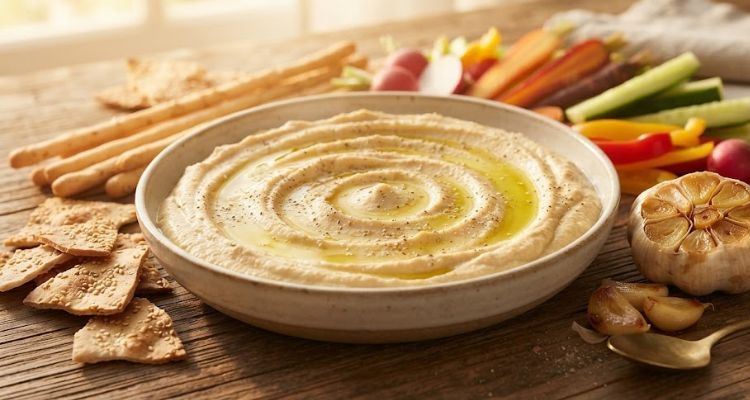
Nigella Lawson’s caramelized garlic hummus blitzes chickpeas with tahini, lemon, olive oil and the sweet, soft flesh of a whole roasted garlic bulb into a rich, mellow purée. The garlic roasts at 220°C (gas 7) for 45 minutes, the hummus itself takes minutes in a food processor, and it makes enough for eight people to dip into over drinks.
The recipe is from Simply Nigella (2015). Nigella cheerfully admits she’s a “compulsive garlic-caramelizer”, forever wrapping bulbs in foil and roasting them until the cloves turn sweet and spreadable, then keeping a stash in the fridge to squeeze into baked potatoes, soups and stews. This hummus is where that habit shines brightest.
That roasted garlic is the whole point. Raw garlic would make a harsh, aggressive hummus, but roasting mellows it into something sweet, nutty and almost jammy, so you can fold in an entire bulb without it overpowering the chickpeas. It’s the difference between fierce and heady, and it can’t be faked with raw cloves.

Nigella Lawson Caramelized Garlic Hummus
Course: Sides, StartersCuisine: BritishDifficulty: Easy8
servings10
minutes45
minutes220
kcal55
minutesNigella’s grown-up hummus from Simply Nigella, lifted with a whole roasted garlic bulb blitzed into the chickpeas. A make-ahead dip for entertaining, best with good chickpeas rather than canned. Serves eight over drinks, with crudités, grissini or torn toasted pitta.
Ingredients
1 large bulb garlic, whole and unpeeled
500g cooked chickpeas (from dried), or 1 x 660g jar chickpeas, or 2 x 400g cans chickpeas, drained
1 unwaxed lemon, zest and juice
4 x 15ml tbsp tahini
4 x 15ml tbsp extra-virgin olive oil, plus more to drizzle
4 x 15ml tbsp cold water
1 tsp sea salt flakes, or to taste
good grinding of white pepper
Directions
- Roast the garlic: Preheat the oven to 220°C/gas mark 7. Cut the top off the garlic bulb so the cloves just peek through, discard the top, and sit the bulb on foil. Seal the ends tightly but leave the parcel slightly baggy, set it on a small foil tray, and bake for 45 minutes. Let it cool in its foil.
- Start the hummus: Drain and rinse the chickpeas if using canned or jarred, then tip into a food processor.
- Add the flavourings: Add the lemon zest and juice, and squeeze in the soft flesh from the caramelized garlic.
- Blitz: Spoon in the tahini and the 4 tablespoons of olive oil, then blitz to a smooth purée.
- Adjust and season: Add enough of the cold water to reach the consistency you want, blitzing as you go, then season with the salt and white pepper and taste. Decant into a bowl and drizzle with more olive oil if you like.
FAQs
What chickpeas should I use?
Nigella has strong views here. She recommends either home-cooked chickpeas from dried, or good pre-cooked ones from a jar, ideally Spanish, and deliberately skips canned chickpeas, which she finds make the hummus “too bitty” and less smooth. Her logic is to go for the cheapest option, dried, or the most expensive, jarred, and avoid the middle.
That said, she’s not dogmatic about it: two 400g cans, drained, can be used if that’s what you have. If you do go canned, rinse them well and blitz for a little longer to smooth out the texture. Jarred and home-cooked chickpeas are softer and purée into a silkier hummus.
How do I caramelize the garlic?
It’s simple and mostly hands-off. Cut the top off a whole bulb so the cloves peek through, wrap it in a slightly baggy foil parcel, and roast at 220°C for 45 minutes until the cloves are soft and golden, then let it cool before squeezing out the sweet flesh. The foil steams and then caramelizes the cloves into a mellow paste.
Nigella’s best tip is about economy: don’t fire up the oven specially. She roasts garlic at whatever temperature the oven is already on for something else, so it takes longer at a lower heat but costs nothing extra. Roasted garlic keeps in the fridge, wrapped or in an airtight container, for up to a week, so it’s worth doing a few bulbs at once.
Isn’t a whole bulb of garlic too much?
It sounds alarming, but no. The reason a full bulb works is that roasting completely transforms it: the harsh, pungent bite of raw garlic mellows into something sweet, soft and nutty, closer to caramelized onion than to a raw clove. You get depth and roundness rather than a raw garlic hit.
This is exactly why you can’t substitute raw or even sautéed garlic here without changing the whole dish. If you’re nervous, start by squeezing in three-quarters of the bulb, blitz, taste, then add the rest. But the caramelized sweetness is the signature of this hummus, so don’t hold back too much.
How do I get it really smooth?
Three things help. Use soft jarred or home-cooked chickpeas rather than firmer canned ones, give it plenty of tahini and olive oil for richness, and add the cold water gradually while blitzing until it loosens to a silky, spoonable consistency. The water is what takes it from stiff paste to creamy dip.
For an extra-smooth result, you can slip the skins off the chickpeas before blitzing, which removes the grainy bits, though it’s fiddly and Nigella doesn’t ask for it. Blitzing for longer than you think you need to also makes a real difference, so let the processor run until the purée looks glossy.
Can I make it ahead and how long does it keep?
Yes, it’s a good make-ahead dip. Nigella says it can be made up to 2 days in advance and kept covered in the fridge, which makes it ideal for entertaining. The one exception is if you’ve used frozen and thawed chickpeas, in which case it’s best eaten within 24 hours of making.
The chickpeas themselves are freezer-friendly if you cook a big batch: cool them quickly, then freeze in airtight containers or bags for up to 3 months and defrost overnight in the fridge. Nigella cooks hers unsoaked in a slow cooker and keeps some frozen precisely so she can make this at short notice.
What should I serve with it?
Nigella’s signature accompaniment is seed-sprinkled crisp bread shards: split wholemeal flatbreads, brush with olive oil, sprinkle with sesame seeds and bake on a rack at 220°C for about 5 minutes, then break into pieces. They’re too delicate to dip, so you spoon the hummus on, but she rates them highly.
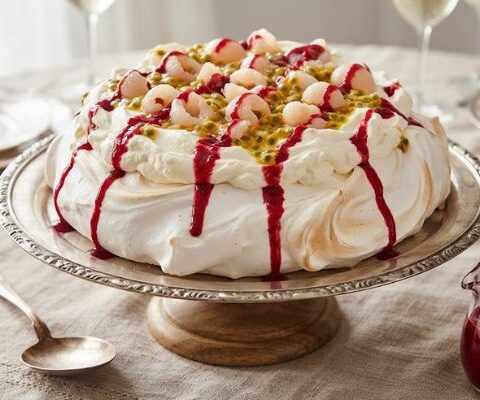
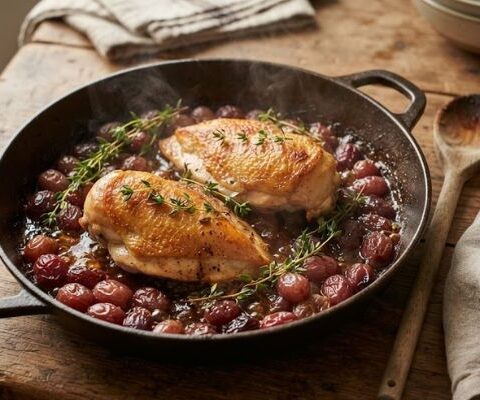
For actual dipping, she suggests grissini, toasted pitta torn into bits, or crudités. It works as a starter or a light lunch, and slots neatly into an entertaining spread: serve it before a cosy main like her chicken with red grapes and Marsala, and finish with her prodigious pavlova for a make-ahead menu from start to sweet.