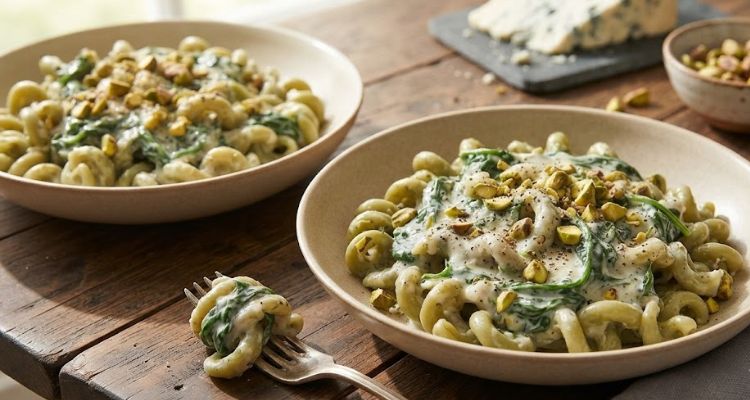
Nigella Lawson’s green pasta with blue cheese is a fast, four-ingredient supper of curled spinach pasta tossed with sharp Gorgonzola, wilted baby spinach and chopped pistachios. There’s no cooking beyond boiling the pasta, the sauce comes together off the heat in a lidded pan, and it serves two hungry people in about 10 minutes.
The recipe is from Nigellissima (2012), and she made it on the accompanying BBC Two series. It grew out of an earlier pasta with Gorgonzola, rocket and pine nuts from her Quick Collection app, but Nigella made one key change: she dropped the crème fraîche and mascarpone she used to add. She promises the result is, in her words, “sul serio”, no joke.
The reason for that change is the whole technique. Instead of cream, a little starchy pasta cooking water is whisked into the cheese to make it creamy. Nigella is clear this isn’t a diet move, but a flavour one, because the starchy water doesn’t mute the palate-rasping piquancy of the Gorgonzola the way dairy does.
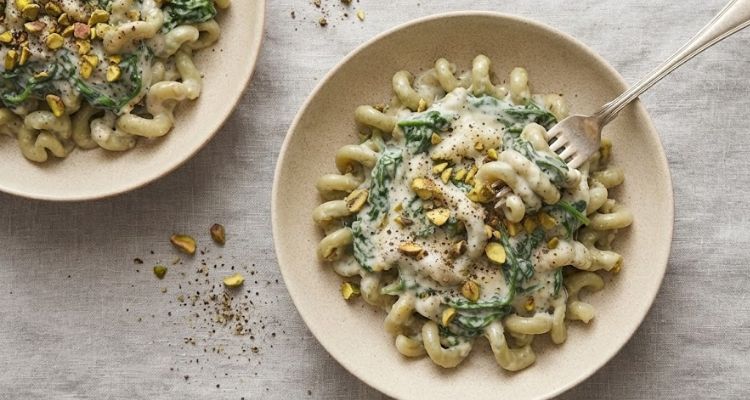
Nigella Lawson Green Pasta With Blue Cheese
Course: Dinner, LunchCuisine: BritishDifficulty: Easy2
servings5
minutes10
minutes760
kcal15
minutesNigella’s 10-minute pasta from Nigellissima, where curled trottole catches a scant, fierce Gorgonzola sauce loosened only with pasta water. Baby spinach wilts in the pan’s heat and pistachios add crunch. A serve-immediately supper, not a make-ahead one.
Ingredients
250g trottole verde or any curled pasta of choice
salt for the pasta water, to taste
125g Gorgonzola piccante, crumbled or chopped
100g baby or salad spinach leaves
Freshly ground pepper, slightly coarser than usual if possible
3 x 15ml tbsp chopped pistachio nuts
Directions
- Boil the pasta: Heat a pan of water, salt it once boiling, then add the pasta. Cook to packet instructions but start checking 3 minutes early, since it needs to be really al dente and will keep cooking as you make the sauce.
- Reserve the water, then combine: Before draining, scoop out a cupful of the pasta cooking water. Tip the drained pasta back into the hot pan with 2 tablespoons of that water, the crumbled Gorgonzola, the baby spinach and a good grinding of coarse pepper.
- Rest off the heat: Put the lid on, off the heat but still on the stove, and leave to stand for 2 minutes so the cheese softens and the spinach starts to wilt.
- Make the sauce: Lift the lid, turn the heat to low and stir everything together, adding as much of the reserved water as you need. Nigella finds about 100ml total is right, stirring until the cheese melts into a light sauce and the spinach has wilted.
- Finish and serve: Off the heat, toss through about two-thirds of the pistachios, then divide between two warmed bowls and scatter the rest of the nuts over each. Serve immediately.
FAQs
What kind of blue cheese should I use?
Nigella specifies Gorgonzola piccante, the sharper, firmer, more pungent aged style, rather than the mild, creamy Gorgonzola dolce. The piccante is what gives the dish its fierce, palate-rasping bite, which is really the point of the whole recipe, so the assertiveness matters.
If you can’t find piccante, another firm, punchy blue like a mature Stilion or Roquefort stands in well, though each shifts the flavour a little. Steer clear of very soft, sweet blues, which melt into something bland and lose the sharp edge that the pistachios and spinach are there to balance.
What if I can’t find trottole pasta?
Don’t worry about it. Nigella loves trottole, the little spinach-dyed coils, and the green colour is what named the dish, but she says outright the green factor isn’t crucial. What matters is the shape holding the sauce, since this is a scant, fierce coating rather than a generous pool.
She suggests radiatori, which has a similarly corrugated, ruffled form, as the closest alternative. Failing that, the curl of fusilli gives you some of the same sauce-catching effect. Any curled or ridged shape works better here than smooth pasta, which the light sauce would slide straight off. It’s the same shape-catches-sauce logic behind her gemelli with anchovies, tomato and mascarpone.
Why add pasta water instead of cream?
This is Nigella’s deliberate improvement on her older version. She used to bind this style of blue cheese pasta with crème fraîche or mascarpone, but swapped to whisking in a little starchy pasta cooking water instead. The starch emulsifies with the melting cheese to make a sauce that’s every bit as creamy.
Her reasoning is about flavour, not calories. Dairy softens and rounds the Gorgonzola, muting its sharp piquancy, whereas the neutral starchy water lets that fierce bite come through undiluted. Add the water gradually, since you want just enough to loosen the cheese into a light sauce, around 100ml in total. This starch-and-water trick also drives her pasta risotto with peas and pancetta.
Why cook the pasta so al dente?
Because it keeps cooking after it leaves the water. Nigella has you check the pasta a full 3 minutes before the packet time, since it carries on softening in the residual heat while you build the sauce, especially during the 2-minute lidded rest. Draining it properly al dente stops it turning soft and claggy by the time it reaches the bowl.
That firmness also helps the pasta stand up to being stirred with the cheese and spinach without breaking down. If you cook it to fully done in the water first, the finished dish ends up overcooked, so treat the pan-standing time as part of the cooking, not an afterthought.
Can I make it ahead or reheat leftovers?
No, and Nigella’s team is explicit that it isn’t advisable to make ahead or store. This is a serve-immediately dish: the sauce is a delicate emulsion of melted cheese and starchy water that sets and turns claggy as it cools, and the spinach loses its fresh wilt.
Reheating tends to split the sauce and overcook the already-al-dente pasta into mush. It comes together in about 10 minutes from a boiling pan, so it’s genuinely quicker to make fresh than to plan around leftovers. Make only what you’ll eat in one sitting.
Is this a main course or a starter?
Nigella frames it as serving 2 hungry people, which puts it squarely as a light main. With 250g of pasta between two, it’s a proper supper rather than a dainty first course, and the richness of the Gorgonzola makes it filling despite the short ingredient list.
If you want to stretch it to serve four as a starter, it divides neatly, though you may want a touch more pasta water to keep the smaller portions saucy. A sharp green salad alongside cuts the richness nicely, keeping the meal as quick and light as the pasta itself.