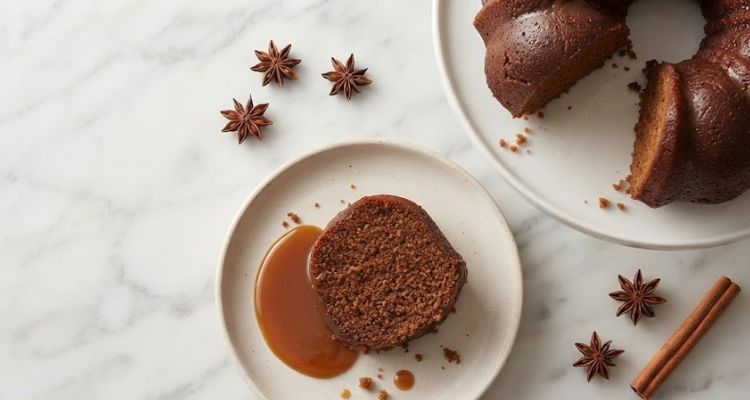
Nigella Lawson’s cider and 5-spice bundt cake is a dark, aromatic spiced cake made with dry cider, black treacle and Chinese 5-spice, baked into a striking bundt shape. It bakes at 170°C (150°C fan, gas 3) for 45-50 minutes, uses oil rather than butter for a tender crumb, and cuts into 10 to 14 slices. The batter pours in alarmingly runny, then sets into a light, moist cake.
The recipe is from Simply Nigella (2015). Nigella usually calls this her Cider and 5-Spice Gingerbread, but renamed it because the crumb has “the lightness of a cake rather than the damp heaviness” of a true gingerbread, and because she wanted to give the aromatic 5-spice its star role. Anyone craving more warmth is free to boost the ginger.
The cider is where it goes wrong for a lot of people. It must be dry, alcoholic cider, not sweet cider and not the raw apple juice sometimes called “apple cider” abroad. The sweetness and acidity of fruit juice would throw off both the flavour and the rise, so this is one ingredient you can’t casually swap.
Nigella Lawson Cider and 5-spice Bundt Cake
Course: DessertCuisine: BritishDifficulty: Easy10-14
servings15
minutes45
minutes295
kcal1
hour10
minutesNigella’s autumn-into-winter bundt from Simply Nigella, an oil-based spiced treacle cake with a tender crumb and a whole-batter simplicity. Impressive out of the tin, wonderful plain, and even better with her smoky salted caramel sauce. Tastes best the day after baking.
Ingredients
250ml cider, preferably dry or at least not sweet
175ml sunflower oil
100g soft dark brown sugar
300g (250ml) black treacle (use an oiled cup measure for ease)
3 large eggs
3cm piece (15g) fresh ginger, peeled and finely grated
300g plain flour
2 tsp baking powder
¼ tsp bicarbonate of soda
½ tsp freshly grated nutmeg
2½ tsp Chinese 5-spice powder
1½ tsp ground cinnamon
non-stick cooking spray or sunflower oil for greasing
Directions
- Prepare: Open the cider so it loses its fizz. Preheat the oven to 170°C/150°C fan/gas 3. Grease the bundt tin thoroughly with spray or oil and leave it upside down on paper while you make the batter.
- Combine the wet ingredients: Measure the oil, brown sugar and black treacle into a bowl, oiling your cup measure first so the treacle slides out. Pour in the cider, crack in the eggs, add the grated ginger and beat until smooth. By hand, beat the eggs together first before adding.
- Mix the dry ingredients: In another bowl, combine the flour, baking powder, bicarbonate of soda, nutmeg, 5-spice and cinnamon, forking them through together.
- Make the batter: Gently tip the dry ingredients into the wet treacly mixture, beating as you go into a smooth batter. Scrape the sides and base of the bowl well so there are no pockets of flour.
- Bake: Pour the very runny batter into the tin (don’t be alarmed by how loose it is) and bake for 45-50 minutes, checking from 40. It’s done when it comes away from the sides and a tester comes out clean but with a few crumbs clinging. In a square tin, allow 50-55 minutes.
- Cool and turn out: Rest on a wire rack for about 30 minutes, then ease the cake away from the edges, especially around the funnel, and turn out. Cool completely, then wrap in parchment and foil, since it tastes best the next day.
FAQs
What kind of cider do I need?
Dry, alcoholic cider, and the distinction matters. Nigella’s team is clear this means proper hard cider, not sweet cider, and specifically not the raw, unfiltered apple juice that’s called “apple cider” in the US and elsewhere. A dry cider brings acidity and a subtle apple note without adding sweetness.
Crucially, apple or pear juice are not good substitutes, because they’re much sweeter and their different acidity can stop the raising agents working properly, so the cake may not rise well. Open the cider ahead of time and let it go flat, since you don’t want the fizz in the batter. Choose the driest cider you can find.
Can I make it without alcohol, or make it more gingery?
Nigella offers one swap that solves both. Replace the 250ml of cider with 250ml of ginger beer, which removes the alcohol and, at the same time, intensifies the ginger warmth without any extra peeling and grating. It’s her own suggested alternative, so the quantities are designed to work.
If you’re keeping the cider but want more heat, simply increase the fresh grated ginger to taste, since she explicitly says anyone is free to boost it. That’s part of why she renamed the cake, to reassure people the ginger level is a starting point rather than the whole identity of the bake.
What 5-spice powder should I use?
Any Chinese 5-spice works, and Nigella has tried several. The usual blend is star anise, cloves, cinnamon, Sichuan pepper and fennel seeds, but she also loves versions that include liquorice and dried mandarin peel, which add their own aromatic layers to the cake.
One oddity: she found that even the one or two brands that mistakenly add garlic still work, with two testers confirming the garlic wasn’t detectable in the finished cake. Still, she suggests checking the label and choosing a garlic-free blend when you can. The 5-spice is the headline flavour, so it’s worth buying a good one.
Is it a cake or a gingerbread?
It’s genuinely a cake, despite its gingerbread roots. Nigella built it from a gingerbread idea but found the crumb came out light and tender, more like a cake than the dense, sticky, damp texture of a classic gingerbread, which is why she changed the name. The 5-spice and treacle give it depth without heaviness.
If you love a proper sticky gingerbread instead, that’s a different texture entirely. This bundt sits closer to her spiced teatime cakes than to a dark, fudgy loaf, in the same warm-spice family as her ginger and walnut carrot cake, while her luscious vegan gingerbread gives you the denser, stickier end of the spectrum.
My batter is really runny and I’m worried about the bundt sticking.
The runniness is completely normal. Nigella warns the batter will be very loose when you pour it in and tells you not to be alarmed, since that’s exactly what gives the finished cake its moist, tender crumb. Pour it confidently into the tin.
Sticking is the real risk with any bundt, so grease every crease thoroughly with spray or oil before adding the batter. After baking, rest the cake for 30 minutes, then use your fingers to ease it away from the edges and especially around the central funnel before turning it out. If you don’t own a bundt tin, the 20cm square tin is a reliable alternative, needing 50-55 minutes.
How should I store and serve it?
It’s a keeper and actually improves with a day’s rest. Wrapped in parchment then foil, it keeps at cool room temperature in an airtight container for up to a week, and Nigella says it tastes best eaten the next day, once the flavours have settled. It also freezes, tightly wrapped, for up to 3 months, defrosting on a rack for about 5 hours.
It’s lovely plain with a cup of tea, but Nigella confesses a weakness for serving it with the smoky salted caramel sauce from the same book, which pools gleamingly over the dark cake. A dusting of icing sugar or a simple glaze works too, keeping it as understated or as celebratory as you like. For an everyday teatime bake in a similar spirit, her banana bread is another one that rewards a day’s patience.