Nigella Lawson’s New Year doughnuts are Dutch oliebollen, little yeasted dough balls made with a nutmeg-and-lemon-scented batter, fried at 180°C for about 5 minutes until crisp outside and soft within, then dusted with icing sugar. The batter proves for around 1¼ hours.
She frames them in Cook, Eat, Repeat (2020) as her way of celebrating New Year’s Eve without the party. In the Netherlands, oliebollen, literally “oil balls”, are the traditional way to see in the year, and it’s said the whole country smells of frying and icing sugar. She makes hers small and, unusually, without the dried fruit.
The one thing that makes or breaks them is the oil. Nigella is firm that it has to sit steady at 180°C, which is why a saucepan needs a thermometer. Frying is a long game, and letting the heat drift gives you greasy, undercooked centres.

Nigella Lawson New Year Doughnuts
Course: Nigella Lawson24-30
servings15
minutes30
minutes65
kcal2
hoursDutch oliebollen from Cook, Eat, Repeat (2020), fried for Nigella’s BBC2 Christmas special. A moreish, icing-sugar-dusted canapé built for New Year’s Eve, with an optional rum-soaked-fruit version.
Ingredients
250g plain flour
a pinch of salt
2 x 15ml tbsp (25g) caster sugar
2½ tsp (7g) or 1 sachet fast-action dried yeast
250ml full-fat milk
an exuberant grating of nutmeg
1 lemon
1 tsp vanilla extract
2 x 15ml tbsp (30g) soft unsalted butter
1 large egg, at room temperature
sunflower oil for frying (approx. 4 litres in a deep-fat fryer, or approx. 1.5 litres in a 22cm pan)
icing sugar, for dusting
Directions
- Mix the dry: Combine the flour, salt, caster sugar and yeast in a large bowl.
- Warm the milk: Pour the milk into a pan or a microwave jug. Grate in a generous amount of nutmeg and the lemon zest, add the vanilla and butter, and heat until just lukewarm, about 45 seconds in a 900W microwave. It’s fine if the butter doesn’t fully melt.
- Make the batter: If you heated the milk in a pan, tip it into a jug. Whisk in the egg, then pour the warm scented milk into the dry ingredients, beating hard with a wooden spoon or small whisk to a smooth batter. It’ll be looser than dough, more like thick cake batter.
- Prove: Cover the bowl with wrap or a slightly damp tea towel and leave somewhere warm for about 1¼ hours, until it’s puffed up and the surface is a mass of big bubbles. To make ahead, chill it covered for up to 24 hours, then bring back to room temperature.
- Heat the oil: Scrape down the sides with a spatula to knock it back. Heat sunflower oil to 180°C, either to the minimum mark of a deep-fat fryer, or about 3½cm deep in a heavy pan at least 12cm deep and 22cm across. In a pan, use a digital or jam thermometer, and never leave hot oil unattended.
- Shape and fry: Dip a rounded tablespoon measure and a teaspoon into a bowl of cold oil, scoop up a tablespoon of dough, and ease it into the hot oil, using the teaspoon to shape it. Fry the first two for about 2½ to 3 minutes a side, until deep golden all over and cooked through. Cool them a few minutes, dust with icing sugar, and eat them to check your timing.
- Repeat: Once the timing’s right, carry on, frying no more than four or five at a time so the pan isn’t crowded. Keep dipping the spoons in the cold oil between doughnuts.
- Drain and dust: Lift onto kitchen-paper-lined plates and blot. Leave 3 to 5 minutes, because icing sugar melts on piping-hot doughnuts, then arrange on plates and dust generously. Eat immediately.
FAQs
Do I need a deep-fat fryer?
No, but it makes life much easier, and Nigella admits she bought one as an early Christmas present to herself. A fryer holds the temperature steady for you. In a fryer, you just fill with sunflower oil to the minimum mark.
Without one, use a heavy-based saucepan at least 12cm deep and no less than 22cm across, with the oil about 3½cm deep, and a digital or jam thermometer clipped on. The bread-cube test isn’t enough here, because keeping the oil at a constant 180°C over a whole batch is the real skill. Don’t fill the pan more than a third with oil, and never walk away from it.
What should the dough actually look like?
Looser than you’d expect. Nigella calls it dough because you’re making doughnuts, but it behaves more like a thick cake batter, which is why you scoop and drop it with spoons rather than rolling or cutting. Beat it hard when you add the warm milk so it comes together smooth.
After proving it should have puffed up and be covered in large bubbles across the surface. When you scrape it down it deflates, then starts bubbling up again while the oil heats, which is exactly what you want. That live, active batter is what gives you a soft, bouncy centre.
Can I make the dough ahead?
Yes, and it’s a sensible move if you’re frying for a party. Nigella says you can cover the bowl and leave it to rise slowly in the fridge overnight, or for up to 24 hours. The cold slows the yeast right down without stopping it.
Just bring it back to room temperature before you fry, so the centres cook through in the same time. Everything else stays the same. If you’d rather a make-ahead showstopper that doesn’t involve standing over hot oil at all, prodigious pavlova is the festive centrepiece to reach for instead.
Should I add the raisins and currants?
That’s the traditional way, though Nigella prefers hers plain and says so. In the Netherlands you’ll usually find both fruited and unfruited versions served side by side, so neither is wrong. It comes down to taste.
If you want them, soak about 2 tablespoons each of raisins and currants in rum or orange juice overnight, or bring them to the boil in the liquid for a minute and leave to steep until cold. Fold the plumped fruit into the batter once it’s mixed and ready to prove, not after. The boozy version leans grown-up, a bit like the direction chocolate raspberry pudding cake takes with its splash of liqueur.
How do I know they’re cooked, and how many at once?
Nigella’s own method is the honest one: fry the first two, let them cool a few minutes, dust with icing sugar and eat them. They should be deep golden brown all over and cooked right through to the middle, and tasting is the only way to be sure your timing’s right before committing the batch.
Once you’ve got it, fry no more than four or five at a time. Overcrowd the pan and the oil temperature drops, which is when they turn greasy and pale. She also loves it when the dough drips a little going in, making super-crunchy spikes, so don’t worry about a perfect ball shape.
Can I make them ahead, and what about leftovers?
Like all doughnuts, these are best eaten straight away, while the outside is crisp and the inside still soft. They don’t hold their texture for long, so fry them as close to serving as you can rather than making a big batch hours early.
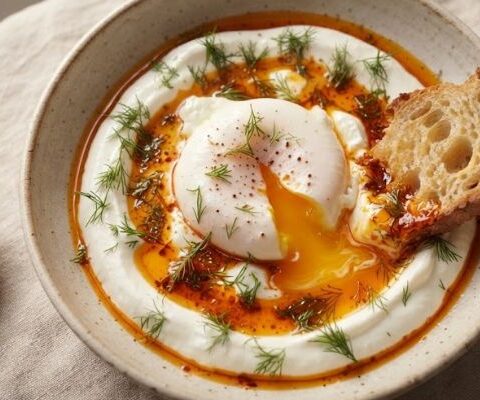
If you do have leftovers, Nigella reheats them on a baking sheet in a 180°C/160°C fan oven for about 5 minutes, then dusts them with icing sugar for what she calls a rather fabulous New Year’s Day breakfast. That reheated-doughnut-and-icing-sugar idea sits nicely alongside something like Turkish eggs for a slow New Year’s Day brunch.