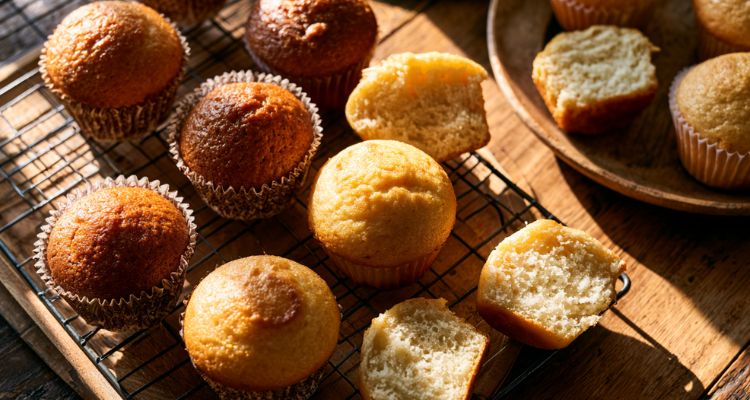
Mary Berry’s fairy cakes are light, golden sponges baked in paper cases in bun tins, made from a Victoria sponge mixture with margarine, caster sugar, eggs, self-raising flour and baking powder, baked at 200°C (Gas 6) for 15-20 minutes. The recipe makes about 18 cakes using her all-in-one method where everything goes into one bowl.
Berry’s headnote in the Ultimate Cake Book (2003) says “these are made from a Victoria sponge mixture, but baked in paper cake cases. Children like to make them: use petits fours paper cases for tiny cakes.” She keeps this recipe deliberately simple because it’s the base for five different variations in the same chapter, from iced to chocolate to butterfly wings.
The instruction Berry repeats across every fairy cake recipe is to half fill the paper cases. In Mary Berry Cooks (2014), she goes further, saying “fairy cakes are not as deep as cupcakes or muffins so use shallower cake trays (widely known as bun tins) and make sure you buy the right paper cases to fill the tin.” The wrong cases in the wrong tin is the fastest way to ruin these.
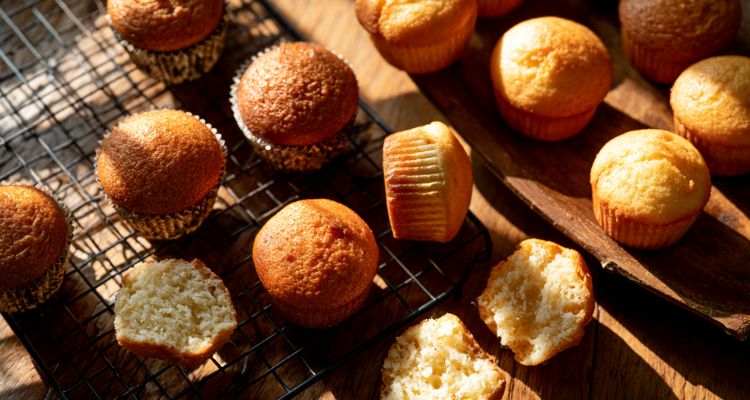
Mary Berry Fairy Cakes
Course: DessertCuisine: BritishDifficulty: Easy18
servings10
minutes15
minutes95
kcal30
minutesFrom the Little Cakes, Rock Cakes and Yeasted Buns chapter of the Ultimate Cake Book (2003), Berry’s simplest small cake using her all-in-one Victoria sponge method. Five ingredients, one bowl, 20 minutes in the oven.
Ingredients
100g (4 oz) soft margarine
100g (4 oz) caster sugar
2 eggs
100g (4 oz) self-raising flour
1 teaspoon baking powder
Directions
- Prepare: Preheat the oven to 200°C/400°F/Gas 6. Place about 18 paper cake cases in bun tins.
- Mix: Measure all the ingredients into a large bowl and beat well for 2-3 minutes until the mixture is well blended and smooth. Half fill the paper cases with the mixture.
- Bake: Bake for about 15-20 minutes until the cakes are well risen and golden brown. Lift the cakes out of the bun tins and cool on a wire rack.
Notes
- Calories: 100g margarine (717) + 100g sugar (387) + 2 eggs (156) + 100g flour (345) = 1,605 ÷ 18 = 89 → rounded to 95 kcal per cake (unfrosted)
FAQs
What is the difference between fairy cakes and cupcakes?
Berry draws a clear line between the two. In Mary Berry Cooks (2014), she says fairy cakes use “shallower cake trays (widely known as bun tins)” while cupcakes use deeper muffin tins. In 100 Sweet Treats and Puds, she’s even more direct: “Cupcakes are a different shape from fairy cakes, the cases they are baked in are deeper and have less angular sides.”
The sponge mixture is essentially the same, but the proportions change. Berry’s fairy cakes use 100g each of margarine, sugar and flour. Her cupcakes in Foolproof Cooking (2016) and Everyday (2017) use 150g sugar and 150g flour to 100g fat, giving a slightly denser sponge that fills the deeper cases.
Why does Berry use margarine instead of butter?
Berry’s fairy cakes are from the Ultimate Cake Book (2003) and use “soft margarine” which was standard in her earlier all-in-one recipes. Margarine is softer than butter straight from the fridge, which makes the all-in-one method easier because everything combines quickly without lumps.
Her later small cake recipes in Mary Berry Cooks (2014) switch to “baking spread” which is essentially the same thing. In Foolproof Cooking (2016), her Red Velvet Cupcakes use butter. Either works, but butter gives a richer flavour. If substituting butter, make sure it’s properly softened first or the batter won’t come together smoothly.
How many variations does Berry make from this base?
Berry builds five different cakes from this exact sponge in the Ultimate Cake Book alone. The plain Fairy Cakes here, Iced Fairy Cakes with glacé icing, Chocolate Fairy Cakes (swapping 25g flour for cocoa), Butterfly Cakes with buttercream wings, and Orange Fairy Cakes with orange zest and orange glacé icing.
She also adds currants to make Queen Cakes, which she describes as a way to “vary a simple fairy cake recipe by adding store-cupboard ingredients.” That’s six variations from one base mixture, which shows how versatile it is.
Can I store these overnight?
Berry doesn’t give a prepare ahead or storage note for the plain fairy cakes, which tells you they’re meant to be eaten fresh. Without icing or filling, the sponges dry out quickly because they’re small and thin. The surface area relative to the crumb is high, so moisture escapes fast.
Her Orange Butterfly Cakes in Mary Berry Cooks (2014) are the exception. She says those “will keep in a cake tin for up to 3-4 days” and “can be frozen for up to 1 month.” The orange curd and buttercream act as a moisture barrier that the plain version doesn’t have.
What does Berry mean by petits fours cases?
Berry suggests using “petits fours paper cases for tiny cakes” which are miniature paper cases about half the size of standard fairy cake cases. They sit in mini bun tins or on a flat baking tray and make bite-sized cakes perfect for afternoon tea or children’s parties.
With smaller cases, reduce the baking time to 10-12 minutes and check early. The mixture makes about 36 petits fours from the same quantity. I use these for children’s birthday parties because small hands manage them better and there’s less waste.