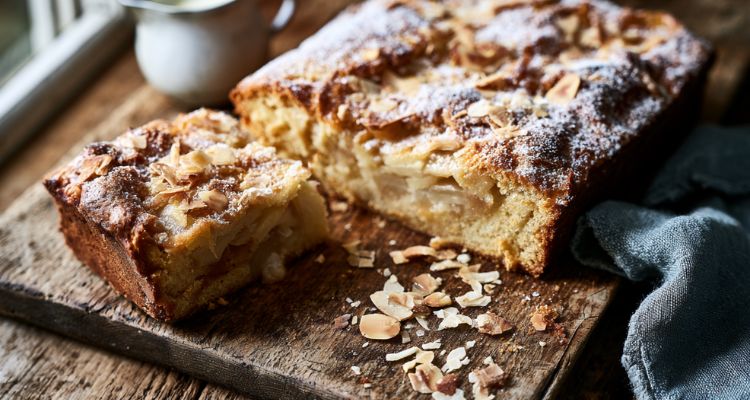
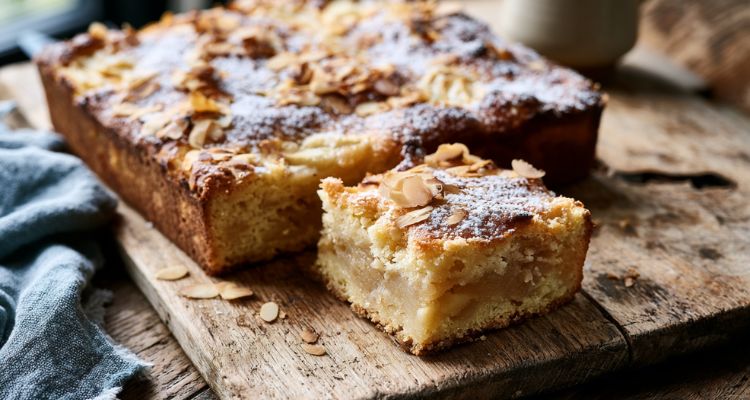
Mary Berry’s Devonshire apple cake is a buttery almond sponge layered with thinly sliced cooking apples, baked at 180°C (160°C fan) for 1¼ hours in a 30×23cm traybake tin. It cuts into 12 slices and it’s best eaten warm with cream.
Berry published this twice, first in her Ultimate Cake Book (2003) and again in Baking Bible (2010), updating almond essence to extract between editions. She’s honest about the look, writing that the cake “looks a little unappetizing when cold” though the flavour more than makes up for it.
The butter goes in melted, not creamed, so the batter comes together in minutes. Berry adds baking powder on top of self-raising flour because this quick method traps less air, and without that extra push the apple layer would drag the sponge down.
Mary Berry Devonshire Apple Cake
Course: DessertCuisine: BritishDifficulty: Easy12
servings20
minutes1
hour15
minutes415
kcal1
hour40
minutesBerry positions this as a pudding rather than an afternoon tea cake. The apples collapse into the sponge during the long bake, so each slice arrives soft and fruit-heavy instead of light and fluffy.
Ingredients
450g (1 lb) cooking apples
Juice of ½ lemon
350g (12 oz) self-raising flour
2 level teaspoons baking powder
350g (12 oz) caster sugar
4 large eggs
1 teaspoon almond extract
225g (8 oz) butter, melted
A generous scattering of shredded, flaked or chopped almonds
Caster sugar, to sprinkle
Directions
- Preheat: Set the oven to 180°C/160°C fan/Gas 4 (350°F). Grease a 30×23cm (12×9 in) traybake or roasting tin, then line the base with baking parchment.
- Prepare the apples: Peel, core and thinly slice the apples and squeeze the lemon juice over them.
- Mix the batter: Measure the flour, baking powder and sugar into a large bowl. Beat the eggs together with the almond extract and stir into the flour along with the melted butter. Whisk until combined.
- Layer the cake: Spread half the mixture into the tin. Arrange the apples over the top of the cake mixture. Carefully top with the rest of the mixture, but don’t worry if the apples show through a little. Sprinkle over the almonds.
- Bake: Bake in the pre-heated oven for about 1¼ hours or until the cake is golden, firm to the touch and slightly shrunk away from the sides of the tin. Leave to cool for 15 minutes, then turn out and remove the parchment. Sprinkle over the caster sugar and serve warm, with cream or fromage frais.
Notes
- Calories: 450g apples (212) + 350g SR flour (1,208) + 350g sugar (1,355) + 4 eggs (312) + 225g butter (1,613) + almond extract (10) + lemon juice (5) + ~30g flaked almonds (173) + ~25g sugar sprinkle (97) = 4,985 ÷ 12 = 415 kcal per slice
FAQs
Can I use eating apples instead of cooking apples in this cake?
Berry calls for cooking apples because Bramleys soften and break apart during the long bake, which creates pockets of moisture that keep the sponge from drying out. Eating apples hold their shape too well, so they sit inside the cake like chunks rather than melting through it.
I tried Granny Smiths once and the difference was clear. The sponge around the apples felt drier and the fruit stayed firm, almost crunchy in places. If you can’t get Bramleys, pick the sharpest, softest cooking apple available and slice them as thin as Berry says to.
Why does Berry squeeze lemon juice over the apples?
It stops them browning while you get the batter ready, which matters because the apples sit uncovered while you measure out the flour, crack the eggs and whisk everything together. Even five minutes of air exposure turns sliced Bramleys an unappetising grey-brown.
There’s a flavour reason too. The batter has 350g of caster sugar in it, so that half lemon adds a sharpness that stops the finished cake tasting flat. I’ve skipped it when I was in a rush and the cake was noticeably sweeter without any balance.
How long does Devonshire apple cake keep?
Berry doesn’t include a storage note for this recipe, which is worth paying attention to since she’s careful about adding them when a bake stores well. Her Mini Apple and Almond Cakes in Absolute Favourites (2015) use the same base batter, and she says those keep for 3 days in an airtight tin and freeze well.
I’d follow the same rule here. Wrap slices in cling film and keep them in an airtight container at room temperature. If you want to bring back that just-baked softness, 10 minutes in a low oven does the job nicely.
What’s the difference between this and Mary Berry’s apple, almond and honey cake?
Berry published a separate apple and almond recipe in Family Sunday Lunches (2016) that adds 4 tablespoons of honey and drops the sugar from 350g down to 225g. It also bakes at a much lower 140°C (120°C fan) in a shallow 28cm tart tin, which gives it a completely different shape.
The honey version comes out stickier and denser, more like a French-style dessert tart than a British traybake. This Devonshire version is lighter and taller, the sort of cake you’d cut into squares and hand round at a picnic. Both start with melted butter, so if you’ve made one, the other won’t feel unfamiliar.
Can I bake this in a round cake tin instead?
Berry designed this for a 30×23cm rectangular tin, which keeps the batter fairly shallow. A deep round tin would make the mixture much thicker, so the centre wouldn’t cook through before the top over-browns. You’d end up with raw batter around the apples in the middle.
Berry herself scaled this down into individual 7cm cooking rings for Absolute Favourites (2015), and those smaller cakes only need 25 to 30 minutes at the same temperature. She even suggests making your own rings from empty baked bean tins with the tops and bottoms removed, which is the kind of practical tip you’d only get from someone who’s been baking for sixty years.
Why does Berry use both self-raising flour and baking powder here?
She warns in her Ultimate Cake Book not to add more baking powder than specified, because the cake “will rise up and then sink back again.” Two level teaspoons is her exact amount for this size of tin, and she’s precise about the word “level” since a heaped teaspoon could tip it over.
I left the baking powder out once by mistake and the difference was obvious. The edges baked fine, but the centre where the apples sit stayed dense and almost pudding-like. Two teaspoons doesn’t sound like much, though in a traybake this size it’s doing more work than you’d think.