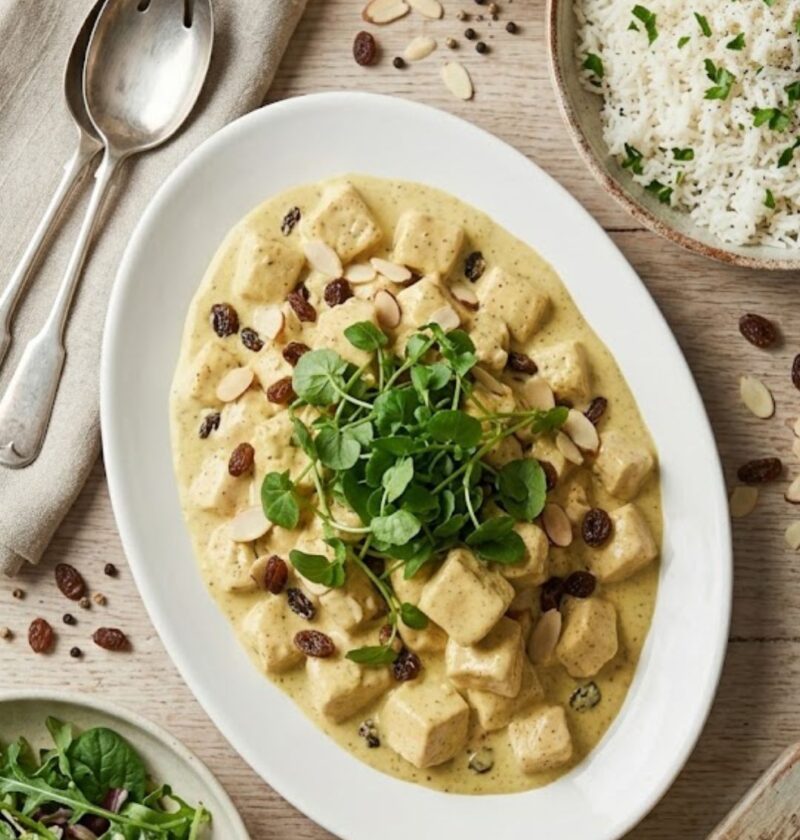
Mary Berry’s coronation chicken is a creamy, mildly spiced chicken salad made with curry paste, red wine, apricot jam, mayonnaise and yogurt, served cold with rice and watercress. The sauce takes about 10 minutes on the hob, then you strain it, cool it and fold in the chicken.
Berry’s version in the Complete Cookbook (2024) stays close to the 1953 original. She cooks the curry paste with spring onions, simmers it in red wine with lemon and tomato purée, then strains the lot before mixing it with mayo and yogurt. In Cooks Up a Feast (2019), she writes that the original recipe “was made with red wine and apricots and took ages to prepare” and calls her version “considerably simpler, but every bit as good.”
The step most people skip is reducing the sauce. Berry simmers the wine mixture down to just 4 tablespoons before straining, which concentrates the flavour without making the dressing thin or watery. That reduction is what gives the sauce its depth.
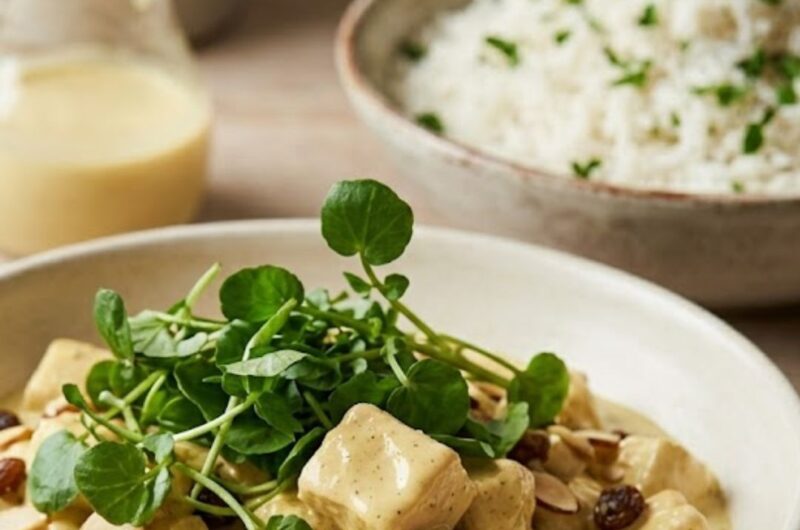
Mary Berry Coronation Chicken Recipe
Course: DinnerCuisine: BritishDifficulty: Easy6
servings15
minutes10
minutes580
kcal1
hour25
minutesFrom Berry’s Complete Cookbook (2024), this is her traditional cooked-sauce method with red wine and curry paste, closer to the 1953 original than her simpler 21st-Century version. The sauce should have “a coating consistency, and be the colour of pale straw.”
Ingredients
1 tbsp sunflower oil
125g (4 oz) spring onions, chopped
4 tsp mild curry paste
150ml (¼ pint) red wine
pared zest and juice of 1 lemon
1 tbsp tomato purée
2 tbsp apricot jam
300ml (½ pint) mayonnaise
150g (5 oz) plain yogurt
salt and freshly ground black pepper
500g (1 lb) cooked chicken, cut into bite-sized pieces
watercress sprigs, to garnish
Directions
- Cook the base: Heat the oil in a small saucepan, add the spring onions, and cook for about 2 minutes until beginning to soften but not colour. Stir in the curry paste, and cook, stirring, for 1 minute.
- Reduce the sauce: Add the red wine, lemon zest and juice, and tomato purée. Simmer, stirring, for 5 minutes or until reduced to 4 tablespoons. Strain into a bowl, cover, and leave to cool.
- Build the dressing: Work the apricot jam through the sieve, then stir it into the curry paste and wine mixture. Add the mayonnaise and yogurt, season with salt and pepper, then stir well to blend evenly. The mixture should have a coating consistency, and be the colour of pale straw.
- Add the chicken: Add the chicken pieces to the mayonnaise mixture, and stir to coat evenly. Garnish with watercress sprigs before serving with boiled rice dressed with chopped flat-leaf parsley.
FAQs
Can I make coronation chicken the day before?
Berry says yes. In Cooks Up a Feast (2019), her prepare ahead note says the dish can be made up to 1 day ahead, and the sauce alone can be made up to 3 days ahead. In Mary Berry at Home, she goes further with her lighter version, saying it “is improved if it is made the day before” because the flavours have time to develop overnight in the fridge.
I’d make the sauce and chicken separately, then combine them the morning you need it. The chicken absorbs the dressing as it sits, so if you mix it too far ahead the coating thins out.
What is the difference between Berry’s three coronation chicken recipes?
Berry has three versions across her books. This one from the Complete Cookbook (2024) is the most traditional, with a cooked sauce using red wine, curry paste and spring onions simmered and strained. It’s the closest to the 1953 original created for the Queen’s coronation.
Her 21st-Century Coronation Chicken in Cooks Up a Feast (2019) is much quicker. She heats apricot jam with curry powder, cools it, then stirs it straight into mayo and crème fraîche with no cooking or straining. She also adds halved black and green grapes, which the traditional version doesn’t have. Her lightest version in Mary Berry at Home drops the curry entirely, using fresh mint, crème fraîche and light mayo instead.
Can I use curry powder instead of curry paste?
Berry uses both across her books. The Complete Cookbook version calls for mild curry paste, while the Cooks Up a Feast version uses curry powder. Paste gives a smoother, more rounded flavour because the spices are already cooked in oil. Powder is sharper and more noticeable.
If swapping, use about 1 tablespoon of curry powder in place of the 4 teaspoons of paste. Heat it in the oil with the spring onions for a full minute so the raw spice flavour cooks out. Either way, Berry keeps the spicing mild so the curry supports the chicken rather than overpowering it.
Why does Berry strain the sauce?
Straining removes the softened spring onion pieces and any lemon zest, leaving a smooth, glossy dressing. Berry then works the apricot jam through the same sieve, which breaks down any lumps and gives the sauce that even, pale straw colour she describes.
I skipped the straining once to save time and the dressing looked grainy with visible onion bits. It tasted the same, but coronation chicken should coat the meat cleanly. The straining takes 30 seconds and makes a real difference to how it looks on the plate.
Is coronation chicken served hot or cold?
Always cold. Berry serves it with watercress and boiled rice in the Complete Cookbook, and with “baby new potatoes and dressed salad” in Cooks Up a Feast. In Cooks Up a Feast she also notes it’s “delicious made with cooked turkey, ideal for a Boxing Day bowl party.”
This is buffet food by design. Berry writes that “no buffet would be complete without coronation chicken” and elsewhere notes she always serves warm new potatoes or jacket potatoes alongside cold buffet dishes.