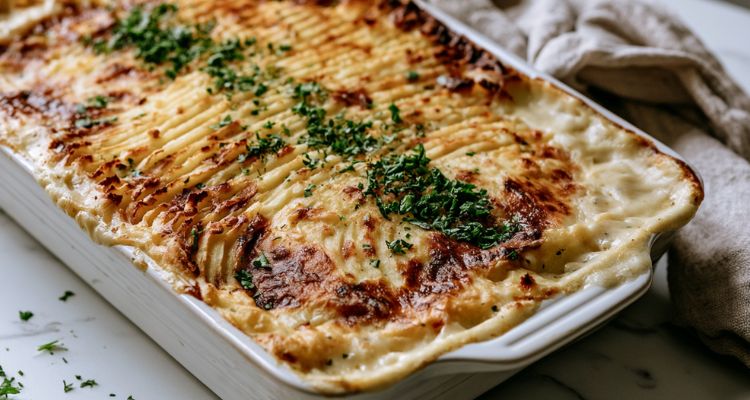
Mary Berry’s Three Fish Pie with Leeks and White Wine combines 750g of salmon, smoked haddock and fresh haddock in a leek and white wine sauce, topped with mashed potato and grated Gruyère. It bakes at 200°C/180°C fan/Gas 6 for 35–40 minutes and serves 6. Total time is about an hour and 15 minutes.
This recipe comes from Mary Berry Cooks (2014), and Berry writes that the leeks and wine make it “a little more sophisticated than traditional versions so you could confidently serve it at a casual supper party.” The white wine goes in cold, whisked into the flour before the milk, which keeps the sauce smooth and gives it a faintly sharp backbone that plain milk sauce never achieves.
The technique that matters here is how Berry introduces the wine. She doesn’t add it to the pan directly. She measures the flour into a bowl, adds the wine, whisks them together until smooth, then adds that mixture to the leek and milk. This prevents the raw flour from catching on the pan and stops the wine from turning the sauce grainy.
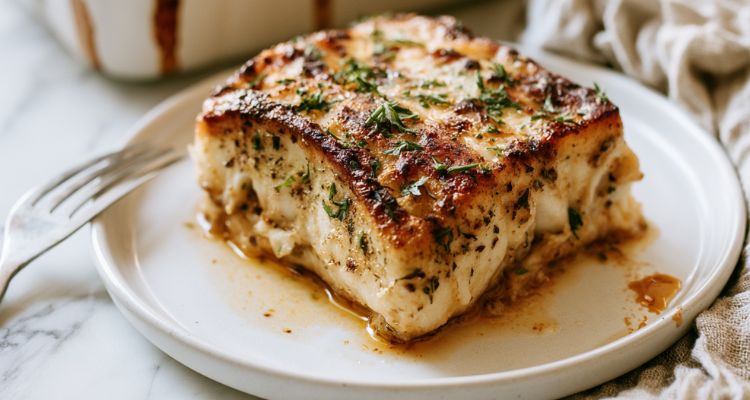
Mary Berry Three Fish Pie with Leeks and White Wine
Course: Main, DinnerCuisine: BritishDifficulty: Easy6
servings30
minutes40
minutes680
kcalFrom Berry’s 2014 supper party chapter, this is the fish pie she’d serve to guests: three fish varieties, leeks softened for a full 10 minutes, a Gruyère crust on top. Scales easily to serve 12 for a crowd.
Ingredients
- For the topping:
1kg (2lb 2oz) potatoes, peeled and cut into large chunks
a knob of butter
a little milk
50g (2oz) Gruyère cheese, grated
salt and freshly ground black pepper
- For the filling:
75g (3oz) butter
2 leeks, sliced
75g (3oz) plain flour
150ml (¼ pint) white wine
600ml (1 pint) milk
2 tablespoons chopped parsley
750g (1¾lb) mixture of salmon, smoked haddock and fresh haddock fillet, skinned and cut into cubes
6 eggs, hard-boiled, peeled and quartered
Directions
- Preheat and make the mash: Set the oven to 200°C/180°C fan/Gas 6. Put the potatoes into a saucepan of cold salted water. Bring to the boil and simmer until completely tender, about 20 minutes. Drain well then mash with the butter and milk. Season with pepper and check the seasoning.
- Soften the leeks: Melt the butter in a saucepan, add the leeks and stir over the heat. Cover with a lid and simmer gently for 10 minutes until soft.
- Make the wine sauce: Measure the flour into a small bowl. Add the wine and whisk together until smooth. Add the milk to the leeks and bring to the boil, then add the wine and flour mixture. Stir briskly until thickened.
- Add the fish and cool: Season the sauce, then add the parsley and fish. Stir over the heat for 2 minutes then spoon into a 2.25 litre (4 pint) ovenproof dish. Scatter over the quartered eggs. Allow to cool until firm.
- Top and bake: Spoon the mashed potato over the fish mixture and mark with a fork. Sprinkle over the Gruyère. Bake for 35–40 minutes until lightly golden on top and bubbling around the edges.
Notes
- Calorie figure calculated from ingredient weights. Fish split equally between salmon (250g), smoked haddock (250g) and fresh haddock (250g). Protein, fat and carb figures are approximate.
FAQs
Why do the leeks need 10 minutes rather than just a quick fry?
Leeks softened for a full 10 minutes under a lid release their moisture slowly and turn completely tender and sweet. A quick 3-minute fry would leave them slightly firm with a raw, grassy edge that doesn’t disappear during baking. Berry covers the pan specifically to trap the steam, which does the softening without any colour on the leeks.
I rushed this step once and the filling tasted noticeably sharp, with leek pieces that were still slightly squeaky against the fish. The 10 minutes matters.
Can I use cider instead of white wine?
Yes. Berry says so in her Wise Words note at the end of the recipe: “You could also make the sauce with cider instead of wine.” A dry still cider works best because sweet or sparkling cider throws the balance of the sauce off. The cider gives a slightly more apple-forward flavour that suits smoked haddock particularly well.
The method stays the same: whisk the cider into the flour in the bowl before adding it to the leek and milk. Don’t pour it straight into the pan or the sauce may turn lumpy.
Why Gruyère on top rather than Cheddar?
Gruyère melts to a thin, golden, slightly nutty crust rather than the thick rubbery layer you can get from Cheddar. Its lower moisture content means it crisps at oven temperature without pooling fat onto the mash below. Berry uses Cheddar in her Salmon and Crayfish Pie, which has a heavier filling, but for this lighter, wine-based sauce the Gruyère keeps things delicate.
50g is enough to cover the surface without overwhelming the fish underneath. If you can’t find Gruyère, a well-aged Comté is a closer match than Cheddar.
What happens if I freeze this with the eggs left in?
Hard-boiled eggs become tough, rubbery, and develop an unpleasant texture when frozen because the protein structure changes permanently at low temperatures. Berry is direct about this: “Whole eggs do not freeze well, so do not add them to a fish pie if you are freezing it.” Egg whites become dense and chewy, egg yolks turn chalky.
If you know you’ll be freezing this pie, simply make the filling without the eggs, freeze it, then add fresh hard-boiled eggs when you assemble and bake the thawed pie.
Can I add prawns to this recipe?
Berry herself suggests it. In her Wise Words she writes: “you can add a few prawns and some mussels too, if you prefer.” She doesn’t specify a quantity, but based on how she proportions seafood in her similar Mary Berry salmon and crayfish pie, 150–200g of cooked peeled prawns added off the heat after thickening the sauce works well. Add them with the fish and stir once, gently, so they don’t break up.
Avoid raw prawns here because they release significant water into the sauce during the 2-minute cooking step, which can thin the filling and make the topping unstable.
What should I serve with this pie?
The pie is filling on its own, so a simple green vegetable is enough. Steamed peas, tenderstem broccoli, or buttered cabbage all work. Berry’s suggestion that you could add spinach or peas directly to the filling is worth noting: if you go that route, squeeze the spinach very well before adding it. Excess water from spinach will thin the sauce and the pie will be too loose to hold a clean portion when cut.
If you’re making this for a dinner party and want a starter that matches the fish theme, a Mary Berry dressed crab on toast is light enough to precede a generous pie like this.