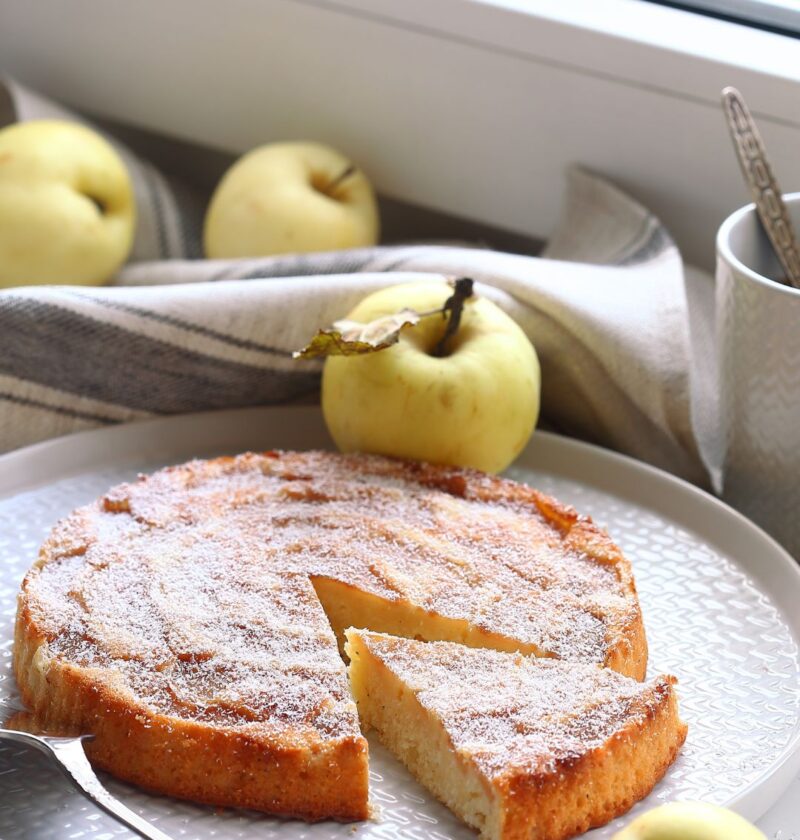
Mary Berry’s upside down apple cake is a golden, caramel-topped sponge made with thinly sliced eating apples, light muscovado sugar and butter, baked at 180°C (160°C fan) for about 45 minutes. Berry’s all-in-one sponge comes together in minutes, then you flip it onto a warmed plate so the sticky toffee apple layer sits on top.
Berry doesn’t have this exact recipe in her books, but it’s built from her tested techniques. The sponge and upside-down method come from her Pineapple Upside-Down Pudding in the Complete Cookbook (2024), while her Eve’s Pudding in Traditional Puddings (2009) proves raw apples bake perfectly under sponge at the same temperature. In Cooks the Perfect (2014), she gives the crucial rule: slice apples thinly, because “if they’re too thick, they won’t soften enough when baked.”
The one thing that will ruin this cake is the wrong apple. Berry warns in Mary Berry Cooks (2014) not to use Bramleys because they collapse when cooked. Cox’s or Braeburn hold their shape and look beautiful once you flip the tin.
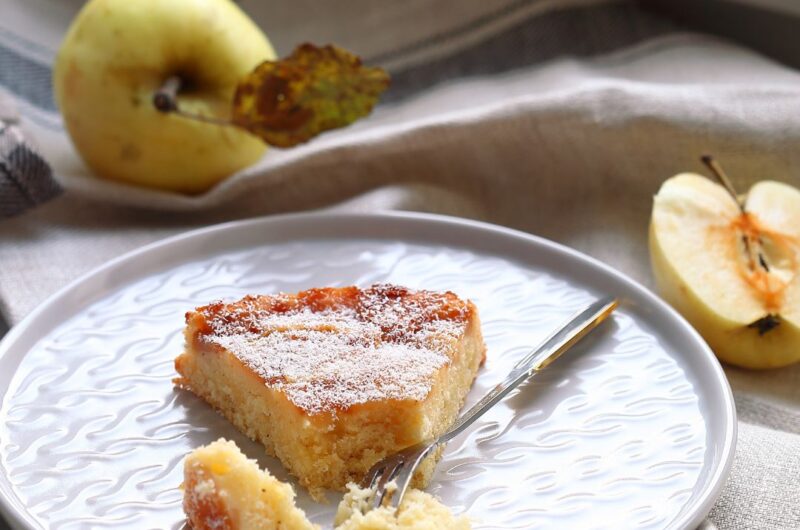
Mary Berry Upside Down Apple Cake Recipe
Course: DessertCuisine: BritishDifficulty: Easy8
servings20
minutes45
minutes380
kcal1
hour10
minutesBuilt from Berry’s Pineapple Upside-Down Pudding method and her Eve’s Pudding apple technique, this warm, caramel-topped cake uses her all-in-one sponge with thinly sliced eating apples on a buttery muscovado base.
Ingredients
- For the apple topping:
60g (2 oz) butter, softened
60g (2 oz) light muscovado sugar
3 medium eating apples (Cox’s or Braeburn), about 400g total
juice of ½ lemon
- For the sponge:
125g (4 oz) butter, softened
125g (4 oz) caster sugar
2 large eggs, beaten
175g (6 oz) self-raising flour
1 tsp baking powder
2 tbsp milk
Directions
- Preheat: Set the oven to 180°C/160°C fan/Gas 4 (350°F). Lightly butter an 18cm (7 in) round cake tin and line the bottom with baking parchment.
- Make the topping: Cream together the 60g butter and muscovado sugar and spread evenly over the baking parchment in the tin.
- Prepare the apples: Peel, core and thinly slice the apples, about 3–5mm thick. Toss in the lemon juice straight away to stop them browning. Arrange the apple slices in a single layer over the butter and sugar mixture, overlapping them neatly in circles from the outside in.
- Make the sponge: Put the butter, caster sugar, eggs, flour, baking powder and milk into a large bowl. Beat for 2 minutes or until smooth and well blended. Spoon the mixture on top of the apple slices and level the surface.
- Bake: Bake for about 45 minutes until the sponge is well risen, golden and springy to the touch. If the top starts to brown too quickly, lay a sheet of foil loosely over the tin for the last 10 minutes.
- Turn out: Leave to cool in the tin for 5 minutes, then run a palette knife around the edge. Place a warmed serving plate over the tin, flip it over confidently and lift the tin away. Peel off the baking parchment. Serve warm with cream or custard.
FAQs
Can I use Bramley apples for this upside down cake?
Berry is clear on this. In Mary Berry Cooks (2014), she writes that Bramleys are “too sharp and also they collapse when cooked.” For an upside down cake you need apples that hold their shape after 45 minutes, because they become the top once you flip it.
Cox’s, Braeburn or similar eating apples soften without falling apart, and their natural sweetness pairs well with the muscovado base. I tested this with Bramleys once and the topping turned to mush.
How do I stop the cake sticking when I turn it out?
Lining the base with baking parchment is the single most important step. Berry lines the base of her Pineapple Upside-Down Pudding tin in the Complete Cookbook (2024), and the same applies here. Without parchment, the caramelised muscovado will take half the topping with it.
Run a palette knife around the edge before flipping, and don’t wait too long. Five minutes of cooling lets the sponge firm up without the caramel setting hard. Berry says to invert onto a warmed plate, which helps the caramel stay liquid.
What is the difference between this and a Tarte Tatin?
Berry’s Tarte Tatin uses pastry, not sponge. Her Classic (2018) version has puff pastry with a caramel base and two types of apple, baked at 220°C/200°C fan for 35–40 minutes. She calls it a “classic ‘upside-down’ French tart” in the Complete Cookbook.
This cake is gentler. The sponge bakes lower at 180°C, the apples sit in muscovado butter rather than hard caramel, and the texture is soft and pudding-like. Tarte Tatin slices neatly for a dinner party. This one is warm, comforting Sunday lunch territory.
How long will this cake keep?
Berry notes her Very Best Apple Dessert Cake in the Christmas Collection (2013) can be made the day before and frozen for up to 3 months. The same applies here, though it’s best served warm on the day.
To make it ahead, cool completely in the tin, cover with cling film and refrigerate for up to 24 hours. Reheat at 160°C/140°C fan for 10–15 minutes before turning out. The caramel loosens again as it warms.
Can I use other fruit instead of apples?
Berry gives two upside-down variations in her books. The original uses canned pineapple rings, and she offers an apricot version using a 400g can of apricot halves with chopped stem ginger.
Pears work well with fresh fruit since they behave like apples under sponge. Berry warns in Foolproof Cooking (2016) that the fruit should lie in a single layer at the bottom, otherwise “the sponge will burn before the fruit is cooked.”
Why does the sponge use baking powder if the flour is self-raising?
Berry uses this combination across her all-in-one sponges. In the Ultimate Cake Book (2003), she explains that baking powder compensates “for the air not being incorporated during the initial creaming stages” when you beat everything together at once.
I skipped the baking powder once and the sponge came out dense under the weight of the apples. Berry’s extra teaspoon makes the difference between a light cake and a flat one.