Mary Berry’s chicken pot pie is a whole chicken poached in stock with carrots, potatoes and peas, covered with shortcrust pastry. The filling sits in a lemon-spiked white sauce. It bakes at 190°C (170°C fan/Gas 5) for 30 minutes and serves 6.
Berry’s headnote in the Complete Cookbook (2024) says “you can vary the vegetables according to season.” Her version stands out because she poaches a whole chicken in stock with the vegetables, then uses that same liquid to build the sauce.
The lemon is the detail most people miss in a pot pie. Berry adds the zest to the poaching liquid and the juice to the finished sauce. That acidity lifts the whole dish and stops the filling tasting heavy or stodgy.
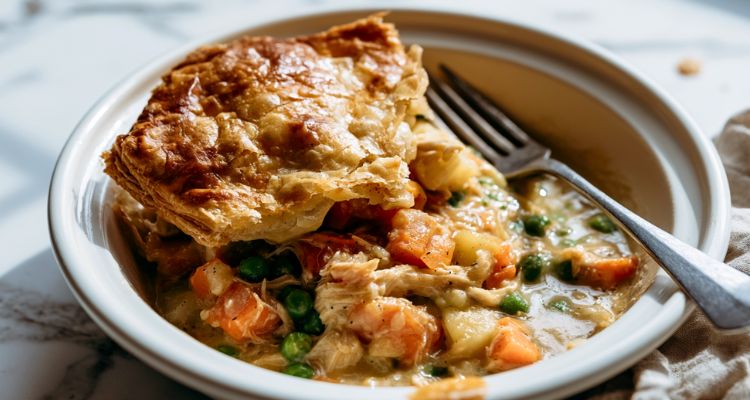
Mary Berry Chicken Pot Pie
Course: DinnerCuisine: BritishDifficulty: Easy6
servings30
minutes1
hour20
minutes508
kcalFrom the Complete Cookbook (2024), a poach-from-scratch pot pie where the chicken and sauce are built from the same stock. Berry gives 508 kcal per serving and notes the filling can be made up to 24 hours ahead.
Ingredients
- For the filling:
1kg (2lb) chicken
1.25 litres (2 pints) chicken stock
1 onion, quartered
1 celery stalk, thickly sliced
pared zest and juice of 1 lemon
2 carrots
2 waxy potatoes, peeled and cut into quarters
45g (1½oz) butter
45g (1½oz) plain flour, plus extra for dusting
salt and black pepper
125g (4oz) frozen peas
- For the pastry top:
175g (6oz) shortcrust pastry
beaten egg yolk, for glazing
Directions
- Put the chicken, stock, onion, celery and lemon zest into a large saucepan. Bring to a boil, cover and simmer for 30 minutes.
- Add the carrots and potatoes, cover and simmer for about 20 minutes or until the vegetables are cooked and the chicken is just tender. Remove the vegetables from the liquid and set aside. Leave the chicken to cool in the liquid.
- Remove the meat from the chicken and cut into bite-sized pieces, discarding the skin and bones. Dice the vegetables.
- Skim the fat from the cooking liquid, then bring 600ml (1 pint) of the liquid to a boil. Melt the butter in another pan, add the flour and cook, stirring occasionally, for 1 minute. Stir in the hot stock, whisking until it comes to a boil and thickens. Add the lemon juice and season with salt and pepper.
- Stir the chicken, diced vegetables and peas into the sauce, then leave to cool. You’ll need a 2-litre (3½-pint) pie dish.
- On a lightly floured work surface, roll out the pastry. Cut out the lid, fill the pie dish and cover with the pastry. Brush with beaten egg yolk.
- Bake in a preheated oven at 190°C (170°C fan/Gas 5) for 30 minutes or until the top is crisp and golden brown. Serve hot.
FAQs
Why does Berry poach a whole chicken instead of using breasts?
Poaching a whole bird in stock extracts far more flavour than cooking individual portions. The bones, skin and cartilage release gelatine into the liquid, which gives the sauce body and a silky texture you can’t get from stock alone.
Berry uses that same poaching liquid as the base for the sauce. She boils 600ml of it down, then thickens it with a butter and flour roux. The result is a sauce that tastes deeply of chicken because it literally is chicken. Using pre-cooked meat and bought stock would give a thinner, less flavoured filling.
Can I use puff pastry instead of shortcrust?
Berry specifies shortcrust here, but her chicken cobbler uses a scone topping on a similar filling, and her Traditional Chicken, Leek, and Mushroom Pie from Cooks Up a Feast uses puff pastry. Any of the three toppings work with this poached chicken base.
Puff pastry rises higher and gives a flakier crust, but it doesn’t seal as tightly as shortcrust. If you swap, increase the oven temperature to 200°C/180°C fan/Gas 6 and check at 25 minutes. Berry writes elsewhere that if pastry browns too fast, cover it loosely with foil.
What does the lemon do in a pot pie?
Berry adds lemon in two stages. The zest goes into the poaching liquid with the whole chicken, infusing the stock as it simmers for 30 minutes. The juice goes into the finished sauce after thickening. Together they cut through the richness of the butter roux.
Without lemon, a pot pie filling made with butter, flour and stock can taste flat and one-note. The acidity lifts everything the same way a squeeze of lemon brightens a risotto. It’s a small addition that Berry includes in several of her chicken pie recipes.
How do I stop the pastry going soggy on the bottom?
Berry avoids this by cooling the filling completely before topping with pastry. Hot filling steams upward and softens the raw pastry from underneath, so the base never crisps. She’s specific about this: step 5 says to leave the filling to cool.
If you’re making the filling a day ahead, it’ll be fridge-cold by the time you top it, which actually helps. The cold filling gives the pastry a head start in the hot oven before moisture can soften it. Berry’s quiche Lorraine uses the same principle: cool filling, hot oven.
How long should I poach the chicken for?
Berry gives 30 minutes for the chicken alone, then another 20 minutes after the carrots and potatoes go in. The total poaching time is 50 minutes. She says the chicken should be “just tender,” which means cooked through but not falling apart.
Overcooking at this stage ruins the filling. The meat goes stringy when you cut it and then bake it for another 30 minutes. Check the thickest part of the thigh with a knife. If the juices run clear and the meat pulls away from the bone easily, it’s ready.
What vegetables can I swap in?
Berry’s headnote invites substitutions. She says to “vary the vegetables according to season and availability.” Leeks, mushrooms and sweetcorn all work well in place of or alongside the carrots and potatoes.
Her paprika chicken uses peppers, and her chicken casserole recipes often include parsnips and celery. The peas should stay because they add colour and sweetness that balances the lemon in the sauce. Root vegetables need to go in with the chicken so they cook through properly.