Mary Berry’s country chicken casserole is bone-in chicken thighs braised with carrots, parsnips, potato and white wine in a single flameproof casserole dish. It cooks at 160°C (140°C fan/Gas 3) for 50 minutes to 1 hour and serves 4.
Berry’s headnote in Cooks the Perfect (2014) says she likes to “serve it with mash to soak up the sauce.” Her three Keys to Perfection notes teach browning, wine reduction and chicken placement. No other casserole in her books gets this treatment.
The step Berry flags as critical is the wine reduction. She says to let it “bubble rapidly over a high heat” until reduced by half. This drives off the alcohol and creates a thick, syrupy base for the sauce.
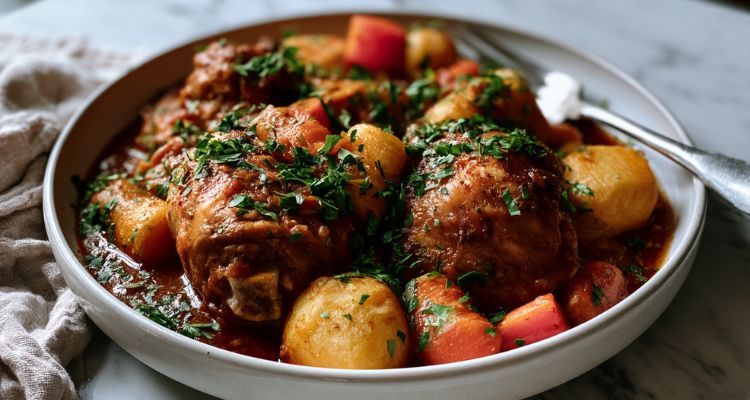
Mary Berry Country Chicken Casserole
Course: DinnerCuisine: BritishDifficulty: Easy4
servings15
minutes1
hour10
minutes438
kcalFrom Cooks the Perfect (2014), a one-pot casserole with three Keys to Perfection teaching notes on browning, wine reduction and chicken placement.
Ingredients
8 bone-in chicken thighs
salt and freshly ground black pepper
2 tbsp olive oil
15g (½oz) butter
1 onion, coarsely chopped
1 celery stick, thinly sliced
3 garlic cloves, finely chopped
2 medium carrots, halved lengthways and cut into chunks just under 1cm (½in) thick
2 medium parsnips, quartered and cut into chunks just under 1cm (½in) thick
1 large potato, about 300g (10oz), peeled and cut into 2.5 to 3cm (1 to 1¼in) cubes
200ml (7fl oz) white wine
1 tbsp Dijon mustard
2 tsp tomato purée
230g can chopped plum tomatoes
250ml (9fl oz) chicken stock
1 tbsp coarsely chopped fresh flat-leaf parsley
Directions
- Preheat the oven to 160°C/140°C fan/Gas 3. Remove the skin and fat from the chicken thighs and season the meat.
- Heat 1 tablespoon of the oil and the butter in a flameproof casserole until hot. Fry the chicken, skinned-side down first, in 2 batches over a medium-high heat until golden brown all over. Transfer to a large plate using a slotted spoon and set aside.
- Pour in the remaining tablespoon of oil. Tip in the onion and celery and fry for 2 to 3 minutes or until the onion starts to soften. Stir in the garlic followed by the carrots, parsnips and potato. Reduce the heat to medium and fry for 4 to 5 minutes, stirring often, until the onion starts to brown.
- Increase the heat and add the wine. Stir and let it bubble for about 2 minutes until reduced by half. Stir in the mustard and tomato purée, then the tomatoes and stock.
- Return the chicken and its juices to the casserole. Bring to the boil, then reduce the heat, cover and simmer for 10 minutes. Season with salt and pepper and transfer the casserole to the oven, covered. Cook for 50 minutes to 1 hour or until the chicken and vegetables are tender.
- Serve sprinkled with the parsley.
FAQs
Why does Berry remove the skin from bone-in thighs?
Berry leaves the bones in for flavour during the long braise, but takes the skin off because it goes flabby in a wet casserole. Bone-in thighs release collagen as they cook, which thickens the sauce naturally and gives it body.
Skinless boneless thighs would work, but the sauce won’t have the same richness. If you use them, reduce the cooking time by 15 minutes and check earlier. Berry’s chicken cobbler uses boneless thighs because the scone topping adds the richness instead.
What does Berry mean by “partially immerse the chicken”?
This is one of her three Keys to Perfection for the recipe. She says to “sit the chicken thighs on top of the vegetables and gently press them down” so they’re about three-quarters in the liquid. The exposed quarter keeps its golden colour from the browning step.
Fully submerging the thighs would wash off the brown crust and make them look pale and boiled. Pressing them three-quarters down means the meat cooks through evenly while the top stays golden. It’s a visual trick as much as a cooking technique.
Can I use red wine instead of white?
Berry uses white wine here but red wine in her Chicken, Red Wine and Garlic Casserole from Foolproof Cooking (2016). Red wine gives a darker, deeper sauce. White keeps the casserole lighter and lets the vegetable colours show through.
If you swap to red, the sauce will taste richer but the parsnips and potatoes will turn an unappealing grey-brown. Stick with white if you want a brighter finish. Berry’s red wine version also uses bacon and mushrooms, which pair better with the bolder wine flavour.
Why reduce the wine before adding the stock?
Berry’s Keys to Perfection note explains this clearly. Reducing the wine “drives off some of the alcohol and concentrates the flavour for the sauce.” Raw wine in a casserole tastes sharp and boozy; reduced wine tastes smooth and rounded.
Two minutes of hard bubbling is all it takes. The wine should go from splashy and thin to thick and syrupy before the stock goes in. Berry uses this technique across her casserole recipes, and her chicken stroganoff follows the same principle of reducing liquid before building the sauce.
What can I serve alongside this casserole?
Berry answers this in her headnote. She says “mash to soak up the sauce,” which makes sense given how flavourful the braising liquid is. The casserole already has potato, carrot and parsnip in it, so you don’t need roast vegetables on the side.
Buttered cabbage or steamed greens work well for colour and freshness. Her cauliflower cheese is another option, though that makes the meal heavier. Crusty bread for mopping up the sauce is the simplest choice and probably what Berry would reach for herself.
How do I know when the casserole is done?
Berry says to cook until “the chicken and vegetables are tender.” Test by pushing a fork into the thickest thigh. It should slide in easily and the meat should come away from the bone without effort.
The vegetables are your other indicator. The parsnips and carrots should be soft all the way through when pierced with a knife. If the sauce looks too thin after cooking, remove the lid for the last 10 minutes to let it reduce on the hob. Berry’s oven temperature of 160°C is low and gentle, so overcooking in the hour is unlikely if you check at 50 minutes.