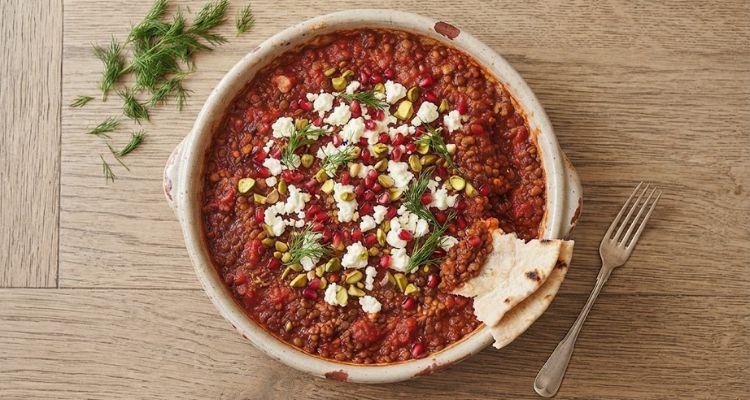
Jamie Oliver’s tomato and feta lentils simmers tinned lentils in a thick sauce of fresh tomatoes and blitzed roasted red peppers with garlic and chilli, then scatters the top with crumbled feta, pomegranate seeds, pistachios and dill. It serves four with warm flatbreads, takes 20 minutes, and comes in at 519 kcal. There’s no meat, no oven and one pan.
The recipe is from Jamie’s 20-Minute Meals (2012). The roasted red peppers from a jar are doing the structural work here: blitzed smooth with their juice, they become a thick, sweet, smoky sauce base in seconds, doing the job of a long-cooked tomato reduction without the time. Fresh tomatoes go in chopped for texture, so you get two tomato notes in one dish.
The topping is where it goes from good to genuinely interesting. Pomegranate seeds, pistachios, feta and dill piled over a warm, spiced lentil stew is Middle Eastern in spirit, and the contrast of cold, sharp, crunchy toppings against the hot, soft, savoury base is what makes each mouthful work. Without them, it’s pleasant. With them, it’s a proper supper.

Jamie Oliver Tomato & Feta Lentils
Course: Lunch, Sides, DinnerCuisine: BritishDifficulty: Easy4
servings10
minutes10
minutes519
kcal20
minutesJamie Oliver’s 20-minute lentil supper from Jamie’s 20-Minute Meals: tinned lentils simmered in a roasted pepper and tomato sauce, topped with feta, pomegranate, pistachios and dill. Vegetarian, one pan, served with warm flatbreads. Serves four.
Ingredients
4 cloves of garlic
1 fresh red chilli
500g ripe tomatoes
1 x 460g jar of roasted red peppers
½ a pomegranate
30g shelled unsalted pistachio nuts
1 bunch of dill (20g)
4 flatbreads
2 x 400g tins of lentils
100g feta cheese
Directions
- Start the sauce:Peel and finely slice the garlic and chilli, then cook in a shallow casserole on medium-high heat with 2 tablespoons of olive oil until soft but not coloured. Chop and add the tomatoes. Blitz the roasted peppers with all their jar juice until smooth, pour into the pan, and cook for 8 minutes until thickened, stirring occasionally.
- Prep the toppings:Meanwhile, bash the pomegranate half cut-side down over a bowl so the seeds fall out. Finely chop the pistachios. Pick and chop the dill. Warm the flatbreads.
- Add the lentils:Drain the lentils, add to the pan with ½ a tablespoon of red wine vinegar, and simmer for a final 5 minutes. Stir through half the pomegranate seeds and half the dill, then season.
- Finish:Scatter over the pistachios and remaining pomegranate seeds, crumble over the feta, sprinkle with the remaining dill. Serve with the warm flatbreads.
FAQs
Why blitz jarred roasted peppers into the sauce?
They’re doing the job of a long reduction in seconds. Jarred roasted red peppers are already cooked, sweet and smoky, and blitzed with their liquid they become a thick, intensely flavoured sauce base that would take 30-40 minutes to build from raw. Oliver pours the whole thing, juice and all, straight into the pan.
The fresh tomatoes go in chopped alongside, adding a brighter, sharper note and a bit of texture against the smooth pepper purée. Between the two, you get a sauce that tastes slow-cooked despite being done in 8 minutes. It’s one of Oliver’s smartest 20-minute shortcuts.
What do the pomegranate seeds actually do?
They add jewel-bright bursts of sharp, fruity crunch against the warm, soft lentils. Half go into the stew to cook for the last 5 minutes, where they soften slightly and release a little juice into the sauce. The other half scatter raw over the top for the cold, crunchy contrast that makes each spoonful interesting.
Bashing the pomegranate half cut-side down over a bowl is Oliver’s quick method: the seeds tumble out without you having to pick them individually. If pomegranate is out of season or unavailable, a squeeze of lemon juice into the stew and a scatter of dried barberries or cranberries over the top approximates the effect.
Is this a proper vegetarian main?
Yes. Two tins of lentils give 21g of protein per serving (book verified), which is substantial for a plant-based meal, and the feta and flatbreads add more. There’s no hidden meat stock or non-vegetarian ingredient. It’s also naturally gluten-free if you swap the flatbreads for rice or a gluten-free wrap.
For a vegan version, leave off the feta or swap it for a crumbly plant-based alternative, and check the flatbreads. The lentil-tomato-pepper base is already vegan, and the pomegranate, pistachio and dill topping carries plenty of flavour and texture on its own.
Can I use dried lentils instead of tinned?
Not in 20 minutes. Dried lentils need 20-30 minutes of simmering on their own before they’re tender, which blows the timeline. Tinned lentils are pre-cooked and only need 5 minutes in the sauce to absorb the flavours, which is why Oliver specifies them for this book.
If you want to cook from dried, use green or brown lentils (red lentils would collapse to mush), simmer them separately until just tender, drain and add to the finished sauce. The dish will taste slightly earthier with home-cooked lentils, which some people prefer. Oliver uses tinned lentils the same way in his pressure cooker bolognese for the same speed reason.
What flatbreads should I use?
Any shop-bought flatbread, naan, pitta or Turkish pide works. Oliver doesn’t specify a type, which means whatever’s in your cupboard is fine. Warm them under the grill, in a dry pan or wrapped in foil in a low oven for a few minutes, since cold flatbread from the packet doesn’t have the same appeal.
If you want to go a step further, brush them with a little olive oil and grill until charred in spots, which adds flavour and makes them sturdier for scooping. The flatbreads are the vehicle for the lentils, so they need to be warm and pliable rather than crisp.
Can I make it ahead?
The lentil base reheats well: cool it, refrigerate for up to 3 days, and warm gently with a splash of water since it thickens as it sits. The vinegar and tomato keep the flavours lively even after a night in the fridge, so it’s a good batch-cook option.
The toppings, though, should go on fresh. Feta crumbled over cold lentils goes dry, pomegranate seeds bleed, and pistachios lose their crunch. Prep them just before serving for that contrast of cold, sharp, crunchy toppings against the hot stew, which is really the whole point. It shares that warm-base, fresh-topping format with his bread and borlotti bean soup, where the mozzarella and sage go on last.