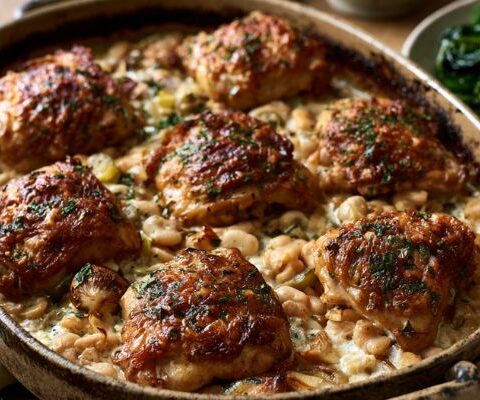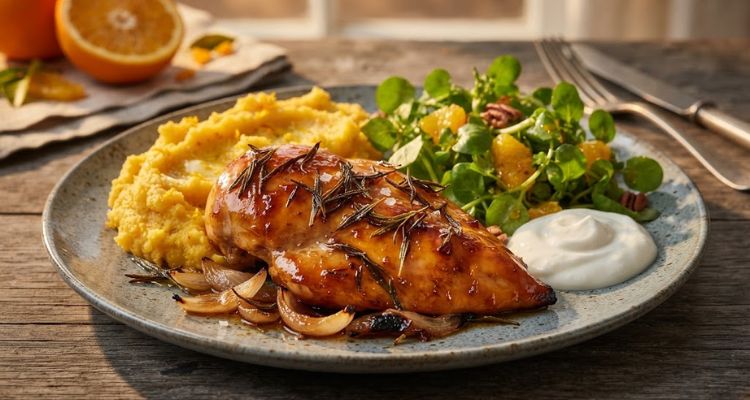
Jamie Oliver’s sticky orange chicken poaches seasoned chicken breasts on a bed of onion petals, then fries them in olive oil with crispy rosemary, orange marmalade and a flambéed brandy glaze, served with microwaved sweet potato mash, dressed watercress and a spoonful of Greek yoghurt. It serves two, takes 20 minutes, and comes in at 572 kcal.
The recipe is from Jamie’s 20-Minute Meals (2012). The clever move is starting with water rather than oil: the chicken and onions poach under a lid for 6 minutes first, which cooks the chicken gently without any colour, then the water cooks away and olive oil goes in to fry everything golden. That two-stage cook gives you tender, juicy chicken with a sticky, caramelised exterior.
The marmalade is the shortcut that makes the glaze work in minutes. A heaped tablespoon of orange marmalade stirred into the hot pan melts instantly into a bitter-sweet, orangey base, which the brandy and fresh orange juice then loosen into a thick, sticky sauce. It replaces a long reduction with a single spoonful from the cupboard.

Jamie Oliver Sticky Orange Chicken
Course: Dinner, LunchCuisine: BritishDifficulty: Easy2
servings7
minutes14
minutes572
kcal20
minutesJamie Oliver’s 20-minute sticky chicken from Jamie’s 20-Minute Meals: chicken breasts poached then fried sticky with marmalade, brandy and fresh orange, served with sweet potato mash, crispy rosemary and dressed watercress. A midweek dinner for two.
Ingredients
500g sweet potatoes
1 onion (160g)
2 x 150g skinless free-range chicken breasts
½ a bunch of rosemary (10g)
2 oranges
1 teaspoon wholegrain mustard
red wine vinegar
extra virgin olive oil
60g watercress
olive oil
1 heaped tablespoon orange marmalade
50ml brandy
2 tablespoons Greek yoghurt
Directions
- Microwave the sweet potatoes:Peel, chop into 3cm chunks, place in a heatproof bowl, loosely cover and microwave on full power (800W) for 7 minutes, or until soft.
- Poach the chicken:Put a large frying pan on medium-high heat. Peel the onion, cut into eighths and break apart into petals, adding them to the pan with 150ml of water. Season the chicken with salt and place on top of the onions. Cover and cook for 6 minutes, shaking occasionally.
- Make the dressing:Strip the rosemary leaves. Halve the oranges. Squeeze the juice of one half into a serving bowl, add the mustard, 1 teaspoon each of red wine vinegar and extra virgin olive oil, mix and season. Pile the watercress on top, ready to dress later.
- Fry and glaze:Uncover the pan and let any excess water cook away, then add 2 tablespoons of olive oil and let everything start to fry. Move the chicken and onions to one side, add the rosemary and fry until crispy, then remove. Stir in the marmalade, add the brandy and carefully flame it if you like. Squeeze in all the remaining orange juice and reduce for 5 minutes on low heat.
- Mash and serve:Mash the sweet potatoes with 1 teaspoon of extra virgin olive oil, season, and divide between plates. Add the sticky chicken and onions, scatter over the crispy rosemary, and serve with the dressed watercress and yoghurt.
FAQs
Why start with water instead of oil?
It’s Oliver’s two-stage trick for getting tender chicken with a sticky crust in one pan. Poaching the breasts on the onion petals in 150ml of water for the first 6 minutes cooks them through gently and evenly without any browning. Then the water evaporates, the oil goes in, and everything fries golden and sticky.
If you started with oil, the outside of the chicken would colour before the inside was cooked, and you’d either have to lower the heat (losing the sticky fry) or risk drying it out. The poach-then-fry sequence solves both problems, and it means you can use skinless breasts, which would normally dry out fast in a hot pan.
What does the marmalade do?
It’s a one-spoonful glaze. Orange marmalade is basically pre-made candied orange peel in sugar syrup, so when it hits the hot pan it melts instantly into a bitter-sweet, caramelised orange coating. It does the job of reducing fresh orange juice and sugar for 20 minutes, but in seconds.
The bitterness from the marmalade’s peel is important: it stops the glaze tasting sugary and one-note, which a spoonful of honey or jam would. That bitter-sweet edge is what makes the sticky coating taste sophisticated rather than cloying. Any thick-cut or fine-cut orange marmalade works.
Do I have to flambé the brandy?
No. Oliver says “carefully flame it, if you like,” making it optional. Flambéing burns off the raw alcohol quickly and adds a caramelised depth, but if you’d rather not have open flames, simply let the brandy bubble hard in the pan for a minute instead, and the alcohol cooks off just the same.
If you skip the brandy entirely, the glaze still works from the marmalade and orange juice, just without that warm, boozy depth. A splash of white wine or apple juice can stand in for volume. The flambé is a nice bit of theatre for a dinner for two, but it’s not essential to the dish.
Can I use chicken thighs instead?
Yes, and they’d be more forgiving. Bone-in thighs need longer in the initial poaching stage, roughly 10 minutes instead of 6, then the same fry and glaze. Boneless thighs cook closer to the same timing as the breasts and stay juicier, since they carry more fat.
The sticky glaze actually suits thighs well: their slightly richer flavour stands up to the sweet-sharp-boozy coating better than lean breast. Adjust your timing but keep the poach-then-fry method, since it works the same way with any cut.
Why microwave the sweet potatoes?
Speed. Boiling sweet potatoes for mash takes 15-20 minutes, which would blow the 20-minute window. Microwaving in chunks for 7 minutes gets them soft and mashable while the chicken cooks, so both components finish at the same time. Oliver uses the microwave throughout his 20-Minute Meals book for exactly this kind of parallel cooking.
If you don’t have a microwave, boil the sweet potato chunks in salted water for 12-15 minutes, but start them before anything else so they’re ready when the chicken is done. Mash with a teaspoon of extra virgin olive oil and season: that’s it.
What should I serve it with if I’m scaling up?
The recipe serves two, and it doubles cleanly for four, though you’ll need a bigger pan so the chicken isn’t crowded. The watercress salad with its orange-mustard dressing and the yoghurt on the side keep everything fresh against the sticky glaze.
For a bigger spread, this chicken sits naturally alongside other quick Oliver dishes: his tomato and feta lentils would work as a warm side, or start with the bread and borlotti bean soup and follow with this as the main. All three are from the same 20-Minute Meals book, and the whole menu takes under an hour.