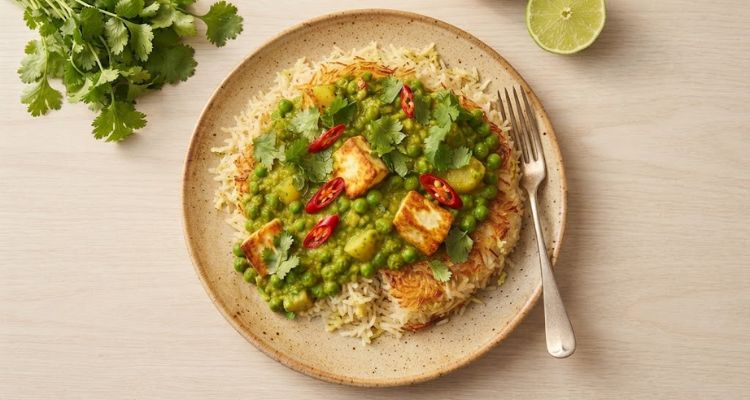
Jamie Oliver’s pea, paneer and potato curry fries golden paneer and chillies, simmers microwaved diced potatoes in Kerala-style curry paste, then stirs through a blitzed sauce of frozen peas, yoghurt and coriander. It serves two over ginger-fried rice with a crispy bottom, takes 20 minutes, and comes in at 865 kcal, a proper filling vegetarian supper.
The recipe is from Jamie’s 20-Minute Meals (2012). The smart move is blitzing half the peas with the yoghurt and coriander into a smooth, bright green sauce that becomes the body of the curry, while the other half go in whole for texture. That blitzed-pea sauce replaces a long-simmered coconut or tomato base with something fresh, vivid and ready in seconds.
The ginger rice is worth paying attention to. You fry the rice and chopped ginger in oil before adding boiling water, then cover and cook for 12 minutes. That initial fry toasts the grains and releases the ginger’s fragrance, and the rice crisps on the bottom of the pan into a golden tahdig-style crust that you turn out onto the plate.

Jamie Oliver Pea Paneer & Potato Curry
Course: Sides, Lunch, DinnerCuisine: BritishDifficulty: Easy2
servings12
minutes8
minutes865
kcal20
minutesJamie Oliver’s 20-minute curry from Jamie’s 20-Minute Meals: golden paneer and microwaved potatoes in a Kerala-spiced, pea-and-yoghurt sauce, served over ginger rice with a crispy bottom. Vegetarian, two pans, serves two.
Ingredients
5cm piece of ginger
150g basmati rice
250g small potatoes
200g paneer cheese
1-2 fresh red chillies
1 onion (160g)
2 heaped tablespoons Kerala-style curry paste
1 bunch of coriander (30g)
250g frozen peas
250g natural yoghurt
Directions
- Start the rice:Roughly peel and finely chop the ginger. Place a 26cm frying pan on medium heat, add the rice, ginger and 1 tablespoon of olive oil and fry for 2 minutes, stirring. Pour in 300ml of boiling water, cover and cook for 12 minutes until fluffy with a crispy bottom.
- Fry the paneer:Meanwhile, prick the potatoes and microwave on full power (800W) for 5 minutes. Heat a large non-stick frying pan on medium with 1 tablespoon of oil and the paneer. Halve and deseed the chillies, add to the pan and cook for 4 minutes until golden, turning halfway.
- Build the curry base:Peel and finely chop the onion. Dice the softened potatoes into 1cm pieces. Remove the golden paneer and chillies to a board, then add the onion, potato, curry paste and 1 tablespoon of red wine vinegar to the pan. Stir for a minute, pour in 300ml of boiling water and simmer for 8 minutes.
- Make the green sauce:Blitz half the coriander (stalks and all), half the peas, all the yoghurt and a splash of water in a blender until smooth.
- Finish the curry:Pour the green sauce over the vegetables, add the remaining whole peas, return the chillies, break in the paneer and simmer for 4 minutes.
- Serve:Turn out the ginger rice, spoon over the curry and sprinkle with the remaining coriander leaves.
FAQs
What is Kerala-style curry paste?
It’s a ready-made spice paste based on the flavours of southern Indian cooking: typically a blend of turmeric, coriander, cumin, fenugreek, curry leaves, mustard seeds and chilli, ground into a paste with oil. Oliver uses 2 heaped tablespoons as the entire spice base, so the paste does the work of measuring out six or seven individual spices.
Patak’s and other brands sell it in most supermarkets. If you can’t find a Kerala-specific paste, a mild or medium curry paste works, though the flavour profile shifts. Korma paste is too sweet, and a Thai paste is wrong entirely. The Kerala-style gives a warm, fragrant, coconut-free curry that suits the pea-and-yoghurt sauce.
Why blitz half the peas into the sauce?
It’s Oliver’s fastest route to a thick, creamy curry sauce without coconut milk or a long reduction. Frozen peas blitzed with yoghurt and coriander become a vivid green, naturally sweet, protein-rich sauce in 30 seconds. The remaining whole peas go in for texture, so every spoonful has both smooth and whole.
The yoghurt brings tang and body, and the coriander stalks (not just leaves) add an earthy depth that raw leaves alone don’t give. It’s a genuinely clever shortcut: you end up with a sauce that looks and tastes like it was carefully built, but it’s one blast in the blender.
How do I get the crispy rice bottom?
Don’t touch it. The rice fries in ginger and oil before the water goes in, which starts the crisping process. Once the water is added and the lid goes on, leave it alone for the full 12 minutes. The bottom layer toasts against the pan into a golden, crunchy crust while the top steams into fluffy grains.
When you turn the rice out onto the plate, that crust should come away in one piece, like an Iranian tahdig or a Korean nurungji. If it sticks, your pan wasn’t oiled enough or the heat was too high. A well-seasoned or non-stick 26cm pan gives the best results.
Can I make it vegan?
Swap the paneer for firm tofu, pressed and cubed, which fries golden the same way. Replace the yoghurt with a plain plant-based yoghurt (soy works best for blitzing into a smooth sauce). The curry paste may contain dairy, so check the label, but most Kerala-style pastes are vegan.
The frozen peas, potatoes, rice and coriander are already plant-based, so the swaps are minimal. The blitzed-pea sauce works just as well with soy yoghurt, though it’s slightly thinner, so you may want to simmer the finished curry a minute longer to thicken.
Is 865 kcal a lot for a serving?
It’s high for two, but this is a complete meal, with rice, potato, paneer and peas all in the bowl, so there’s no side dish adding more. The paneer (200g between two) and the rice are the main calorie drivers, along with the yoghurt and oil. If you want to lighten it, use less paneer or swap half for extra peas.
Oliver’s 20-Minute Meals nutritional data puts it at 40g protein and over 100g carbs per serving, which is filling enough that you shouldn’t need anything alongside. If you’re watching portions, it also scales down well to one.
What other quick Oliver curries or vegetarian dishes work alongside this?
His tomato and feta lentils is the closest in spirit: another 20-minute vegetarian supper from the same book, with a completely different flavour profile (Middle Eastern rather than Indian). The two together make a solid “Jamie Oliver quick vegetarian” pair on the site.
For a meat option in the same speed bracket, his sticky orange chicken takes 20 minutes too and uses the same microwave-then-fry parallel cooking, so the rhythm is familiar even though the dish is completely different. Both are from 20-Minute Meals and both designed for a weeknight table for two.