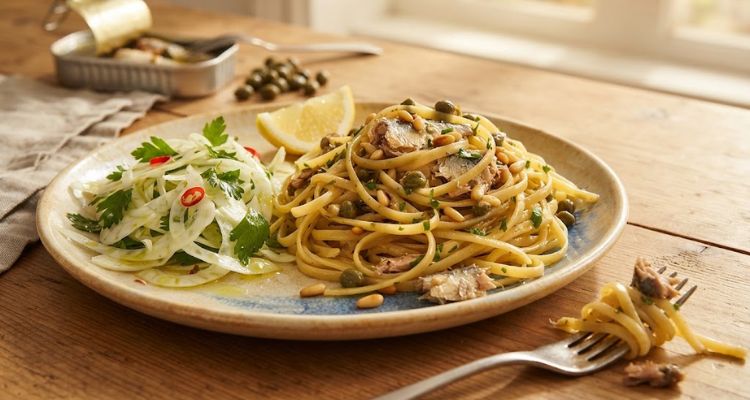
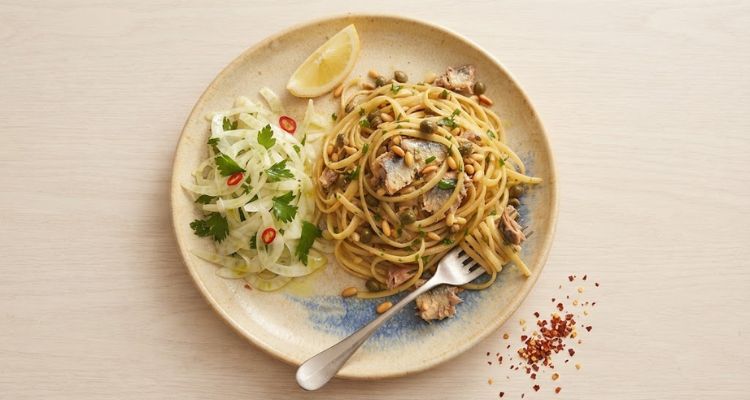
Jamie Oliver’s sardine linguine cooks grated onion, garlic, parsley stalks, chilli and capers in the oil from a tin of sardines, breaks the sardines in with pine nuts, then drags al dente linguine through the pan with enough pasta water to make a silky sauce. Served with a raw fennel, parsley and lemon salad. Two servings, 20 minutes, 584 kcal.
The recipe is from Jamie’s 20-Minute Meals (2012). The whole dish is built on the oil from a single 120g tin of sardines, which is the smartest detail: that oil is already seasoned with fish flavour and salt, so it becomes the cooking fat for the onion base, saving a step and wasting nothing. Every element of the tin goes into the pan.
The fennel salad on the side is doing more than decoration. Speed-peeled into thin shavings, tossed with parsley, chilli and lemon zest, it gives a raw, aniseedy, crunchy counterpoint to the warm, soft, oily pasta. Without it, the dish is all one texture; with it, you alternate between hot and cold, soft and crisp, rich and sharp.
Jamie Oliver Sardine Linguine
Course: Dinner, LunchCuisine: BritishDifficulty: Easy2
servings10
minutes10
minutes584
kcal20
minutesJamie Oliver’s tinned-sardine pasta from Jamie’s 20-Minute Meals: linguine tossed in a sardine, caper and chilli sauce made from the oil in the tin, served with a raw fennel and parsley salad. A storecupboard supper for two.
Ingredients
1 onion (160g)
1 clove of garlic
1 x 120g tin of sardines in olive oil, from sustainable sources
½ a bunch of flat-leaf parsley (15g)
½-1 fresh red chilli
1 tablespoon baby capers in brine
150g dried linguine
1 small bulb of fennel (160g)
1 lemon
2 tablespoons pine nuts
Directions
- Start the base:Boil the kettle. Peel and coarsely grate the onion, peel and finely grate the garlic, and put both in a frying pan on medium-high heat with the oil from the sardine tin. Finely slice and add the parsley stalks, reserving the leaves. Finely slice the chilli, add half to the pan with the capers, a splash of their brine and 100ml of water. Cook for 8 minutes, stirring regularly.
- Cook the pasta:Meanwhile, cook the linguine in boiling salted water for 2 minutes less than the packet instructions, until al dente.
- Make the salad:Use a speed peeler to finely slice the fennel, reserving any herby tops. Toss with the parsley leaves and remaining chilli, and finely grate over the lemon zest.
- Add the sardines:Break the sardines into the onion pan, add the pine nuts and cook on low heat, stirring and giving it some love, until the pasta is ready.
- Combine:Squeeze half the lemon juice over the sardines, then use tongs to drag across the linguine. Feed it with enough cooking water to create a silky sauce, cooking for another 2 minutes until the pasta is perfect. Season.
- Serve:Plate with the fennel salad alongside and lemon wedges for squeezing over.
FAQs
Why use the oil from the sardine tin?
It’s free flavour. The oil the sardines sit in is already infused with fish, salt and seasoning, so using it as the cooking fat for the onion base means every element of the tin goes into the dish. You get a deeper, more savoury foundation than plain olive oil would give, and you waste nothing.
This is a common trick in Italian coastal cooking, where tinned fish (sardines, anchovies, tuna) is a storecupboard staple and the oil is always used, never poured away. Oliver builds the entire sauce on it: the grated onion softens in the sardine oil, the parsley stalks and capers cook in it, and by the time the fish itself breaks in, the base is already rich.
Why grate the onion instead of chopping it?
Speed and texture. Coarsely grating the onion on a box grater turns it to pulp in seconds, and that pulp melts into the sauce as it cooks rather than sitting in distinct pieces. In 8 minutes you get a smooth, sweet, dissolved onion base that would normally take 20 minutes of slow frying from chopped onion.
Oliver uses this trick throughout his 20-Minute Meals: grated onion, grated garlic, grated tomato. It’s the fastest way to get aromatics to disappear into a sauce. The downside is a wet, juicy mess on your grater and board, but the time saving is real.
What if I don’t like sardines?
The method works with any tinned oily fish. A tin of mackerel in olive oil is the closest swap, giving the same rich, oily base and flaking into the pasta the same way. Tinned tuna works too but is drier, so you may need an extra tablespoon of olive oil.
Anchovies are the other classic option for this style of Italian pasta, though they’re stronger and saltier, so use a smaller tin and go easy on the capers. Whatever fish you use, drain and keep the tin oil for the base, since that’s where the flavour starts.
Why cook the pasta 2 minutes short?
Because it finishes cooking in the sauce. Oliver drags the al dente linguine into the sardine pan with tongs and cooks it for another 2 minutes with splashes of starchy pasta water, which does two things: it finishes the pasta to perfect tenderness, and the starch from the water emulsifies with the oil into a silky, coating sauce.
This is the classic Italian technique of finishing pasta in its sauce, and it’s why Oliver tells you to keep the cooking water rather than dumping it. The starch is the free thickener that turns oily fish and pasta water into something glossy. It’s the same approach behind his pressure cooker bolognese, where reserved pasta water loosens the mashed ragù.
What are the pine nuts doing?
Adding a toasted, buttery crunch that offsets the soft sardines and the slippery pasta. They go into the pan with the broken sardines and warm through in the fishy oil, picking up flavour without needing to be toasted separately. Two tablespoons is enough for texture in every bite without overwhelming the fish.
If you have a pine nut allergy or can’t find them, toasted almonds (flaked or roughly chopped) or even toasted breadcrumbs give a similar crunch. Breadcrumbs are the traditional Sicilian alternative to cheese on fish pasta, and Oliver uses them elsewhere for exactly that purpose.
What else from 20-Minute Meals works alongside this?
It’s a complete meal for two as it stands, with the fennel salad built in. If you want a starter, his bread and borlotti bean soup in smaller portions makes a good warm lead-in. For a different quick fish supper from the same book, his zesty salmon tacos take a completely different route with the same speed and storecupboard logic.
For a fully Italian 20-minute menu, start with the pizza fritte as a nibble and follow with this linguine as the main, which is how an Italian meal would flow: fried bread, then pasta, both from the same book.