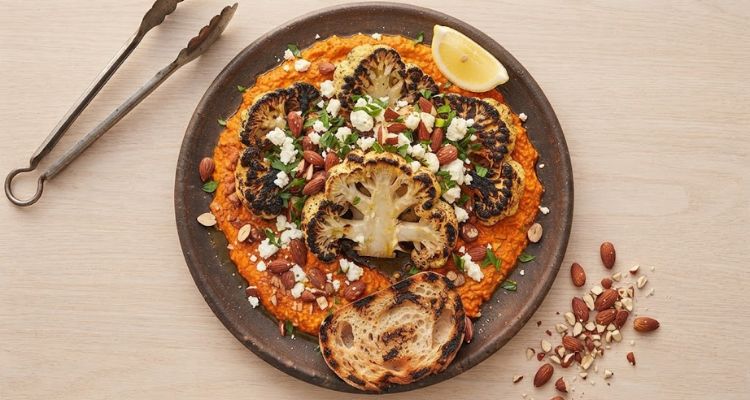
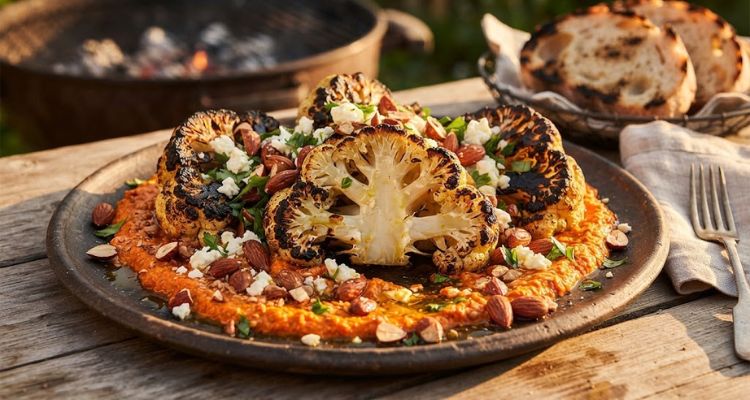
Jamie Oliver’s romesco cauliflower chars thick wedges of cauliflower on a barbecue, then sits them on a blitzed romesco sauce made from grilled tomatoes, roasted red peppers from a jar, charred garlic, toasted sourdough, smoked almonds and smoked paprika. Finished with feta, parsley and extra almonds. It serves four as a vegetarian main at just 270 kcal.
The recipe is from Jamie Oliver’s BBQ book. This is the first Oliver recipe in the set that isn’t from 20-Minute Meals, and it brings a different energy: outdoor cooking, live fire and smoke. The cauliflower, tomatoes, garlic and bread all cook on different zones of the barbecue at the same time, so the grill does the work of an oven, a toaster and a hob in one go.
The romesco is the real star. It’s a Catalan sauce traditionally served with grilled vegetables and fish, and Oliver builds his version from ingredients that are already grilled or roasted: charred tomatoes, jarred roasted peppers, smoked almonds and fire-toasted bread all go into the blender. The smoke from the barbecue runs through every element, so the sauce tastes deeply grilled even though it’s blitzed raw.
Jamie Oliver Romesco Cauliflower
Course: Dinner, LunchCuisine: BritishDifficulty: Easy4
servings15
minutes20
minutes270
kcal35
minutesJamie Oliver’s barbecue romesco cauliflower from his BBQ book: cauliflower wedges charred on the grill, served on a smoky blitzed sauce of grilled tomatoes, roasted peppers, smoked almonds and charred sourdough. Topped with feta and parsley. Vegetarian, 270 kcal, serves four.
Ingredients
1 head of cauliflower (800g), ideally with leaves
olive oil4 cloves of garlic
300g ripe tomatoes
100g sourdough bread
1 x 460g jar of roasted red peppers
25g smoked almonds, plus extra to serve
1 pinch of smoked paprika
extra virgin olive oil
4 sprigs of flat-leaf parsley
30g feta cheese
Directions
- Prep and grill the cauliflower:Light the barbecue with a 50/50 setup (coals on one half, clear on the other). Trim any tatty outer leaves from the cauliflower and chop into eight wedges. Spritz with olive oil and season. Place the wedges and the whole tomatoes on the hot zone, and the unpeeled garlic on the medium zone. Slice the bread and place on the cool zone. Cook with the lid on, vents open, for 10 minutes.
- Turn and finish:Remove the tomatoes, garlic and toast to a board. Turn the cauliflower and cook with the lid on for another 10 minutes, until charred and cooked through, moving to the medium zone if colouring too fast.
- Make the romesco:Pinch off and discard the tomato skins, putting the soft insides into a blender. Squeeze in the garlic, tear in the toast, add the peppers with all their jar juice, the smoked almonds, paprika and 2 tablespoons of extra virgin olive oil. Blitz until smooth and season. Spread across your plates.
- Serve:Sit the charred cauliflower wedges on the sauce. Scatter over roughly chopped parsley, extra almonds and crumbled feta. Finish with a drizzle of extra virgin olive oil. Serve with extra toast for mopping.
FAQs
What is romesco sauce?
It’s a Catalan sauce from northeastern Spain, traditionally made from roasted tomatoes, dried ñora peppers, garlic, bread, almonds and olive oil, pounded in a mortar. It originated as a fishermen’s sauce, served alongside grilled fish and shellfish, and later became the classic partner for grilled spring onions at the calçotada festivals.
Oliver’s version keeps the bones of the original but uses jarred roasted red peppers instead of ñora, smoked almonds for depth, and sourdough charred on the grill. The sauce is thick, smoky, nutty and slightly sweet, and it works under any grilled vegetable or protein.
Can I make it without a barbecue?
Yes. Roast the cauliflower wedges at 220°C/200°C fan for 25-30 minutes until charred at the edges and tender through. Grill the tomatoes and bread under a hot kitchen grill, and roast the garlic in its skin in the oven alongside the cauliflower. The romesco sauce blitzes the same way.
You lose the live-fire smokiness, which is the whole point of Oliver’s BBQ book version, but the smoked almonds and smoked paprika carry a lot of that smoky character into the sauce regardless. A griddle pan can char the cauliflower wedges too, though you’ll need to do them in batches.
What is a 50/50 barbecue setup?
It means piling all your coals into one half of the barbecue and leaving the other half empty, which gives you three heat zones in one grill. The hot zone (directly over coals) sears and chars. The medium zone (the border) gives moderate, direct heat. The cool zone (no coals beneath) cooks gently by indirect heat, like an oven.
Oliver uses this so the cauliflower can char over direct heat while the bread toasts gently on the cool side and the garlic roasts in the middle. It’s the most useful barbecue setup to learn, since it lets you cook multiple things at different speeds on the same grill.
Why use jarred roasted peppers instead of fresh?
They’re already roasted, which saves 20-30 minutes of grilling and peeling fresh peppers. The jar liquid is flavourful too, and it all goes into the blender, thinning the sauce and adding sweetness. Oliver uses the same jarred-pepper shortcut in his tomato and feta lentils, where the blitzed peppers become the sauce base.
Fresh peppers charred on the barbecue, skinned and blitzed, would taste even smokier and slightly more bitter, so if you have the time and the grill space, they’re an upgrade. But the jarred version makes a very good romesco with less effort, which is Oliver’s trade-off throughout his books.
Is this a main course or a side?
At 270 kcal it’s light for a main, but the sauce, feta and extra bread give it substance. Oliver presents it as a vegetarian centrepiece, plated on the spread sauce with the charred wedges as the star. For a bigger appetite, double the cauliflower or serve it alongside another grilled dish.
As a side, it works brilliantly next to grilled lamb, chicken or fish, since romesco is traditionally a sauce for grilled meats and seafood. On a barbecue spread, it pairs naturally with his sardine linguine cooked indoors while the cauliflower grills outside, giving you a vegetable and a fish course from two different Oliver books.
Can I make the romesco ahead?
Yes, and it improves. The sauce keeps covered in the fridge for up to five days, and the flavours deepen as they sit. Bring it to room temperature before serving, since cold romesco is thicker and less vibrant. It also freezes well for up to three months.
Having romesco in the fridge is genuinely useful beyond this dish: spoon it over grilled chicken, spread it on toast, stir it into pasta, or serve it as a dip with crudités. It’s one of those sauces, like pesto or harissa, that earns its jar space many times over.