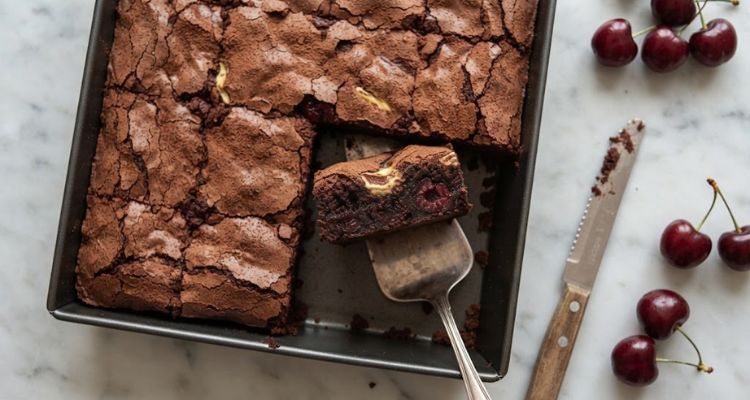
James Martin’s double chocolate cherry brownies fold halved fresh cherries through a rich, dark chocolate batter, then scatter chopped white chocolate and more cherries on top before baking. They use 350g of dark chocolate (minimum 55% cocoa solids) and 150g of white, bake at 170°C (150°C fan, gas 3) for 25-30 minutes, and the recipe makes 12.
The recipe comes from BBC’s James Martin: Home Comforts. The “double chocolate” means dark in the batter and white on the surface, so you get two textures and two flavour notes in every bite: the deep, fudgy dark base and the sweet, creamy white chunks melting into pools on top. Fresh cherry halves cut through both with sharpness and juice.
The doneness test is the one that trips people up with any brownie. Martin’s skewer should come out with “just a little mixture sticking to it”, not clean, not wet with raw batter. That slight stickiness is what gives you a fudgy centre rather than a cakey one. Pull them too early and they collapse; leave them too long and you lose the squidginess.

James Martin Double Chocolate Cherry Brownies
Course: DessertCuisine: BritishDifficulty: Easy12
servings15
minutes30
minutes490
kcal45
minutesJames Martin’s dark-and-white chocolate cherry brownies from BBC’s Home Comforts: a fudgy dark chocolate batter studded with fresh cherries, topped with white chocolate chunks and more fruit, dusted with cocoa. A short ingredient list, no hard-to-find ingredients. Makes 12.
Ingredients
350g/12oz dark chocolate (minimum 55% cocoa solids)
250g/9oz unsalted butter, plus extra for greasing
3 large free-range eggs
250g/9oz dark soft brown sugar
110g/4oz plain flour
1 tsp baking powder
150g/5½oz fresh cherries, halved and stoned
150g/5½oz white chocolate, roughly chopped
1-2 tbsp cocoa powder, for dusting
Directions
- Prepare:Preheat the oven to 170°C/150°C fan/gas 3. Grease the tin with butter and line the base and sides with baking paper.
- Melt the chocolate:Heat the dark chocolate and butter in a saucepan over low heat until just melted and combined, stirring occasionally. Remove from the heat and cool for at least 5 minutes.
- Whisk the eggs:Meanwhile, whisk the eggs with the brown sugar in a large bowl until thick, pale and creamy.
- Combine:Whisk the cooled chocolate mixture into the egg mixture, then gently fold in the flour, baking powder and half the cherries until just combined.
- Top and bake:Spoon into the tin, scatter over the white chocolate and remaining cherries, and bake for 25-30 minutes, until the surface is cracked and a skewer comes out with just a little mixture sticking to it.
- Cool and serve:Leave to cool completely in the tin on a wire rack, then dust with cocoa powder and cut into squares.
Notes
- Note: If fresh cherries are unavailable, use frozen cherries instead. Defrost, drain well and fold in as directed. They’ll be wetter, so you may need a few extra minutes in the oven.
- Tin: 30x23cm/12x9in baking tin.
FAQs
Why two types of chocolate?
Each does a different job. The 350g of dark chocolate melts into the batter with the butter, forming the rich, fudgy base of the brownie, while the white chocolate is scattered in rough chunks on top so it melts into sweet, creamy pools on the surface. You get contrast in both flavour and texture.
Martin specifies at least 55% cocoa solids for the dark chocolate, which gives a properly chocolatey batter without being too bitter. The white chocolate is deliberately sweeter, balancing the dark and pairing with the sharp cherries. Using all dark would make the brownies one-note intense; the white lightens and sweetens them.
Do I need fresh cherries?
Fresh are best, giving that burst of tart juice against the rich chocolate. They’re in season from June to August in Britain, which is the ideal time for these brownies. Halve and stone them carefully, since any stray stones are a bad surprise in a soft brownie.
Martin’s own tip covers the off-season: use frozen cherries instead, defrosted and well drained. They’ll be wetter than fresh, so expect a slightly longer bake time. You could also use jarred Morello cherries, drained, for year-round sharpness. Glacé cherries are too sweet and too firm, so avoid those here.
How do I know when they’re done?
The skewer test is everything. Martin says it should come out with “just a little mixture sticking to it.” That’s the sweet spot for a fudgy brownie: not wet (underbaked, and the centre will collapse as it cools), not clean (overbaked, and you’ve lost the squidgy texture that makes a brownie a brownie).
The surface should be cracked, which is normal and part of the look. Leave them to cool completely in the tin before cutting, since warm brownies fall apart and the fudge centre sets as they cool. Patience here is genuinely the difference between a clean square and a mess, tempting as it is to cut them early.
Can I leave out the baking powder?
It’s unusual in a brownie recipe, and you could make these without it, but Martin includes it deliberately. The teaspoon of baking powder gives the brownies a very slight lift, so they’re fudgy rather than flat and dense, with a thin, papery crust on top that cracks attractively as they bake.
Without it, the brownies will be denser and more truffle-like, which some people prefer, so it’s a texture choice rather than a structural necessity. The eggs and sugar whisked to thick and pale already provide the main aeration; the baking powder is a gentle boost on top of that.
How should I store them?
Cool completely first, then keep in an airtight container at room temperature for up to 3-4 days. The cherries add moisture that keeps the brownies fudgy, but that same moisture means they don’t keep quite as long as a plain brownie would before the surface softens.
They freeze well too: wrap individual squares or the whole slab tightly and freeze for up to a month, then defrost at room temperature. The cocoa dusting is best done just before serving rather than before storing, since it absorbs moisture and goes patchy in a tin.
What makes a good brownie fudgy rather than cakey?
Three things: a high ratio of chocolate and butter to flour, whisking the eggs and sugar to a thick mousse before combining, and not overbaking. Martin’s recipe has 350g chocolate and 250g butter against only 110g flour, which tilts the balance heavily toward fudge. The eggs are whisked until thick and pale, which traps air, but the heavy chocolate mixture keeps it from rising too much.
The gentle fold at the end matters too, since overworking the batter at that point develops gluten and pushes the texture toward cakey. Fold just until the flour disappears and the cherries are distributed, then stop. Between the ratio, the whisking and the restraint, you get that dense, squidgy centre that a brownie should have.