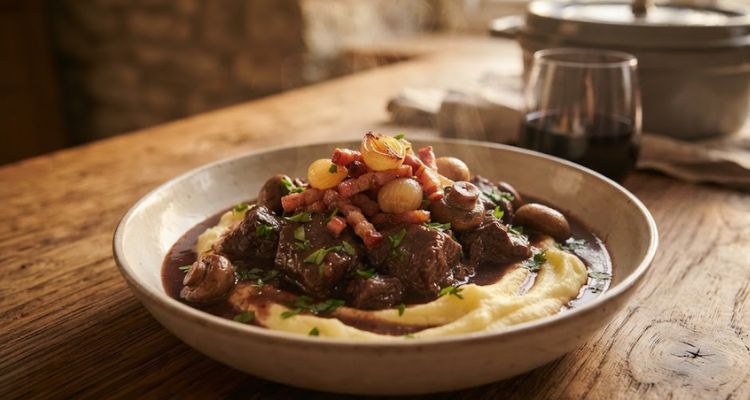
James Martin’s beef bourguignon slow-braises flour-dredged blade of beef in Burgundy with pancetta, brandy and a bouquet garni, then finishes it with baby onions and chestnut mushrooms, served over creamy mash with a bacon and mushroom garnish. The beef browns, gets flambéed in brandy, then braises for two hours until meltingly tender. It serves four and is built to be made ahead.
The recipe comes from his BBC show Christmas Kitchen, and he pitches it as a make-ahead dish to freeze for a hearty meal over the festive period. This is Martin cooking the full classic: he dredges the beef in flour, flambés brandy, ties a proper bouquet garni and adds a separate garnish at the end. It’s notably more traditional than his own stripped-back coq au vin.
The heart of it is layering flavour. Dredging the beef in flour and browning it hard builds a deep, savoury base and thickens the sauce into a glossy gravy, while flambéing the brandy burns off the raw alcohol and leaves a caramelised warmth. Then a long, gentle braise breaks down the tough blade into tender, spoonable beef.
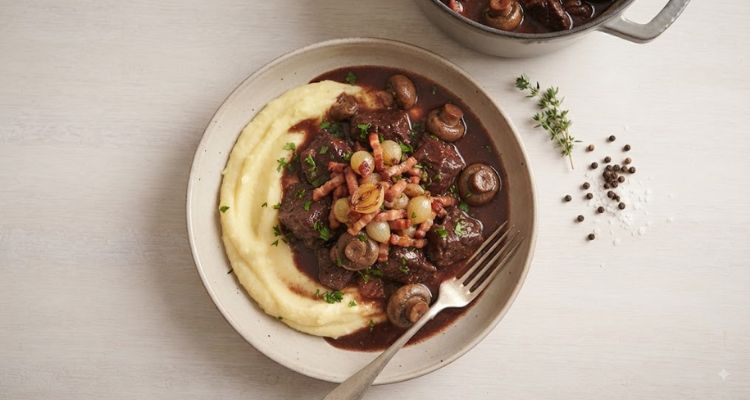
James Martin Beef Bourguignon
Course: Dinner, LunchCuisine: BritishDifficulty: Easy4
servings30
minutes2
hours1485
kcal2
hours30
minutesJames Martin’s classic beef bourguignon from BBC’s Christmas Kitchen: blade beef braised in Burgundy with pancetta, brandy and herbs, served with buttery mash and a bacon-onion-mushroom garnish. A proper make-ahead winter feast, even better the next day. Serves four.
Ingredients
- For the beef bourguignon:
2 tbsp plain flour
salt and freshly ground black pepper
1kg/2lb 4oz blade of beef, cut into large cubes
2 tbsp olive oil
150g/5½oz pancetta, cut into small chunks
2 shallots, finely chopped
1 garlic clove, crushed
50ml/2fl oz brandy
500ml/18fl oz Burgundy red wine, or other red wine
250ml/9fl oz beef stock
1 bouquet garni (2 bay leaves, 2 sprigs thyme, 2 sprigs flatleaf parsley)
25g/1oz butter
150g/5½oz peeled baby shallots (or frozen button onions)
200g/7oz chestnut mushrooms
- For the mash:
1kg/2lb 4oz floury potatoes, peeled and cut into chunks
110g/4oz butter
110ml/4fl oz full-fat milk
- For the garnish:
1 tbsp olive oil
25g/1oz butter
100g/3½oz small pearl onions, peeled (or frozen button onions)
100g/3½oz pancetta, cut into lardons
150g/5½oz button mushrooms, stalks removed, left whole
½ bunch flatleaf parsley, finely chopped
Directions
- Dredge the beef:Season the flour on a plate with salt and pepper, then dredge the beef cubes in it and set aside.
- Brown:Heat 1 tablespoon of the oil in a large lidded frying pan and fry the pancetta for 1-2 minutes until golden. Add the beef and fry for 4-5 minutes until browned all over, then add the shallots and garlic and fry for 4-5 minutes until softened.
- Flambé:Add the brandy and carefully tilt the pan towards the flame, or light it with a match. Let the flames flare and die down. (Keep face and hair clear, and don’t leave it unattended.)
- Braise:Add the red wine and beef stock, bring to a simmer, add the bouquet garni, then cover and cook on low for 2 hours, until the beef is tender and the sauce has thickened.
- Add the onions and mushrooms:Heat the butter and remaining oil in a pan and fry the baby shallots for 4-5 minutes until golden. Add them and the chestnut mushrooms to the beef and cook for a further 20 minutes, then season.
- Make the mash:Boil the potatoes in salted water for 12-15 minutes until tender. Drain, return to the pan and dry over the heat for a minute, then mash well, beat in the butter and milk until smooth, and season.
- Make the garnish:Heat the oil and butter in a small pan. Fry the pearl onions until brown, add the pancetta lardons and fry until crisp, then the button mushrooms until golden. Finish with the parsley and set aside.
- Serve:Divide the mash among plates, spoon the bourguignon alongside and top with the garnish.
FAQs
What cut of beef should I use?
Martin uses blade of beef, a cut from the shoulder that’s ideal for slow braising. Like other braising cuts, it’s full of connective tissue that melts into gelatine over a long, gentle cook, giving you tender, silky meat and a rich sauce. That’s exactly what you want in a bourguignon.
If you can’t get blade, chuck, shin or ordinary braising steak all work the same way. What you should avoid is a lean, tender quick-cook cut like fillet or sirloin, which has no connective tissue to break down and turns dry and stringy over two hours of braising. Cheaper, tougher cuts genuinely give the better result here.
Do I have to flambé the brandy?
Flambéing burns off the raw, harsh alcohol quickly and leaves behind a deeper, slightly caramelised warmth, so it’s worth doing for the flavour. Martin adds the brandy and tilts the pan to the flame, letting it flare and die down, with a clear caution to keep your face and hair away and never leave it unattended.
If open flames make you nervous, you don’t have to light it. Simply add the brandy and let it bubble hard for a minute or so, which cooks off most of the alcohol just as effectively, if a little less dramatically. Either way, don’t skip the brandy itself, since it adds a distinctive depth that plain wine alone doesn’t give.
Does the wine have to be Burgundy?
Burgundy is traditional, and it’s where the dish gets its name (boeuf bourguignon means beef in the Burgundy style), so it’s the classic choice. But Martin’s own recipe says “Burgundy red wine, or other red wine,” so you’re not tied to it.
Use a full-bodied, dry red you’d be happy to drink, since its flavour concentrates as the sauce reduces over two hours. A Pinot Noir (the grape of red Burgundy) is the most authentic, but a Côtes du Rhône or other robust dry red does the job. Avoid sweet or very cheap harsh wines, which throw the sauce out of balance.
How is this different from his coq au vin?
They’re close cousins from the same French tradition of braising meat in red wine, the obvious difference being beef here versus chicken in coq au vin. Both use wine, bacon or pancetta, onions and mushrooms, and both reward slow cooking.
The interesting part is how differently Martin treats them. This bourguignon is the full classic: he dredges the beef in flour, flambés brandy, ties a bouquet garni and builds a separate garnish. His BBC coq au vin, by contrast, is deliberately stripped back, with no flour, no marinade and no flambé, thickened by reduction alone in about 25 minutes. So one is a weekend project and the other a weeknight braise.
Can I make it ahead or freeze it?
Yes, and Martin specifically recommends it. The BBC recipe is written as a make-ahead dish to store in the freezer for the Christmas period, so it’s designed for getting ahead. Like most braises, the flavour deepens overnight, so it often tastes even better the day after cooking.
Freeze the bourguignon itself once cooled, then defrost and reheat gently until piping hot. Make the mash and the garnish fresh on the day, since mash can go grainy after freezing and the garnish is best crisp and just-cooked. That way the make-ahead element does the heavy lifting while the finishing touches stay at their best.
What can I serve it with besides mash?
Martin builds creamy mashed potato into the recipe, and it’s the classic partner, perfect for soaking up the wine-dark sauce. If you want alternatives, buttered tagliatelle or wide noodles are traditional in France, and plain boiled or steamed potatoes work if you’d rather something lighter than a buttery mash.
Crusty bread is never wrong for mopping the sauce, and a celeriac or potato-and-celeriac mash gives a slightly earthier, less heavy base. Add a simple green vegetable like steamed green beans or a sharp green salad alongside to cut through the richness of the dish.