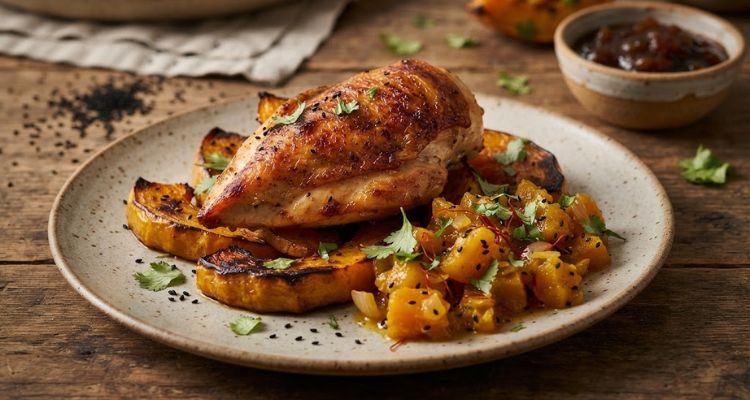
James Martin’s fried chicken breast with pumpkin pickle sears skin-on chicken breasts golden, then finishes them in the oven on a bed of roasted squash wedges, alongside a warm, spiced squash pickle made with fenugreek, nigella seeds, turmeric, ginger and mango chutney. The same squash, two ways, one plate. It serves two.
The recipe comes from BBC’s Home Comforts. Martin’s idea is clever: one squash does double duty. Part is sliced thick and roasted alongside the chicken, becoming a sweet, caramelised base, while the rest is diced small and cooked quickly into a warm, spiced pickle that sits alongside as a condiment. Nothing is wasted and both preparations play off each other.
The pickle is where the flavour really lives. Shallot, garlic and cubed squash cook in butter, then sugar caramelises around them before water, ginger, turmeric, fenugreek, nigella seeds and chilli go in. It finishes with mango chutney stirred through off the heat, making it a quick, warm Indian-style relish rather than a long-kept jar preserve.
James Martin Fried Chicken Breast With Pumpkin Pickle
Course: Dinner, LunchCuisine: BritishDifficulty: Easy2
servings15
minutes25
minutes550
kcal40
minutesJames Martin’s pan-fried chicken and spiced squash pickle from BBC’s Home Comforts: skin-on chicken on roasted squash wedges, with a warm Indian-spiced squash pickle on the side. One squash, two ways. An autumn supper for two.
Ingredients
1 tromboncino squash or butternut squash
2 chicken breasts (preferably French-trimmed), skin on
salt and black pepper
50g/1¾oz butter
1 tbsp olive oil
1 shallot, finely diced
2 garlic cloves, finely sliced
1 tbsp caster sugar
5cm/2in piece fresh root ginger, finely grated
½ tsp ground turmeric
¼ tsp fenugreek seeds
1½ tsp black onion seeds (nigella seeds)
1 red chilli, finely chopped
2 tbsp chopped coriander
2 tbsp mango chutney
Directions
- Prep the squash:Preheat the oven to 200°C/400°F/gas 6. Cut a 6cm piece of squash, peel, and slice into four pieces about 15mm thick. Cut another 300g piece, peel and dice into 1cm cubes.
- Sear the chicken:Season the breasts with salt and pepper. Heat a frying pan, add a knob of butter and the olive oil, then fry the chicken skin-side down for 1-2 minutes each side until golden. Add the squash slices and transfer to the oven for 15 minutes until both are cooked through.
- Start the pickle:Meanwhile, heat a sauté pan, add the remaining butter, and cook the shallot, garlic and diced squash for a couple of minutes.
- Caramelise:Stir in the sugar and cook until it starts to caramelise, then add a few tablespoons of water along with the ginger, turmeric, fenugreek and nigella seeds. Cook for another couple of minutes.
- Finish the pickle:Add 3-4 more tablespoons of water, stir, then add the chilli, coriander and a generous pinch of salt. Take off the heat and stir through the mango chutney.
- Serve:Place two roasted squash slices on each plate, sit a chicken breast on top and spoon the warm pickle alongside.
FAQs
What is tromboncino squash, and does it matter which squash I use?
Tromboncino is a long, pale, Italian climbing squash with a mild, sweet flavour and firm flesh that holds its shape when roasted. It’s increasingly available at farmers’ markets and good greengrocers from late summer, and its shape makes it easy to cut into neat slices for roasting.
Martin offers butternut squash as a direct substitute, which is far more widely available and works just as well. Any firm-fleshed winter squash will do: crown prince, onion squash or kabocha all roast and dice well. Avoid watery summer squashes like courgette, which would collapse in the pickle and go soggy under the chicken.
What are fenugreek seeds and nigella seeds, and can I leave them out?
They’re both whole spices common in Indian cooking. Fenugreek seeds are small, hard, amber-coloured seeds with a slightly bitter, maple-like warmth. Nigella seeds (also called black onion seeds or kalonji) are tiny, black and have a gentle, oniony, slightly peppery flavour. Together they give the pickle its distinctive Indian character.
You could leave either out without the dish failing, but you’d lose the warmth and depth that makes this pickle more interesting than a plain squash side. They’re cheap, last for ages in the cupboard, and crop up in plenty of Martin’s spiced dishes. If you enjoy this warm-spice approach, his butter chicken uses a similar Indian spice palette from the same Home Comforts series.
Why use mango chutney in a pickle?
It’s a shortcut to complexity. Stirring mango chutney through at the end, off the heat, adds sweetness, fruit and a rounded, fermented depth that would otherwise take hours of slow cooking to develop. It binds the spices, sugar and squash together into something that tastes properly made rather than thrown together.
Use a good-quality mango chutney, ideally one with visible pieces of mango and a balance of sweet and sharp. A very cheap, overly sweet one will make the pickle cloying. The chutney also replaces the need for vinegar, which you’d add to a traditional pickle for keeping, since this is a warm, eat-now condiment rather than a preserving-jar job.
What does “French-trimmed” mean for the chicken breast?
It means the breast has a small section of wing bone still attached, trimmed clean of meat and sinew, for a neater, more restaurant-style presentation. Your butcher can do this easily, and some supermarkets sell them ready-trimmed. Martin specifies it as a preference, not a requirement.
An ordinary boneless, skin-on chicken breast works identically. The skin is the important part: it protects the breast from drying out in the pan and oven, and when seared first it crisps into a golden shell. Don’t remove it, since the rendered fat also bastes the squash slices sitting alongside.
Can I make the pickle ahead?
The pickle is a warm condiment designed to be spooned alongside hot, but it actually holds well at room temperature for a few hours and can be gently reheated. The spices mellow and deepen as it sits, so making it an hour or two before serving is no bad thing.
It also keeps in the fridge for a couple of days and works cold as a chutney-like accompaniment to cold chicken, cheese or even a sandwich, though the texture softens as the squash absorbs the liquid. It won’t have the fresh, vibrant look of freshly made, but the flavour is still good.
What else could I serve with the chicken instead of roasted squash?
The roasted squash wedges are deliberately simple, a sweet, caramelised bed for the chicken, but you could swap them for roasted sweet potato, parsnips or even thick slices of celeriac, all of which take to a hot oven the same way and pair with the Indian spicing.
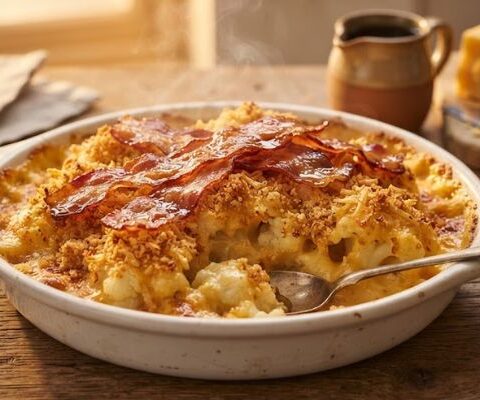
For something lighter, a handful of dressed leaves or some steamed green beans alongside gives contrast without competing. Martin’s maple pancetta cauliflower cheese would be a richer side if you’re feeding more people, or his ultimate macaroni cheese if you want to scale up the comfort factor.