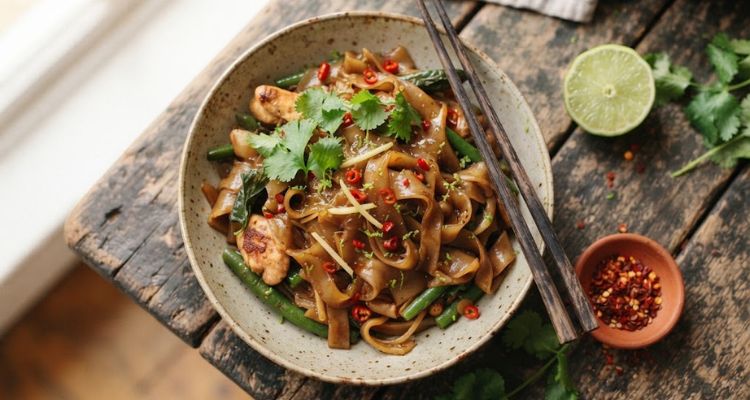
Nigella Lawson’s drunken noodles are a pared-back, searingly hot plate of rice noodles tossed in a ginger, garlic, lime, soy and chilli seasoning. It serves 2 (or one greedy person) in 10 minutes, from her book Simply Nigella.
The usual explanation for the name, she notes, is that Thai drunken noodles have enough chilli to shake you out of even the worst hangover. Her version cuts to the chase: no meat, fish or vegetables, just highly seasoned, searingly hot noodles.
Almost everything comes from the storecupboard, and it’s in front of you in 10 minutes. She warns they really do blow your head off, and offers an escape route: halve the chilli flakes if you want less of a fiery fright, at least to start with.

Nigella Lawson Drunken Noodles
Course: Dinner, Lunch, MainCuisine: BritishDifficulty: Easy2
servings5
minutes5
minutes320
kcal10
minutesNigella’s 10-minute storecupboard noodles from Simply Nigella: rice noodles tossed in a fiery ginger, garlic, lime, soy and chilli seasoning. No meat or veg, just searingly hot noodles. Serves two.
Ingredients
150g dried flat rice noodles (the pad thai sort)
1 x 15ml tablespoon oyster sauce
1 teaspoon toasted sesame oil
2 teaspoons sunflower oil
1 x 3cm piece fresh ginger (peeled and finely grated)
1 clove garlic (peeled and finely grated or minced)
1 lime (preferably unwaxed)
½ teaspoon dried chilli flakes
4 x 15ml tablespoons soy sauce
1 handful chopped fresh coriander
Directions
- Soak the noodles:Soak the rice noodles in hot water for 8 minutes (or per the packet), then drain and refresh under a cold running tap.
- Mix the oyster sauce:Stir 2 tablespoons of cold water into the oyster sauce in a cup and set aside.
- Season the oil:Put both oils in a wok over heat, add the ginger and garlic, grate in the lime zest (a coarse microplane is quickest) and sprinkle in the chilli flakes. Stir well, then tip in the drained noodles and toss quickly in the hot seasoned oil (easier with an implement in each hand).
- Finish:Add the watered-down oyster sauce, the juice of half the lime and the soy sauce. Tip into a bowl (or bowls) and toss with the coriander. Keep the soy and the remaining lime half close at hand as you eat.
Notes
- (the heat): They really blow your head off. For less of a fiery fright, halve the chilli flakes, at least to start with. Nigella, a self-confessed pyrophile, keeps extra chilli flakes to hand.
- (make ahead / store): It’s not advisable to make ahead. Cover and refrigerate leftovers within 2 hours, and eat cold, within 3 days.
FAQs
Why are they called “drunken” noodles?
The usual explanation, as Nigella relays, is that Thai drunken noodles (pad kee mao) are so fiercely chilli-hot that they’ll shake you out of even the worst hangover, hence the “drunken” name. They’re the classic morning-after or late-night dish, the kind of thing you crave when you need something searingly flavourful.
Nigella’s version keeps the fiery heat and the punchy soy-and-lime seasoning but strips out the usual meat, seafood and vegetables. As she says, she’s “cut to the chase”: no meat, fish or veg, just highly seasoned, searingly hot noodles. So it’s a simplified, storecupboard take rather than a full traditional stir-fry.
How hot are they, and can I make them milder?
Properly hot, that’s the whole point, and Nigella warns they “really do blow your head off”. Half a teaspoon of dried chilli flakes in a dish for two, with nothing to buffer it, packs a serious punch. She’s a self-confessed “pyrophile” who even keeps extra chilli flakes on the table.
But she gives a clear way out: halve the chilli flakes if you want less of a fiery fright, “to start with, at least”. So start with a quarter teaspoon if you’re heat-shy and build up. The soy, lime and oyster sauce give savoury-sour depth around the heat, so it’s not just fire, but fire is definitely the headline.
Can I add meat, prawns or vegetables?
You can, though Nigella’s whole idea here was to strip it back to just noodles for a fast, storecupboard fix. If you want a more substantial, traditional drunken noodle, you can absolutely bulk it out: quick-cook sliced chicken, prawns or tofu, and crunchy veg like pepper, mangetout, broccoli or carrot stir-fried before the noodles go in.
Thai basil, if you can find it, is the classic herb for pad kee mao and adds a lovely aniseed note alongside or instead of the coriander. Just keep the seasoning punchy enough to carry the extras. But as a 10-minute solo or quick supper, the plain version is, as Nigella says, hard to beat.
What can I use instead of oyster sauce for a vegetarian version?
Oyster sauce isn’t vegetarian, but it’s easily swapped. Use a vegetarian “mushroom stir-fry sauce” or vegetarian oyster sauce, which give the same savoury, slightly sweet depth, and the rest of the dish is then vegetarian (and vegan, if your noodles contain no egg). A little hoisin or extra soy with a pinch of sugar also stands in at a push.
The soy sauce, ginger, garlic, lime and chilli do most of the flavour work anyway. Check your soy sauce is gluten-free (use tamari) if you need the dish gluten-free. It’s a close, fierier cousin of the quick noodle suppers Nigella loves. There’s more on the Nigella Lawson recipes page.
Why toss with an implement in each hand?
It’s a practical tip Nigella mentions twice, and it genuinely helps. Soaked rice noodles are long, slippery and prone to clumping and sticking, so using two implements, like a pair of pasta forks or tongs, one in each hand, lets you lift and toss them quickly and thoroughly through the hot seasoned oil and sauces, coating every strand evenly.
Working fast matters too, since you’re tossing rather than really cooking (the noodles are already soaked), so everything comes together in a minute or two. Refreshing the drained noodles under cold water first stops them overcooking and sticking while you get the wok going.
Can I make them ahead or eat leftovers?
Nigella advises against making them ahead, since they’re really a cook-and-eat-immediately dish, fast, fresh and at their best straight from the wok while hot and just-tossed. The whole appeal is that they’re ready in 10 minutes, so there’s little reason to prep in advance.
If you do have leftovers, cover and refrigerate them within 2 hours and eat them cold, within 3 days, as a sharp, spicy cold noodle salad, rather than reheating, which can make rice noodles gummy. A fresh squeeze of lime and a little extra coriander perks up cold leftovers nicely.