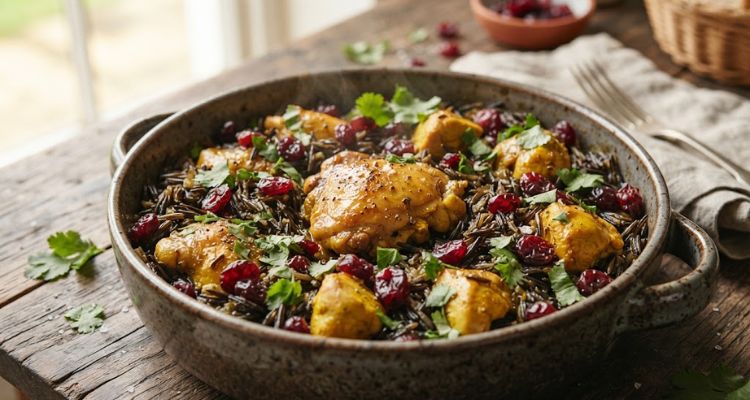
Nigella Lawson’s chicken and wild rice is a warmly spiced one-pot of chicken thighs and wild rice, studded with dried cranberries and cooked in the oven in turmeric-golden stock. It serves 6, from her book Simply Nigella.
She’s cooked a version of it for years, and only on returning to a scribbled note recently realised it’s really a cousin of her squid and orzo dish, the cooking method virtually identical. As she puts it, everything is linked.
The result is dramatic to look at and easy to make. Because wild rice doesn’t absorb all the liquid, this isn’t a dry pilaf but has a scant, rich, runny sauce, with the golden chicken and cranberries set against the blackly gleaming spikes of wild rice.
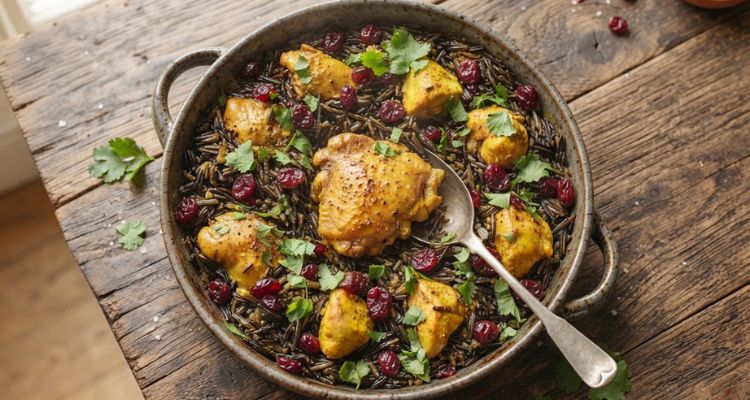
Nigella Lawson Chicken And Wild Rice
Course: Dinner, Lunch, MainCuisine: BritishDifficulty: Easy6
servings15
minutes1
hour30
minutes420
kcal1
hour45
minutesNigella’s dramatic one-pot from Simply Nigella: chicken thighs and wild rice baked with turmeric, cumin, coriander and dried cranberries in a scant, rich sauce. Serves six.
Ingredients
2 x 15ml tablespoons regular olive oil
1 onion (peeled and chopped)
1 clove garlic (peeled and finely grated or minced)
1 teaspoon ground turmeric
2 teaspoons coriander seeds
2 teaspoons cumin seeds
8 skinless, boneless chicken thighs (each chopped into 4 pieces)
225g (1¼ cups) wild rice
60g (½ cup) dried cranberries
1 litre chicken stock
salt and pepper (to taste)
a handful of finely chopped fresh coriander
Directions
- Soften the onion:Preheat the oven to 180°C/160°C fan/350°F. In a wide, flameproof lidded casserole that takes everything snugly, heat the oil and cook the onion over low-to-medium heat for 5 to 10 minutes, until just softened. (Avoid a wooden spoon, as the turmeric’s coming.)
- Spice it:Add the garlic and stir in the turmeric, coriander and cumin seeds.
- Seal the chicken:Turn the heat to high and add the chicken, stirring for 3 minutes until sealed (it won’t colour much).
- Add rice and stock:Stir in the wild rice for 1 minute, then add the cranberries and stock, and bring to the boil. Clamp on the lid, transfer to the oven and cook for 1 hour.
- Finish uncovered:Check the rice is cooked (grains swollen and splitting open but still with bite), season with salt and pepper, and return to the oven, uncovered, for another 15 minutes. It stays saucy, not dry.
- Serve:Stir in half the coriander and sprinkle the rest over the top, either straight from the pan or transferred to a serving dish.
Notes
- (turmeric stains): Avoid a wooden spoon or spatula, as the turmeric will stain it yellow.
- (why it’s saucy): Wild rice (actually a grass, not a rice) doesn’t absorb all the liquid, so this isn’t dry like a regular pilaf but makes a scant, rich, runny sauce.
- (store): Cool leftovers and refrigerate within 2 hours, for up to 3 days. Reheat gently with a splash of water or stock until piping hot.
FAQs
What is wild rice, and can I use ordinary rice?
Wild rice isn’t actually rice at all, but the seed of an aquatic grass, which is why Nigella describes the finished dish as having “blackly gleaming spikes”. It has long, slim, dark grains with a distinctive nutty, slightly chewy texture and an earthy flavour, and it stays with a pleasant bite even when fully cooked.
Crucially, it behaves differently from white rice: it doesn’t soak up all the liquid, which is exactly what gives this dish its scant, rich, runny sauce rather than a dry pilaf. So ordinary rice won’t work the same way here, as it would absorb all the stock and go stodgy. Stick with wild rice (or a wild rice blend, adjusting the time).
Why doesn’t it turn out dry like a pilaf?
Because of that wild rice. Where a normal pilaf absorbs its liquid completely and ends up dry and fluffy, wild rice leaves a good amount of the stock behind, so you get a glossy, scant but genuinely saucy finish. The uncovered final 15 minutes in the oven reduces the liquid a little to a rich sauce without drying it out.
That’s the whole character of the dish, and why Nigella links it to her squid and orzo: the method of toasting the grain briefly then cooking it in stock is virtually identical. Don’t cook it down to dry, since the loose, rich sauce against the chicken and cranberries is the point.
Why seal the chicken if it doesn’t brown?
Turning the heat to high and stirring the chicken for a few minutes “seals” it, firming the surface and starting to cook it, even though Nigella notes it won’t colour much (there’s no searing-brown crust here). It helps the pieces hold together and takes on the flavour of the turmeric, cumin and coriander before the liquid goes in.
The deep golden colour of the finished chicken comes from the turmeric rather than browning, which is also why Nigella warns against using a wooden spoon, as turmeric stains it a stubborn yellow. Chopping each thigh into four gives bite-sized, quick-cooking pieces that stay tender over the hour in the oven.
What do the cranberries and spices add?
The dried cranberries bring little bursts of sweet-sharp fruitiness that cut through the savoury, spiced chicken and rice, as well as jewel-like colour against the dark grains, which is part of what makes the dish so “dramatic-looking”. They’re a lovely sweet counterpoint, much like in a festive pilaf.
The turmeric, cumin and coriander seeds give a warm, earthy, fragrant spicing that’s aromatic rather than hot, and the turmeric gives the golden colour. Together it’s comforting and gently exotic. It sits in the same warmly spiced one-pot family as Nigella’s sweet potato curry. There’s more on the Nigella Lawson recipes page.
What do I serve it with?
It’s a complete one-pot meal, with protein, grain and sauce all together, so it needs little. A simple green salad or some steamed greens freshen it up, and bread or flatbread is good for mopping the rich sauce. A dollop of plain yoghurt adds coolness against the spice.
Nigella often serves it straight from the pan it’s cooked in, scattered with fresh coriander, which suits its dramatic, rustic look. A scatter of toasted pine nuts or flaked almonds adds crunch if you like. It’s a cosy, hands-off supper in the same comforting league as her chicken barley.
Can I make it ahead, store or freeze it?
Yes, it reheats well and the flavours deepen on standing, so it’s a good make-ahead. Keep leftovers in the fridge, cooled and covered within 2 hours of cooking, for up to 3 days, and reheat gently with a splash of water or stock, since it’ll have thickened as the wild rice absorbs a little more liquid.
It can also be frozen for up to 3 months in an airtight container, which makes it a handy batch-cook; defrost overnight in the fridge and reheat the same way. Loosen it with extra stock or water when reheating from chilled or frozen, and add the fresh coriander only when serving so it stays bright.