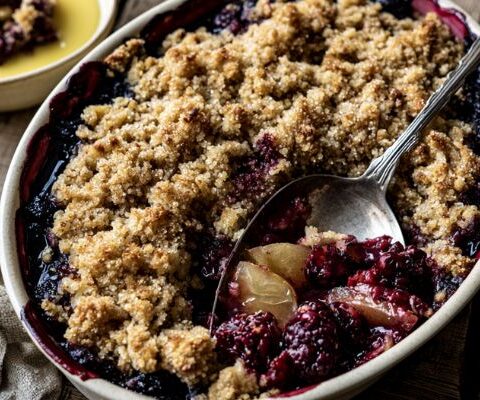
Mary Berry’s apple and blackberry cobbler is a baked pudding of cooking apples and blackberries under a scone topping, served warm with cream. It bakes at 200°C (180°C fan/Gas 6) for 30 to 35 minutes and serves 6.
Berry’s headnote in Foolproof Cooking (2016) calls it “great for using home-grown apples and foraged blackberries.” Her version includes egg in the topping, which gives a richer, more cake-like scone. She also spoons the mixture over in blobs rather than cutting rounds.
Berry’s Foolproof Tip for this recipe matters. She says not to worry about gaps between the blobs, because “the mixture will blend together a bit more once it’s cooked.” Spreading it flat would push the air out and make the topping dense.
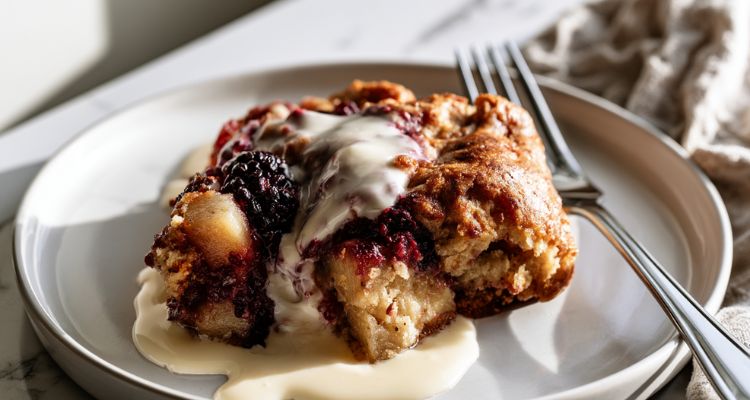
Mary Berry Apple and Blackberry Cobbler
Course: DessertCuisine: BritishDifficulty: Easy6
servings15
minutes35
minutes355
kcalFrom Foolproof Cooking (2016), Berry’s blob-spooned cobbler with egg in the scone dough. A different method from her rolled-and-cut version in the Complete Cookbook.
Ingredients
- For the fruit filling:
1kg (2lb 3oz) cooking apples, peeled, cored and cut into 2cm (¾in) dice
200g (7oz) blackberries
100g (4oz) demerara sugar
icing sugar, for dusting
butter, for greasing
- For the cobbler topping:
150g (5oz) self-raising flour
50g (2oz) cold butter, cubed
50g (2oz) caster sugar
1 egg, beaten
4 tbsp milk
Directions
- Preheat the oven to 200°C/180°C fan/Gas 6. You’ll need a 20cm (8in) round ovenproof dish. Grease the dish with butter.
- Place the apples, blackberries and demerara sugar in the prepared dish and mix together.
- Measure the flour and butter into a food processor and whizz until the mixture is like breadcrumbs. You can also rub the butter into the flour with your fingertips in a mixing bowl. Add the caster sugar, egg and milk and mix until combined. It should be like a wet scone mix.
- Spoon blobs of the cobbler mixture over the fruit in the dish. Leave small gaps between the blobs.
- Bake for 30 to 35 minutes or until golden brown on top and the fruit is soft and bubbling.
- Dust with icing sugar and serve warm with cream.
FAQs
Why does Berry spoon the cobbler in blobs instead of cutting rounds?
Berry has two different methods for this cobbler across her books. In Foolproof Cooking (2016), she spoons the batter in blobs, which creates a rough, rustic topping with golden peaks and soft valleys. Her tip says the gaps fill in during baking, so the finish looks intentional rather than messy.
Her Complete Cookbook (2024) version uses the traditional method. You roll the dough out, cut rounds with a 5cm fluted cutter, and arrange them on top. That version skips the egg entirely, uses more flour (250g vs 150g), and bakes hotter at 220°C. It’s a firmer, biscuit-like scone. The blob method gives a softer, more cake-like result.
Does Berry pre-cook the fruit before baking?
Not in the Foolproof Cooking version. She puts raw diced apple and blackberries straight into the dish with demerara sugar, then tops and bakes. The fruit cooks in its own juice under the cobbler, which keeps the texture chunky rather than mushy.
Her Complete Cookbook version does the opposite. She simmers the fruit on the hob for 10 to 15 minutes first, then transfers it to the dish and tops with scone rounds. Pre-cooking means a shorter bake (15 to 20 minutes vs 30 to 35), but the fruit breaks down more. If you prefer distinct pieces of apple, use the raw fruit method.
Can I use other fruit instead of blackberries?
Berry says in her headnote that “blackcurrants would work well too in place of the blackberries.” Her rhubarb and orange cobbler from Mary Berry Cooks (2014) uses the same scone topping technique with forced rhubarb and orange zest instead.
Raspberries, plums or gooseberries all work with this method. The key is pairing something tart with the sweet scone topping, which is why Berry uses cooking apples rather than eating apples. Bramleys collapse and create a sharp, saucy base that contrasts with the sweet cobbler above.
What’s the difference between a cobbler and a crumble?
A crumble topping is a loose, sandy mixture of flour, butter and sugar rubbed together and scattered over fruit. A cobbler topping is a scone dough, either spooned or cut into rounds. The crumble stays crunchy; the cobbler rises and goes soft inside with a golden crust on top.
Berry has recipes for both across her books, and the method is completely different. A crumble takes 5 minutes to mix; a cobbler needs the butter rubbed in, then liquid added to form a dough. The cobbler is more filling because it’s closer to bread than biscuit. If you want something lighter, her apple crumble is simpler.
Should I use demerara or caster sugar for the fruit?
Berry uses demerara for the fruit and caster for the scone topping, and there’s a reason for each. Demerara has larger crystals that dissolve slowly, so the fruit doesn’t turn syrupy too fast. It also adds a slight toffee flavour that works well against sharp apples.
Caster sugar in the topping dissolves quickly into the dough, giving a smooth, even sweetness. Swapping them would leave gritty patches in the scone and a thin, over-sweet juice around the fruit. Berry’s iced fairy cakes follow the same logic: caster in the sponge, icing sugar for the topping, each chosen for how fast it dissolves.
How do I know when the cobbler is done?
Berry says to bake until “golden brown on top and the fruit is soft and bubbling.” You’ll see juice from the apples and blackberries pushing up between the blobs of topping. The scone itself should be firm when you press the centre gently with your finger.
If the top browns before the fruit finishes cooking, cover loosely with foil for the last 10 minutes. The chicken cobbler uses the same test: golden topping plus bubbling filling around the edges means it’s done. With this fruit version, a knife pushed into the apple should meet no resistance.