Delia Smith’s liver casserole is sliced lambs’ liver layered with onions, carrots, new potatoes and tomatoes, baked in herbed stock at 180°C (350°F/Gas 4). It takes 1½ hours, serves 6, and works as a complete one-pot summer supper.
Smith calls this “a recipe for summer when English lambs’ liver is plentiful,” which tells you the season she intended. New potatoes and new carrots aren’t swaps for convenience. They cook faster and hold their shape in a covered casserole better than older, starchier roots.
Coating each liver slice in seasoned flour before layering is the step that holds everything together. The flour thickens the stock as it bakes, so you don’t end up with watery liquid. Skip it and the casserole won’t develop that clinging sauce.
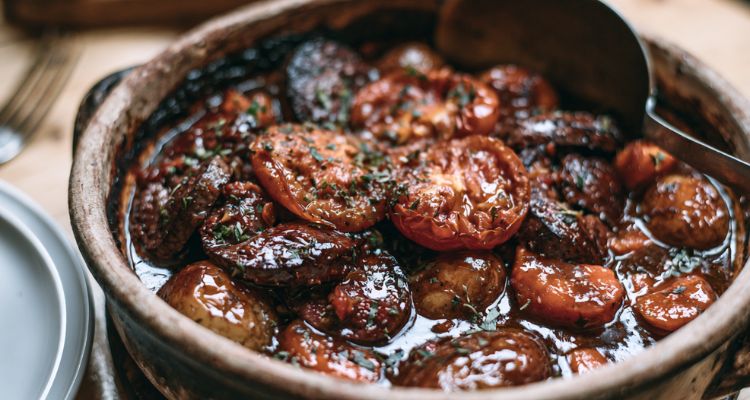
Delia Smith’s Liver Casserole
Course: DinnerCuisine: BritishDifficulty: Easy6
servings20
minutes1
hour30
minutes355
kcal1
hour50
minutesA summer one-pot bake from deliaonline.com where floured lambs’ liver, root vegetables and tomatoes cook slowly together in herbed stock. No browning of the meat is needed: just layer, pour and bake.
Ingredients
570g (1¼ lb) lambs’ liver, cut into 5mm (¼ inch) thick slices
plain flour, seasoned with salt and freshly milled black pepper, for coating
25g (1 oz) butter
1 tablespoon oil
2 medium onions, peeled and thinly sliced
225g (½ lb) new carrots, washed and cut into 2.5cm (1 inch) lengths
900g (2 lb) new potatoes, scraped
450g (1 lb) tomatoes, skinned and sliced
275ml (½ pint) stock
½ level teaspoon dried oregano
1 level tablespoon tomato purée
salt and freshly milled black pepper
Directions
- Preheat: Set the oven to 180°C/350°F/Gas 4.
- Prepare the liver: Dry the liver slices with kitchen paper, then lightly coat the pieces in the seasoned flour.
- Soften the onions: Heat the butter and oil together in a frying pan and soften the sliced onion in it over a low heat for about 10 minutes.
- Layer the casserole: Arrange half the floured liver slices in the base of a deep ovenproof casserole. Cover with a layer of onion, carrots and scraped new potatoes, followed by half the sliced tomatoes.
- Repeat: Add the remaining liver and layer the rest of the vegetables on top, finishing with a layer of tomatoes.
- Add the stock: Combine the stock, oregano and tomato purée together in a jug, season, then pour this into the casserole.
- Bake: Cover closely and bake for about 1½ hours, or until the vegetables are tender.
Notes
- Smith doesn’t specify a flour quantity for coating. Use about 2 tablespoons of plain flour seasoned generously with salt and pepper: enough to dust each slice lightly.
- “Scraped” new potatoes means scrubbed clean, not peeled. The skins are thin enough to eat.
- Use a deep casserole dish with a tight-fitting lid so the steam stays trapped and the liver doesn’t dry out.
FAQs
Can I use a different type of liver?
Lambs’ liver is what Smith specifies because it’s the mildest and most tender option. Calves’ liver would work too, though it’s more expensive and cooks faster because it’s even more delicate. Pig’s liver has a stronger, more metallic flavour that some find too intense for a slow bake like this.
Ox liver is the cheapest, but it’s tougher and needs longer cooking to soften. If you use it, add an extra 30 minutes to the bake time and slice it thinner than 5mm so it breaks down properly.
Why does Smith layer the ingredients instead of browning the liver first?
The layering method means every piece of liver steams inside the casserole rather than frying on the surface. It keeps the liver tender because it never hits a high, direct heat that would tighten the proteins and make it chewy. The seasoned flour does the thickening work that a browning step would normally provide.
It also makes this a genuinely easy midweek recipe. You don’t need to stand at the hob searing meat in batches: just coat, layer, pour and walk away. If you’ve made Smith’s Irish stew with crusted dumplings, you’ll recognise the same low-effort, layered approach.
How do I know when the casserole is done?
Smith says “until the vegetables are tender,” which means the potatoes should slide off a knife when pierced. The carrots should be soft but not collapsing. The stock should have reduced into a thick, glossy sauce that coats the back of a spoon.
If the vegetables are tender but the sauce still looks thin, take the lid off for the final 15 minutes. This lets excess moisture evaporate and concentrates the flavour.
What’s the best way to skin tomatoes for this recipe?
Score a small cross on the base of each tomato with a sharp knife, then drop them into boiling water for 30 seconds. Transfer them straight into cold water, and the skins will peel away easily from the scored cross. Smith uses this technique across many of her recipes because it gives you clean tomato flesh without any papery skin curling in the sauce.
In winter when fresh tomatoes lack flavour, a 400g tin of chopped tomatoes works as a substitute. Drain off some of the liquid first so the casserole doesn’t become too watery.
Can I make this ahead or freeze it?
Smith doesn’t include a preparing ahead or freezing note for this recipe. Liver casseroles generally reheat well the next day because the sauce thickens further as it cools. Store it covered in the fridge and reheat at 160°C (325°F) for 25 to 30 minutes until bubbling.
Freezing is less ideal because liver changes texture after thawing: it can become grainy and slightly dry. If you do freeze it, the vegetables and sauce hold up better than the liver itself. I’d eat it within a month for the best result.
What should I serve with this casserole?
Since Smith designed this as a summer dish and the casserole already contains potatoes, you don’t need extra carbs on the side. A simple green salad or steamed green beans keep things light. Crusty bread is useful for mopping up the herbed stock at the bottom of the dish.
For a heartier winter meal, Smith’s baked lamb with rosemary pairs well thematically if you want a second lamb dish on the table. Plain boiled cabbage or buttered savoy cabbage also works, giving a clean, fresh contrast to the rich sauce.