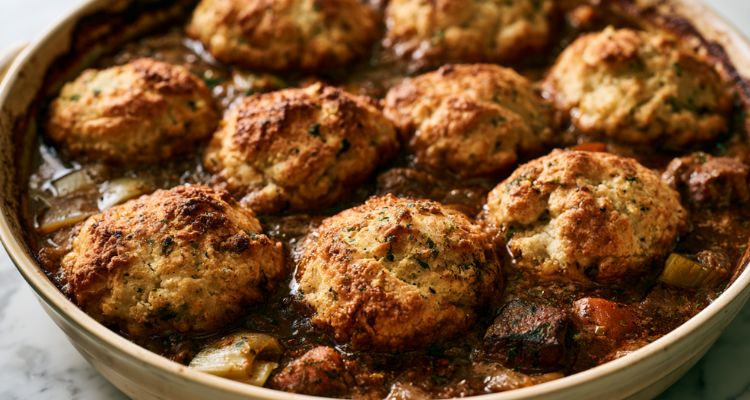
Delia Smith’s Irish stew with crusted dumplings is a layered lamb casserole simmered on the hob for 2 hours, topped with suet dumplings. They bake uncovered at 200°C (Gas 6) for 30 minutes. It serves 4 to 6 using neck fillets and best end cutlets.
The recipe comes from Delia Smith’s Winter Collection (1995). She calls Irish stew “one of the best casserole dishes in the entire world.” Her version stands apart because the dumplings bake without a lid, so they turn crusty on top.
Delia’s dumpling instruction is specific and worth following exactly. She says to mix in the suet but not rub it in. Rubbing creates a short, crumbly pastry texture rather than the light, springy dumpling you need.

Delia Smith Irish Stew With Crusted Dumplings
Course: DinnerCuisine: BritishDifficulty: Easy6
servings25
minutes2
hours30
minutes720
kcal2
hours55
minutesA hearty layered lamb stew topped with parsley suet dumplings that bake to a golden crust. Delia recommends serving it the Irish way, with simple boiled cabbage alongside.
Ingredients
- For the stew:
1.3 kg (3 lb) neck fillets of lamb and best end of neck cutlets, mixed
2 level tablespoons seasoned plain flour
350 g (12 oz) onions, thickly sliced
225 g (8 oz) carrots, cut in chunks
2 medium leeks, washed and sliced
1 large potato (about 275 g / 10 oz), peeled and cut in chunks
1 rounded tablespoon pearl barley
Salt and freshly milled black pepper
- For the dumplings:
175 g (6 oz) self-raising flour
3 level tablespoons chopped fresh parsley
75 g (3 oz) shredded suet
Salt and freshly milled black pepper
- To garnish:
1 level tablespoon chopped fresh parsley
- Equipment
A 6-pint (3.5-litre) flameproof casserole
Directions
- Prepare the meat: Dry the pieces of meat on kitchen paper, trim away any excess fat, cut the fillets into 4 cm (1½ in) rounds, then dip them along with the cutlets into the seasoned flour.
- Layer the stew: Arrange a layer of meat in the base of the casserole, followed by a layer of onion, carrot, leek and potato and a good seasoning of salt and pepper. Then add some more meat and continue layering the ingredients until everything is in.
- Simmer: Sprinkle in the pearl barley and pour in about 1.2 litres (2 pints) of hot water and bring it all up to simmering point. Spoon off any scum that comes to the surface, cover with a well-fitting lid and leave it to simmer over the lowest possible heat for 2 hours.
- Make the dumplings: About 15 minutes before the end of the cooking time, preheat the oven to 200°C/Gas 6 (400°F). Mix the flour and parsley with a seasoning of salt and pepper in a bowl, then mix in but do not rub in the suet. Add just sufficient cold water to make a fairly stiff but elastic dough that leaves the bowl clean. Knead it lightly then shape it into 12 dumplings.
- Bake: When the stew is ready, remove the lid, place the dumplings all over the surface, then transfer the casserole to the highest shelf of the oven without a lid and leave it there for 30 minutes or until the dumplings are golden brown and crusty.
- Serve: Serve the meat surrounding the vegetables and dumplings, with some of the liquid poured over and some in a gravy boat, and sprinkle with chopped fresh parsley.
Notes
- Delia says to serve this the Irish way, with simple boiled cabbage.
- Preheat the oven about 15 minutes before the stew finishes its 2-hour simmer, so the timing overlaps.
FAQs
Why does Delia say to mix in but not rub in the suet?
Rubbing fat into flour coats every grain and creates a crumbly, short texture. That’s great for pastry or a crumble, but it makes dumplings dense and heavy. Mixing the suet in loosely leaves pockets of uncoated fat that melt during baking and create steam inside the dough.
The cold water matters just as much. Delia says to add only enough to make “a fairly stiff but elastic dough that leaves the bowl clean.” I find about 5 to 6 tablespoons does the job, added one at a time.
Can I use lamb shoulder instead of neck fillets and cutlets?
Delia calls for neck fillets and best end cutlets mixed together. Neck has enough connective tissue to break down over 2 hours into something tender. The cutlets add a meatier, leaner bite alongside the softer pieces.
Shoulder works as a substitute, though you’d lose that contrast in texture. Cut it into 4 cm chunks to match Delia’s sizing and trim visible fat. Leg is far too lean for a 2-hour simmer and would dry out before the barley thickens.
What does the pearl barley do in this stew?
Delia adds just one rounded tablespoon, which is a small amount for a stew this size. The pearl barley absorbs liquid as it cooks and releases starch, which thickens the broth naturally without needing a roux or cornflour slurry.
The seasoned flour on the meat works the same way. Delia dips every piece of lamb in it before layering, so the flour dissolves into the liquid and adds body. That’s why she uses only hot water rather than stock, because the lamb and barley build the flavour themselves.
How do I know when the dumplings are done?
Delia says 30 minutes or until golden brown and crusty. They should look like bread rolls on top, with a deep golden crust that feels firm when you tap it. Underneath, where they sit in the stew liquid, they’ll be softer and steamed.
The oven position matters because Delia says the highest shelf, which puts the dumplings close to the top element for maximum browning. The casserole goes in without a lid so steam escapes and the tops dry out enough to crisp. That contrast between the crunchy top and the soft, stew-soaked underside is what makes them special.
Can I make the stew ahead and add the dumplings later?
The stew improves overnight because the lamb fat and juices settle deeper into the vegetables. Simmer it a day ahead, cool it, then refrigerate. Reheat on the hob until bubbling, skim any solidified fat, then add the dumplings before transferring to the oven.
The dumplings need to go on fresh, though. Make the dough just before you bake, because suet dumplings don’t hold well once shaped. For a dinner party, do the stew the day before and the dumplings 15 minutes before the oven goes on.
What can I serve alongside apart from boiled cabbage?
Delia says to serve it the Irish way with simple boiled cabbage, and it’s the right call. Savoy works best because the crinkled leaves hold more gravy than smooth white cabbage. Shred it, boil for 4 to 5 minutes, drain well and toss with a knob of butter and black pepper.
Colcannon is another Irish option, though this stew already has potato so you’d double up on starch. If you enjoy hearty cold-weather cooking, sausage and herb plait is worth trying as a different British savoury main.