Delia Smith’s smoked fish creams are individual baked mousses of blended smoked haddock, eggs and double cream, lined with smoked salmon slices. They bake at 190°C (375°F/Gas 5) for 30 minutes, serve 8 as a starter, and need overnight chilling before baking.
Smith calls these “a delicious first course for a special occasion” in Delia’s Complete Cookery Course. She offers a budget option: skip the smoked salmon lining and the creams still work. The salmon adds a pink shell, but the flavour comes from the haddock.
The overnight rest isn’t optional. Chilling the blended haddock and egg mixture firms the proteins, so the creams hold their shape when you turn them out of the ramekins. Rush it and they’ll collapse on the plate.
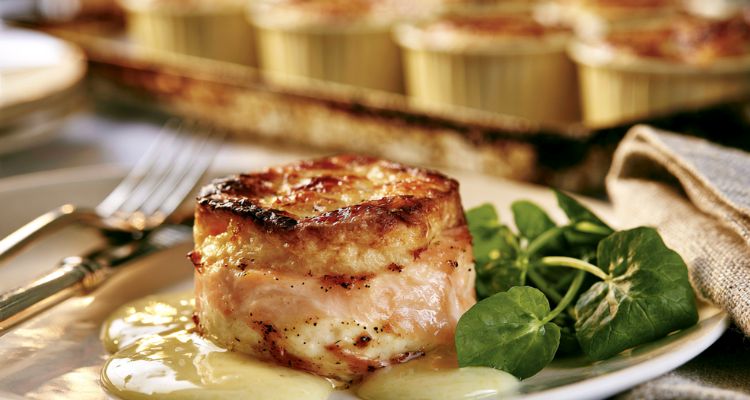
Delia Smith Smoked Fish Creams
Course: DinnerCuisine: BritishDifficulty: Easy8
servings20
minutes30
minutes285
kcal50
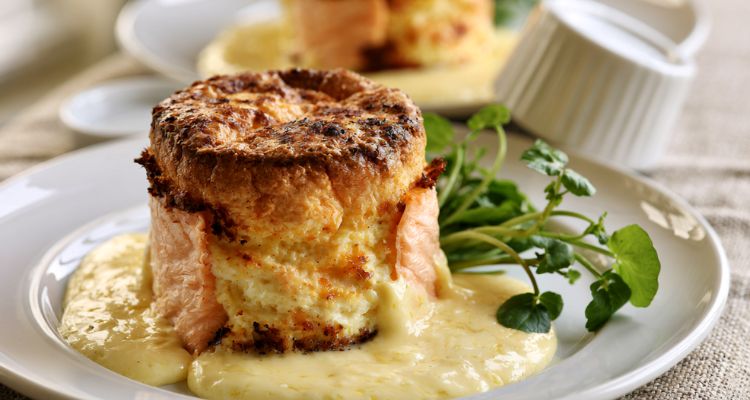
minutesBaked smoked haddock mousses from Delia’s Complete Cookery Course, turned out from ramekins to reveal a smoked salmon shell. Smith suggests serving them with watercress and her Foaming Hollandaise Sauce.
Ingredients
275g (10 oz) smoked haddock fillets (about 225g/8 oz after skinning)
2 eggs, lightly beaten
275ml (10 fl oz) double cream
225g to 300g (8 to 10 oz) smoked salmon slices
freshly grated nutmeg
salt and freshly milled black pepper
Directions
- Skin and blend the haddock: Carefully skin the haddock fillets. Cut the flesh into pieces about 4cm (1½ inches) square and place them in a blender or food processor with the eggs, a little salt, freshly milled black pepper and a good grating of nutmeg. Blend until smooth and even.
- Chill overnight: Transfer the mixture to a bowl, cover and leave in the fridge overnight.
- Line the ramekins: Next day, line the base and sides of each buttered ramekin with smoked salmon. Don’t worry about doing this in pieces and patches: it won’t show when they’re turned out.
- Add the cream: Return the fish mixture to the blender or processor with the cream and blend thoroughly. Divide equally between the ramekins, cover and chill until needed.
- Bake: Preheat the oven to 190°C/375°F/Gas 5. Place a large roasting tin with about 2.5cm (1 inch) of boiling water on the centre shelf. Set the ramekins in the tin and cook for 30 minutes until the tops puff up and become browned.
- Turn out and serve: Have warmed plates ready. Turn out each cream by holding the ramekin with a cloth, flipping it quickly on to your hand, then on to the plate. Garnish with watercress and pour Hollandaise around each one.
Notes
- You’ll need 8 ramekins, 4cm deep with a 7.5cm base diameter, well buttered.
- Smith says the smoked salmon lining is optional if your budget is tight. The creams taste the same without it.
- The bain-marie (roasting tin of boiling water) is essential. It creates gentle, even heat so the creams set without cracking or drying out.
FAQs
Why does the fish mixture need to chill overnight?
The eggs and haddock need time to bond. Blending breaks the fish proteins into fine strands, and overnight chilling lets those strands knit together with the egg into a firm, stable base. When you add the cream the next day, the mixture holds its structure during baking.
If you skip the overnight rest, the creams will still cook through but they’re more likely to collapse when you turn them out. I’ve tested a 4-hour chill and it works at a push, but the texture isn’t as smooth or as stable on the plate.
Can I use a different smoked fish?
Smoked haddock gives these creams their backbone: it’s firm enough to blend into a dense mousse that sets properly in the oven. Hot-smoked salmon would be too soft and oily, and the texture would turn greasy rather than light. Smoked trout could work, though it’s milder and you’d lose that deep smoky flavour.
For a richer version, Mary Berry’s smoked haddock mousse uses soft cheese and mayonnaise instead of cream and eggs. It’s a cold mousse rather than a baked one, so it’s a different dish entirely, but worth comparing if you’re planning a fish starter.
What is the bain-marie doing and can I skip it?
The bain-marie surrounds the ramekins with hot water, which keeps the temperature gentle and even. Without it, the direct oven heat would cook the edges of the creams faster than the centres. You’d get a rubbery outside and a raw middle.
Don’t skip it. Use a deep roasting tin and pour in enough boiling water to come about halfway up the sides of the ramekins. The water also creates steam inside the oven, which stops the tops from cracking as they puff up.
How do I turn them out without breaking them?
Smith’s method is quick: hold the ramekin with a cloth, flip it upside down on to your hand, then on to a warmed plate. The key word is “quickly.” Hesitation lets the cream stick to one side and it comes out lopsided.
Run a thin knife around the inside edge of each ramekin before turning out. The butter should release them cleanly, but the knife gives you extra insurance against sticking. Warming the plates first also helps because a cold plate can make the Hollandaise congeal on contact.
Do I have to make Hollandaise to go with this?
Smith suggests her Foaming Hollandaise, but it’s a separate recipe and adds another layer of effort. The creams are rich enough on their own: smoked haddock, double cream, eggs and smoked salmon is already a lot of flavour. A simple squeeze of lemon juice and the watercress garnish are enough.
If you do make Hollandaise, pour it around the turned-out creams rather than over them. The puffed, browned top is half the visual appeal and you don’t want to hide it under sauce.
Can I prepare these fully in advance?
Smith’s method is already designed for entertaining. You blend and chill overnight, then line with salmon and add cream the next morning. The filled ramekins sit happily in the fridge until you’re ready to bake, so you can do all the prep before your guests arrive.
The 30-minute bake is the only part that can’t be done ahead. These are baked soufflé-style starters that need to go straight from oven to plate. They deflate as they cool, so serve them the moment they come out.