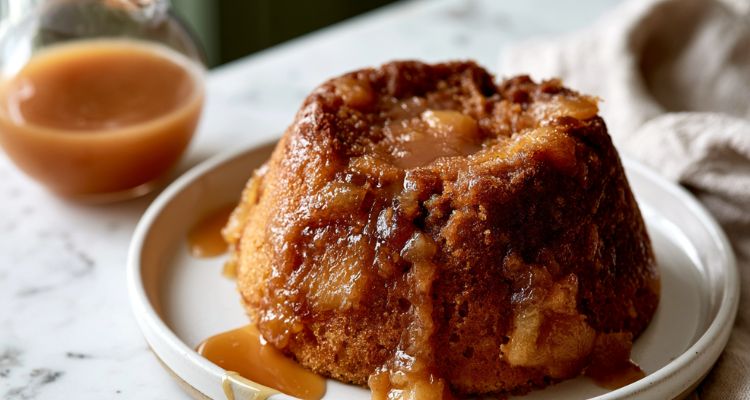
Mary Berry’s toffee apple steamed pudding is a buttery sponge steamed over muscovado toffee sauce and chopped dessert apples. It cooks in a 1-litre pudding basin for 1½ hours, using 200g each of butter and light muscovado sugar for the sauce.
In Mary Berry at Home, she notes the mixture “will also fill six timbale moulds or ramekins, baked for 35 minutes.” That turns a weekend pudding into a midweek option. The ramekin route gives you individual portions straight from the oven.
Half the toffee sauce goes into the basin under the sponge, and the rest is served warm alongside. The sauce in the basin caramelises against the apples during steaming. It tastes different from the poured sauce, so both halves do different jobs.
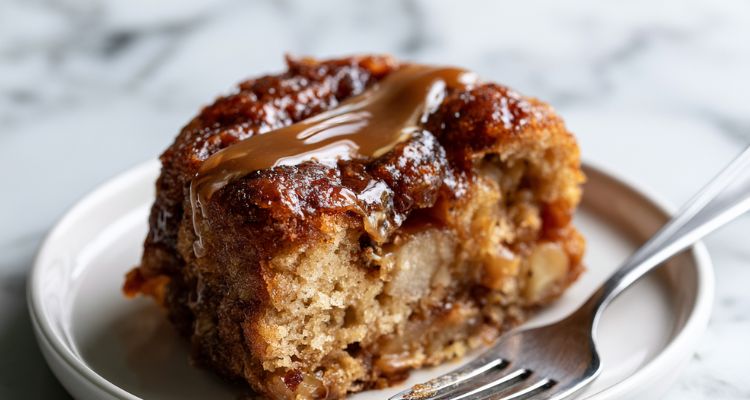
Mary Berry Toffee Apple Steamed Pudding
Course: DessertCuisine: BritishDifficulty: Easy6-8
servings20
minutes1
hour30
minutes500
kcalA steamed pudding from Mary Berry at Home, where a muscovado toffee sauce and chopped dessert apples sit beneath an all-in-one sponge. Berry gives a ramekin variation for quicker individual servings.
Ingredients
- For the toffee sauce:
200g (7 oz) butter
200g (7 oz) light muscovado sugar
Juice of ½ a lemon
2 dessert apples, peeled, cored and cut into tiny pieces
- For the sponge:
100g (4 oz) butter, softened
50g (2 oz) light muscovado sugar
1 tablespoon golden syrup
2 eggs
150g (5 oz) self-raising flour
1 teaspoon baking powder
Directions
- Grease a 1-litre (2-pint) pudding basin.
- To make the toffee sauce, melt the butter and sugar together in a saucepan until the sugar is melted and combined. Add the lemon juice and remove from the heat.
- Pour half of the mixture into the pudding basin and reserve the remaining sauce to serve separately. Add the chopped apple to the basin.
- Measure the cake ingredients into a bowl and whisk together until just blended. Spoon into the basin.
- Take a square of foil a little bigger than the top of the basin, fold a pleat down the centre and grease the underside. Sit on top of the bowl, seal around the edges or tie with string to hold in place.
- Place a metal cookie cutter or enamel side plate in the base of a deep saucepan and sit the basin on top. Fill up halfway with boiling water, cover and bring to the boil on the hob. Once boiling, lower the temperature and simmer for 1½ hours until well risen and firm to the touch.
- Remove the foil, place the pudding on to a lipped dish or plate and remove the basin. Cut into wedges and serve with the remaining warm toffee sauce.
FAQs
Why does Berry split the toffee sauce in half?
The sauce that goes into the basin before steaming behaves differently from the sauce you pour at the table. During 90 minutes of steam, the base sauce caramelises around the apple pieces, thickening into a sticky glaze that clings to each slice. The reserved sauce stays loose and pourable because it’s only reheated briefly.
If you put all the sauce in the basin, you’d lose that contrast between the set toffee layer and the warm pour. Berry’s split gives you two textures from one recipe, which is the kind of detail that separates her puddings from a generic steamed sponge.
Can I use cooking apples instead of dessert apples?
Berry specifies dessert apples here, not Bramleys. Dessert apples hold their shape during steaming and add sweetness to balance the muscovado. Cooking apples would collapse into purée after 1½ hours, which changes the texture of the base layer entirely.
If you prefer a sharper apple flavour, Braeburns or Cox’s work well because they’re firm enough to hold up. Berry uses Bramleys in her Spiced Dorset Apple Traybake where the bake time is shorter and she wants the fruit to soften, so her apple choice always matches the cooking method.
What is the foil pleat for?
The pleat across the centre of the foil lid allows the sponge to expand as it rises during steaming. Without it, the foil pulls tight against the rising batter and either restricts the sponge or pops off from the pressure. Berry’s instruction to “fold a pleat down the centre and grease the underside” solves both problems.
Greasing the underside stops the sponge from sticking to the foil as it pushes upward. I use a little butter rather than oil because it stays put better on the foil surface. String is more reliable than crimping for a secure seal, especially on older pudding basins where the rim isn’t perfectly even.
How do I know when the pudding is done?
Berry says “well risen and firm to the touch” which means the sponge has pushed up above the rim of the basin. It should feel springy, not wet, when you press the centre. If the middle still feels soft or damp, give it another 15 minutes with the lid back on.
The water level matters too. Check it every 30 minutes and top up with boiling water from the kettle if it drops below the halfway mark. Cold water added to a hot pan causes a temperature drop that slows the cooking and can leave you with a dense, underdone centre.
Can I make this ahead or freeze it?
Berry’s own notes are clear on both. The pudding can be made and kept in the basin up to 6 hours ahead, then reheated by steaming again for 30-40 minutes.
It also freezes well once cooked, for up to 3 months. Her Sticky Toffee Pudding has a similar make-ahead note, so this prepare-ahead flexibility runs through her pudding recipes.
For the reserved toffee sauce, keep it in a jar in the fridge for up to 3 days and reheat gently in a pan. It thickens as it cools, so add a splash of cream or milk when rewarming if it feels too stiff to pour.
What is the ramekin variation Berry mentions?
Berry says the mixture fills six timbale moulds or ramekins, baked for 35 minutes instead of steamed. This turns a stovetop pudding into an oven one, which suits weeknight cooking. The ramekin version also gives you individual portions with a neater presentation, each turned out on to its own plate.
The toffee sauce still goes in first, then apples, then sponge. Grease each ramekin well because the sauce can stick.
Bake at 180°C/160°C fan/Gas 4 and check at 30 minutes. Berry’s Toffee Cupcakes use a similar individual-portion approach for a different toffee sponge base.