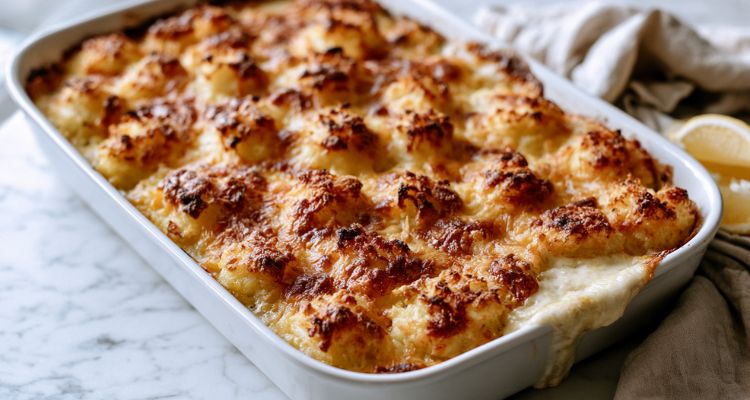
Mary Berry’s Salmon and Crayfish Pie uses 500g of fresh salmon and 250g of cooked crayfish tails with onion, leeks, capers, dill and parsley in a white sauce, topped with King Edward mashed potato and grated Cheddar. It bakes at 220°C/200°C fan/Gas 7 for 35 minutes and serves 6.
This recipe comes from Mary Berry Cooks Up a Feast (2019), which Berry co-wrote for entertaining at scale: the quantities double precisely to serve 12. Berry’s headnote explains the shortcut: shelled crayfish tails “can be bought in all good supermarkets or fishmongers. They come in tubs of brine.” That brine, once drained, means the crayfish arrive already seasoned and fully cooked, so they need no preparation at all.
The capers are the ingredient most people raise an eyebrow at, but they do something no other ingredient in this filling does. They add a sharp, briny pop that cuts through the richness of the sauce and lifts every other flavour. Leave them out and the filling tastes pleasant but flat. Berry adds them straight from the jar with the fish, no chopping required.
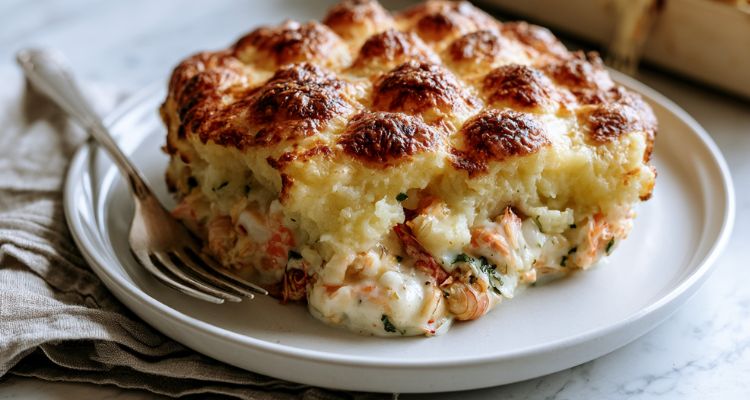
Mary Berry Salmon and Crayfish Pie
Course: Main, DinnerCuisine: BritishDifficulty: Easy6
servings25
minutes35
minutes600
kcalBerry’s entertaining version of fish pie, designed to scale from 6 to 12 servings without adjusting the method. Crayfish tails straight from the brine tub, capers, fresh dill and parsley, and a Cheddar mash that runs golden in under 40 minutes. Prepare the whole pie a full day ahead.
Ingredients
- For the mash:
750g (1lb 10oz) King Edward potatoes or other floury potatoes, cut into 5cm (2in) pieces
a knob of butter
150ml (5fl oz) milk
salt and freshly ground black pepper
- For the pie filling:
75g (2½oz) butter
1 onion, finely chopped
2 leeks, finely sliced
50g (1¾oz) plain flour
600ml (1 pint) hot milk
juice of ½ lemon
2 tbsp freshly chopped dill
2 tbsp freshly chopped parsley
2 tbsp capers, drained
500g (1lb 2oz) skinned salmon fillet, cut into 5cm (2in) cubes
250g (9oz) cooked crayfish tails in brine, drained
75g (2½oz) Cheddar cheese, grated
lemon wedges, to serve
Directions
- Make the mash: Preheat the oven to 220°C/200°C fan/425°F/Gas 7. Put the potatoes in a pan of cold salted water, cover with a lid, bring to the boil, and cook for 15 minutes or until tender. Drain, add the butter and milk, season with salt and freshly ground black pepper, and mash until smooth. You may need a little more milk to get the right consistency.
- Soften the onion and leeks: Meanwhile, melt the butter for the pie in a large saucepan. Stir in the onion and leeks, cover with a lid, and cook over a low heat for 15 minutes or until the onion is soft.
- Make the sauce: Stir in the flour and, over a high heat, gradually add the hot milk, stirring all the time until the sauce is smooth and thick.
- Add the filling ingredients: Remove from the heat, add all the remaining filling ingredients except the Cheddar, and season with salt and freshly ground black pepper. Spoon into the ovenproof dish and level the top. Cover with the mash and fluff up the surface with a fork. Sprinkle over the Cheddar.
- Bake: Bake for 35 minutes (50 minutes if serving 12) or until golden brown and piping hot. Serve at once with wedges of lemon.
FAQs
What are crayfish tails and can I swap them for prawns?
Crayfish are freshwater shellfish with sweet, firm meat that sits between a prawn and a lobster in flavour. The cooked, shelled tails sold in supermarkets in brine are very similar to cooked king prawns in texture, which makes them an easy substitution. If you use cooked peeled king prawns instead, drain them well on kitchen paper before adding them to the filling, because they hold more surface water than crayfish tails and can thin the sauce.
Do not use raw prawns here. Berry adds the crayfish off the heat in step 4, and raw prawns need actual cooking time to become safe and tender, which they wouldn’t get.
Why does this pie bake at 220°C when most of Berry’s fish pies bake at 200°C?
The higher temperature, 220°C/200°C fan, is there to drive the Cheddar crust to a proper golden brown in 35 minutes without drying out the filling. At 200°C the mash would need 40–45 minutes to colour, by which time the salmon at the bottom could become overcooked. Berry tested this recipe for entertaining at scale, where timing is critical, so the hotter oven gives you a faster, more reliable result.
If your oven runs hot and the surface is browning faster than expected, cover loosely with foil for the last 10 minutes.
Why does the onion go in alongside the leeks here, when Berry’s other fish pies only use leeks?
This is the entertaining version from Cooks Up a Feast, designed to feed 6 or 12 at a dinner party. The onion softened slowly with leeks over 15 minutes builds a sweeter, more complex base for the sauce than leeks alone. The two together produce a filling that tastes as though it took far longer to make than it did.
In her Three Fish Pie from Mary Berry Cooks, which is more of a family weeknight recipe, Berry uses only leeks for a faster, lighter sauce. The onion in this version is part of what makes it feel appropriate for guests.
How do I stop the mash from becoming gluey?
Three things: drain the potatoes very thoroughly before mashing, add the milk warm rather than cold, and stop mashing as soon as the texture is smooth. Overworked potato releases too much starch and turns the mash sticky, which then bakes to a dense, pale slab rather than a light, golden crust.
King Edward is Berry’s specified variety because its high starch content gives a fluffy result after mashing. Berry notes you may need a little more milk depending on the potatoes, so add it gradually rather than all at once.
Can I make this ahead and still get a good result?
Berry’s preparing-ahead note covers this directly: the whole pie can be assembled through step 4, covered, and refrigerated for up to a day before baking. The mash and filling both benefit from resting, because the sauce firms up and supports the mash better than it would if you baked it immediately. Add 5 minutes to the baking time if cooking from cold.
The one firm rule is that this pie doesn’t freeze. The salmon and crayfish both become watery when defrosted and the mash turns grainy. If you want a fish pie from this book that freezes, Berry’s Three Fish Pie with Leeks and White Wine can be frozen for up to a month, provided you leave out the hard-boiled eggs before freezing.