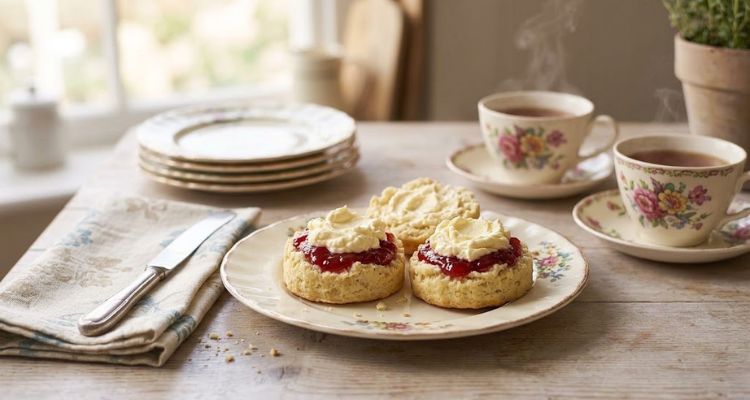
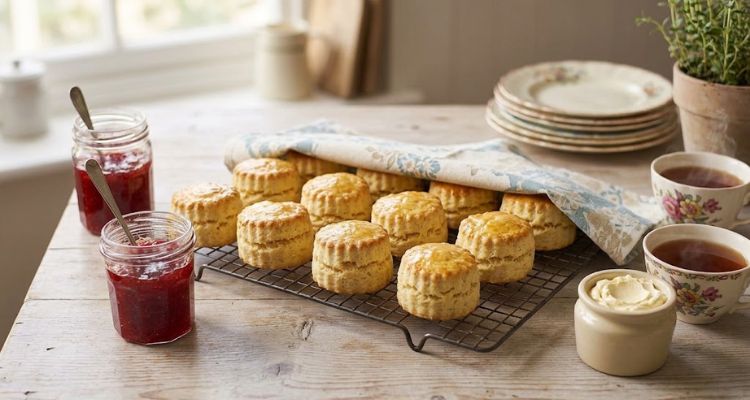
Mary Berry’s very best scones are light, tall, golden scones made with self-raising flour, butter, a little caster sugar, eggs and milk, glazed with egg and baked hot. The recipe makes about 20 small scones, and takes about 30 minutes from bowl to wire rack.
The recipe comes from Mary Berry’s Baking Bible (2010), and she shares her secret in the headnote. Good scones, she says, come from “not to handle them too much before baking, and to make the mixture on the sticky side.” Her version also uses two eggs in the liquid, which gives a richer, more golden scone than milk alone.
What surprises most bakers is how wet the dough should be. Berry wants it “on the wet side, sticking to your fingers, as the scones will rise better.” It feels wrong, so people add more flour, and that dry, overworked dough gives flat, heavy scones.
Mary Berry Cherry Scones Recipe
Course: Dessert, SnacksCuisine: BritishDifficulty: Easy20
servings15
minutes15
minutes130
kcal30
minutesBerry’s classic teatime scone from the Baking Bible (2010). She says they “can be made and cooked in minutes,” so they suit unexpected visitors. Bake small ones for afternoon tea, or switch to a bigger cutter for 8 to 10 large scones.
Ingredients
450g (1lb) self-raising flour
2 rounded teaspoons baking powder
75g (3oz) softened butter
50g (2oz) caster sugar
2 large eggs
about 225ml (8fl oz) milk
Directions
- Preheat: Heat the oven to 220°C (200°C fan/Gas 7). Lightly grease 2 baking trays.
- Rub in: Measure the flour and baking powder into a large bowl. Rub in the butter with your fingertips until the mixture looks like fine breadcrumbs, then stir in the sugar.
- Mix the dough: Beat the eggs and make them up to a generous 300ml (½ pint) with milk. Set about 2 tablespoons aside in a cup for glazing. Gradually stir the rest into the dry ingredients until you have a soft dough that’s on the wet side and sticks to your fingers.
- Cut: Turn the dough on to a lightly floured surface and flatten it with your hand or a rolling pin to 1 to 2cm (½ to ¾in) thick. Stamp out scones with a 5cm (2in) fluted cutter, pushing straight down and lifting straight out without twisting. Gently push the trimmings together, knead lightly, re-roll and cut more.
- Glaze and bake: Arrange the scones on the trays and brush the tops with the reserved egg mixture. Bake for 10 to 15 minutes, until well risen and golden. Cool on a wire rack, covered with a clean tea towel to keep them moist. Serve split and spread generously with strawberry jam, topped with clotted or whipped cream if you like.
Notes
- (Wholemeal Scones): Berry’s variation uses 450g (1lb) wholemeal self-raising flour instead of white. You may need a little more liquid to make the dough.
FAQs
Why shouldn’t I twist the cutter?
Twisting seals the cut edges, so the scones rise lopsided or barely rise at all. Berry pushes the cutter straight down and lifts it straight out, which “will ensure that the scones rise evenly and keep their shape.” Dip the cutter in flour between cuts so it releases cleanly.
Why cover the cooling scones with a tea towel?
The towel traps a little steam as they cool, so the crust stays soft and the inside stays moist. Uncovered, the outside dries out and turns crusty within an hour. It’s a small step, but it’s the difference between a bakery-soft scone and a dry one.
Can I freeze scones?
Yes. Berry says to cool them completely, then freeze them. Thaw at room temperature and “refresh in a moderate oven for about 10 minutes,” and her 2023 edition gives this as 350°F (about 180°C). They come out almost as good as freshly baked.
How do I make large scones instead?
Berry says the same dough makes 8 to 10 large scones with a 9cm (3½in) cutter. She doesn’t give a separate baking time for the big ones. I’d start checking at 15 minutes and give them a few minutes more if they need it, until well risen and golden.
What changed in the 2023 edition?
The revised Baking Bible (2023) is a US edition: all-purpose flour with 2½ tablespoons of baking powder and a teaspoon of salt, plus salted butter and extra-large eggs. The method and the sticky-dough advice are the same. It drops the note about large scones, so the 2010 recipe is the better one to follow in a British kitchen.
Jam or cream first?
Berry spreads the jam first, “generously,” then adds “a good spoonful” of clotted or whipped cream on top. For a different spread, try her lemon curd. For other scones, there’s the wholemeal variation as her wholemeal scones, or her buttermilk and sultana scones.