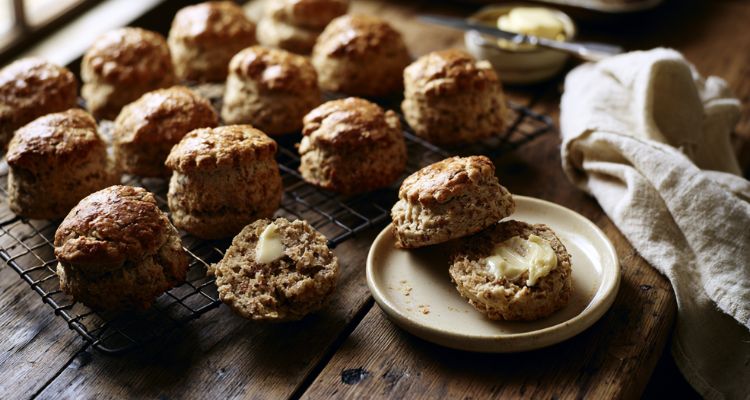
Mary Berry’s brown scones are wholemeal self-raising flour scones made with butter, a single egg and milk, baked at 220°C (425°F/Gas 7) for about 10 minutes. The recipe makes 12 using a 5cm fluted cutter and they’re best eaten as fresh as possible.
Berry lists these as a variation of her plain Scones in the Ultimate Cake Book (2003), with one swap: wholemeal self-raising flour replaces white. She writes elsewhere in the same book that wholemeal flour gives bakes “a coarser texture but a delicious nutty flavour,” and that’s exactly what happens here. The crumb is denser, darker and more interesting than a white scone.
The extra liquid is the detail Berry flags every time she mentions this swap. Wholemeal flour absorbs more moisture than white, so the dough will feel drier unless you add a splash more milk. She repeats this note in Baking Bible (2010) too, which tells you it’s a mistake she’s seen people make more than once.
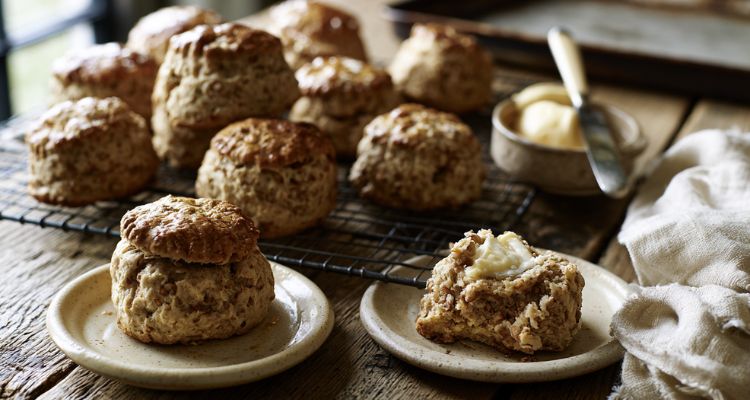
Mary Berry Wholemeal Scones Recipe
Course: DessertCuisine: BritishDifficulty: Easy12
servings10
minutes10
minutes115
kcal20
minutesBerry’s simplest wholemeal bake. Five ingredients, ten minutes in the oven, and her Secrets of Success tip says to slice any leftovers in half and toast them for breakfast the next morning.
Ingredients
225g (8 oz) wholemeal self-raising flour
2 teaspoons baking powder
50g (2 oz) butter
25g (1 oz) caster sugar
1 egg
Milk (see method)
Directions
- Preheat: Set the oven to 220°C/425°F/Gas 7 (fan 200°C). Lightly grease 2 baking trays.
- Rub in: Measure the flour and baking powder into a bowl, then add the butter and rub in with the fingertips until the mixture resembles fine breadcrumbs. Stir in the sugar.
- Mix the dough: Break the egg into a measuring jug, then make up to 150ml (5 fl oz) with milk. You may need a little more liquid than this with wholemeal flour. Stir the egg and milk into the flour and mix to a soft but not sticky dough.
- Shape: Turn out on to a lightly floured work surface, knead lightly and then roll out to a thickness of about 1cm (½ in). Cut into rounds with a fluted 5cm (2 in) cutter and place on the prepared baking trays. Brush the tops with a little extra milk, or any egg and milk left in the jug.
- Bake: Bake in the oven for about 10 minutes or until they are a pale golden brown. Lift on to a wire rack to cool. Eat as fresh as possible.
Notes
- Calories: 225g wholemeal SR flour (765) + 50g butter (359) + 25g sugar (97) + 1 egg (78) + ~100ml milk (61) = 1,360 ÷ 12 = 115 kcal per scones
FAQs
Why does Berry say I’ll need more liquid with wholemeal flour?
Wholemeal flour contains the whole grain, including the bran, which soaks up moisture faster and in greater quantity than white flour. If you use the same 150ml of egg and milk that works for the white version, the dough comes out noticeably stiffer and harder to roll. Berry flags this in both the Ultimate Cake Book (2003) and the Baking Bible (2010), so it’s clearly a common mistake.
Add the liquid gradually and stop when the dough feels soft but not sticky. I find I usually need an extra tablespoon or two beyond the 150ml, though it varies depending on the brand of flour. If the dough cracks when you roll it out, it’s too dry — press it back together, add a splash of milk and try again.
Can I mix wholemeal and white flour instead of going fully wholemeal?
Berry doesn’t suggest it for this recipe, but she uses half-and-half mixes in several of her other bakes, including her Griddle Scones in the same book. A 50/50 split gives you some of that nutty wholemeal flavour without the denser texture. The scones will rise a little taller than full wholemeal because white flour has more gluten structure.
I’ve done this when I wanted something lighter but still brown-looking. Use 110g wholemeal and 115g white self-raising flour, keep the liquid at the standard 150ml and adjust from there. You probably won’t need the extra splash that full wholemeal demands.
How do these compare to Berry’s other scone recipes?
These are the plainest and leanest scones in Berry’s books. Her Buttermilk and Sultana Scones from Mary Berry at Home use three times the butter (75g vs 50g), three times the sugar (75g vs 25g) and two eggs instead of one. Her Very Best Scones from Baking Bible (2010) double the flour to 450g and make 20 scones from a batch.
The brown scone is more of a bread roll than a tea cake. It’s barely sweet, quite filling and works just as well with cheese or soup as it does with jam. Berry herself hints at this versatility in her intro to the scones chapter, writing that “a big plain scone can serve as a bread.”
What’s the difference between wholemeal and brown self-raising flour?
Berry writes in the Ultimate Cake Book that “brown self-raising flour is now widely available and is the best one to use for wholefood cakes.” Brown flour has some of the bran removed, so it’s lighter than full wholemeal but darker than white. It sits between the two and gives a less dense result.
If your local shop stocks brown self-raising flour, it works as a straight swap here and you’re less likely to need extra liquid. Full wholemeal gives a more robust, nuttier scone. Both work, and Berry seems happy with either since she uses the terms interchangeably in her recipe title versus her ingredients chapter.
How do I store brown scones?
Berry says to “eat as fresh as possible,” which is her standard advice for plain scones across all her books. Her Secrets of Success tip for this recipe adds something useful though: “If you have any left-over scones, slice in half and toast them for breakfast.” It’s a practical solution that works particularly well with wholemeal because the nuttier flavour comes alive when toasted.
For freezing, Berry’s general scone advice from the same chapter applies: freeze immediately after cooling, then refresh in a moderate oven before serving. I wrap them individually in cling film, freeze flat on a tray, then bag them once solid. They toast straight from frozen in about 3 minutes per side.
Can I add fruit or cheese to make these more interesting?
Berry keeps the brown scone plain, but her Teatime Scones in Mary Berry Cooks (2014) come with three built-in variations: cinnamon and sultana, cheese with tomato and thyme, or lemon and orange zest. All of those work with wholemeal flour too, since the base method is identical.
If you’re adding sultanas, stir 50g into the dry ingredients after rubbing in the butter, the same way Berry does for her fruit scone variations. For a savoury version, drop the sugar, add a pinch of salt and stir in 100g of grated mature Cheddar. Berry’s Cheese Scone Round from the same book follows exactly that logic.