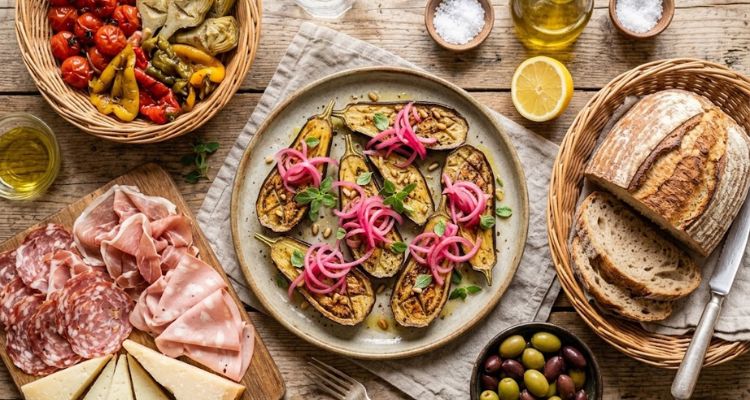
Nigella Lawson’s baby aubergines with oregano and red onion are halved baby aubergines roasted with olive oil and dried oregano, then topped with vinegar-pickled red onions in a garlicky dressing. It serves 6 as a side, from her book Nigellissima.
It comes from a memory. In the south of Italy she ate aubergines roughly chopped, sprinkled with dried wild oregano, doused with olive oil and roasted with a little garlic and a lot of red onions. This is her quicker version of that dish.
Part of its charm is how flexible it is. She eats it as a starter or part of an antipasti table, as a main sprinkled with ricotta salata or crumbled feta, or as an accompaniment to meat and fish. If you add cheese, she says, sprinkle it over before the onions, which turn a glorious, luminescent puce in their red wine vinegar marinade.

Nigella Lawson Aubergines With Oregano
Course: SidesCuisine: Italian, BritishDifficulty: Easy6
servings10
minutes15
minutes170
kcal55
minutesNigella’s southern-Italian side from Nigellissima: baby aubergines roasted with oregano and olive oil, topped with vinegar-pickled red onions and a garlic dressing. Serves 6.
Ingredients
500g baby aubergines
3 tablespoons regular olive oil
2 teaspoons dried oregano
1 small red onion, cut into thin half-moons
3 tablespoons red wine vinegar
1 teaspoon Maldon sea salt flakes (or to taste)
4 tablespoons extra virgin olive oil
1 clove garlic, peeled
3 to 4 sprigs fresh oregano (optional)
Directions
- Prep: Preheat the oven to 250°C/230°C fan/gas mark 9/450°F. Slice the baby aubergines in half lengthways, keeping the stalks on (an aesthetic touch, nothing to do with flavour).
- Roast: Pour the 3 tablespoons regular olive oil into a very shallow roasting tin, sprinkle in the dried oregano, add the aubergines cut-side down and swirl gently. Turn them cut-side up and roast for 15 minutes, until tender and turning gold in parts.
- Pickle the onions: As soon as the aubergines go in, put the onion half-moons in a bowl and cover with the red wine vinegar and salt.
- Make the dressing: Move the cooked aubergines to a platter. Whisk the extra virgin olive oil into the vinegary onions, grate in (or mince and add) the garlic, then whisk in 1½ tablespoons cold water.
- Assemble: Pour over the warm aubergines, using your hands to arrange the glowing pink onions evenly. Leave about 30 minutes to cool to room temperature. Scatter with fresh oregano to serve, if you have it.
Notes
- (keep the stalks on): Halving the aubergines with their stalks left on is purely for looks, as Nigella says, “humour me.” It makes for a prettier platter.
- (serve it three ways): Nigella serves this as a starter or antipasto, as a main with ricotta salata or crumbled feta, or as a side with meat and fish. If adding cheese, sprinkle it on before the onions.
- (the puce onions): The red wine vinegar marinade turns the raw red onions a vivid, luminescent pink-puce, which is part of the dish’s look. Let them sit in the vinegar while the aubergines roast.
- (make ahead / store): The onions can be pickled up to 24 hours ahead, covered and refrigerated. Cover and refrigerate leftovers quickly and eat cold within 3 days.
FAQs
Do I need baby aubergines, or will regular ones work?
Baby aubergines are what Nigella specifies, and they look lovely halved with their little stalks on, cooking quickly and evenly in the hot oven. Their size is part of the charm, especially if you’re serving this on an antipasti platter where the small halves look elegant.
If you can’t find them, regular aubergines work fine, just cut into roughly 2 to 3cm chunks or thick wedges so they roast at a similar rate. You may need a few minutes longer in the oven. The flavour is identical, you just lose the pretty whole-half presentation. No need to salt and drain them first, as the high-heat roasting handles any bitterness.
What does the red wine vinegar do to the onions?
Two things. It quick-pickles the raw red onion, softening its harsh bite into something sweet-sharp and mellow while the aubergines roast, and it turns them a glorious, luminescent puce-pink colour, which Nigella clearly delights in. That bright tangle of onion over the golden aubergines is what makes the dish look so good.
The vinegar then becomes the base of the dressing: you whisk the extra virgin olive oil and garlic straight into the vinegary onions, plus a splash of cold water to soften the sharpness. So the onions, their pickling liquid and the dressing are all one element. If you’re out of red wine vinegar, cider vinegar or lemon juice work, though you’ll lose a little of that pink colour.
Can I serve it as a main, not just a side?
Yes, that versatility is exactly what Nigella loves about it. As written it serves 6 as a side or part of an antipasti spread, but she also eats it as a light main course, sprinkled with ricotta salata (a firm, salty Italian cheese) or crumbled feta for protein and substance.
One ordering tip from her: if you’re adding cheese, sprinkle it over the aubergines before you top them with the onions, so the onions sit prettily on top. As a side, it goes beautifully with grilled or roasted meat and fish. It also sits well on an antipasti table next to caramelized garlic hummus and some good bread.
Should I eat it hot or cold?
Room temperature, which is the Italian way and part of the point. You pour the dressing and onions over the warm roasted aubergines, then leave the whole thing for about half an hour to cool and for the flavours to mingle before eating. It shouldn’t be served piping hot from the oven.
This makes it a brilliant make-ahead and entertaining dish, as there’s no last-minute stress. The flavours actually deepen as it sits. Leftovers are eaten cold, covered and refrigerated, within 3 days, and many would say they taste even better the next day once the aubergines have fully soaked up the garlicky, vinegary dressing. Scatter the fresh oregano on just before serving so it stays bright.
Fresh or dried oregano, and does it matter?
Both, and they do different jobs. The 2 teaspoons of dried oregano go in at the start, sprinkled into the oil before roasting, where the heat releases its warm, earthy, savoury aroma into the aubergines. Dried oregano holds up to roasting better than fresh, which would scorch. This echoes the dried wild oregano Nigella remembers from southern Italy.
The fresh oregano is optional and goes on right at the end, scattered over as you serve, for a burst of bright, green, aromatic freshness and a pretty finish. If you only have one, dried is the essential one here. Fresh marjoram makes a good stand-in for the finishing herb if you can’t get fresh oregano.
What should I serve it with?
As a side it’s a natural partner to grilled or roasted lamb, chicken or firm fish, its tangy, oily, herby character cutting through richer mains beautifully. Nigella positions it as an accompaniment to meat and fish as much as a dish in its own right.
On an antipasti or mezze table it shines alongside other room-temperature dishes: good bread, olives, a dip, or Catalan toast for scooping. With crumbled feta or ricotta salata and some bread, it becomes a light vegetarian lunch on its own. It’s exactly the kind of simple, flexible Italian vegetable dish that runs through Nigellissima. There’s more on the Nigella Lawson recipes page.