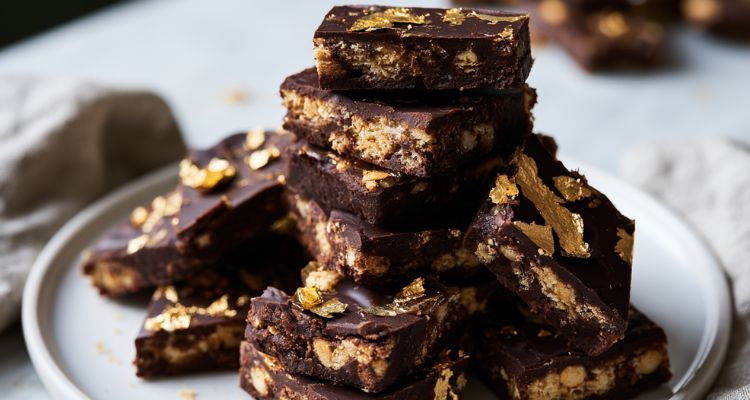
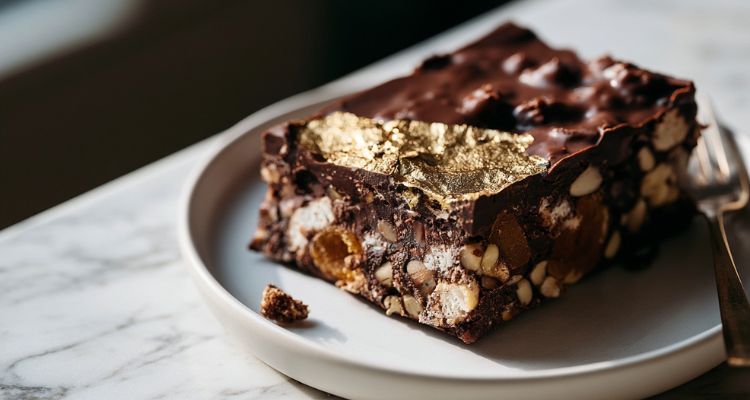
Mary Berry’s chocolate and amaretti bars are no-bake treats with dark chocolate, toasted almonds, pine nuts and dried apricots bound with crumbled soft amaretti. They chill for at least three hours, then get a poured chocolate topping. The recipe makes 18 bars.
Berry published these in Cooks the Perfect (2014), calling them “lovely to have with coffee at the end of a meal.” She suggests edible gold leaf, though chocolate shavings work too. It’s one of the few recipes where she lists a paintbrush as equipment.
The detail that makes these work is how you handle the amaretti. Berry’s “Keys to Perfection” tip says to “crumble the biscuits quite coarsely” so you get “a mixture of sizes and textures.” Stir too hard and the biscuits turn to dust, losing the crunch.
Mary Berry Chocolate and Amaretti Bars
Course: DessertCuisine: BritishDifficulty: Easy18
servings20
minutes240
kcalFrom Cooks the Perfect (2014), a no-bake bar with toasted nuts, apricots and cocoa folded through crumbled amaretti, chilled until firm and finished with a dark chocolate glaze.
Ingredients
115g (4 oz) butter, plus extra for greasing
50g (1¾ oz) whole, blanched almonds, coarsely chopped
50g (1¾ oz) pine nuts
3 tablespoons golden syrup
200g (7 oz) plain dark chocolate, chopped into small pieces
2 teaspoons cocoa powder
100g (3½ oz) ready-to-eat dried apricots, chopped
300g (10 oz) soft amaretti biscuits
edible gold leaf, to decorate
Directions
- Prepare and toast: Grease a 20cm (8 in) square cake tin, 5cm (2 in) deep, with butter and line the bottom with baking parchment. Heat a medium, non-stick frying pan, tip in the almonds and pine nuts, and dry-fry over a medium heat for about 3 minutes or until golden, turning often so they brown evenly. Tip into a small bowl and set aside.
- Melt and combine: Put the butter, syrup, and half the chocolate into a large heatproof bowl set over a pan of gently simmering water; the base of the bowl should not touch the water. As soon as the chocolate has melted, remove the bowl from the pan. Stir in the cocoa, then the apricots and dry-roasted almonds and pine nuts. Coarsely crumble in the amaretti biscuits. Stir just to combine.
- Set and top: Tip the mixture into the tin and press down with a palette knife to level the surface. Cover and put in the fridge to set for at least 3 hours, or overnight. Remove the tin from the fridge. Put the remaining half of chocolate into a heatproof bowl set over a pan of gently simmering water, and when melted remove the bowl from the pan. Pour the chocolate over the top of the biscuit base, spread it thinly over the surface, and leave to set for 30 minutes to 1 hour.
- Cut and decorate: Cut into 18 bars using a sharp knife, remove from the tin, and decorate each bar with edible gold leaf.
FAQs
Why does Berry use soft amaretti instead of hard ones?
Soft amaretti crumble unevenly, which is exactly what Berry wants for this recipe. Her tip says to aim for “a mixture of sizes and textures” with some chunky and some crumbly. Hard amaretti would shatter into uniform sharp pieces that feel gritty against the chocolate.
The soft variety absorbs the melted chocolate without dissolving, so you get pockets of almond flavour rather than a uniform slab. I tried hard amaretti once and the texture was closer to gravel than biscuit. Stick with the soft ones Berry specifies.
Why toast the almonds and pine nuts first?
Berry dry-fries the nuts before adding them to the chocolate, which deepens their flavour. It also gives a second crunch layer alongside the amaretti. In the same book she warns that pine nuts “can burn easily,” so tip them out the moment they turn golden.
Three minutes is her guideline, but watch closely because pine nuts go from golden to black in seconds. Keep turning them, and don’t walk away from the hob. The almonds are chunkier so they take the heat better, but the pine nuts need constant attention.
Why shouldn’t you put the topped bars back in the fridge?
Berry is specific about this in her “Even chocolate topping” tip from Keys to Perfection. She says not to return the bars to the fridge “or the chocolate will lose its sheen.” Cold air causes the cocoa butter to separate, leaving a dull surface.
Let the topping set at room temperature for 30 minutes to an hour. It’ll firm up enough to cut cleanly without losing that polished look. If your kitchen runs warm, move the tin to the coolest spot rather than reaching for the fridge.
Can you use digestive biscuits instead of amaretti?
You can, but you’d end up with a different recipe entirely. Berry’s chocolate biscuit cake from the Ultimate Cake Book (2003) uses crushed digestives and rich tea biscuits with walnuts and sultanas instead. It’s simpler, sweeter and more traditional, with no chocolate topping.
The amaretti bars are her upgrade: cocoa, toasted pine nuts, dried apricots and a poured chocolate topping make them richer and more complex. For a children’s party, the chocolate biscuit cake is the safer bet. For a dinner party, these are the ones.
How long do chocolate and amaretti bars take to set?
The base needs at least three hours in the fridge, though Berry says “overnight” works too. The chocolate topping then needs 30 minutes to an hour at room temperature. So plan for at least four hours from start to serving.
Berry presses the mixture down firmly with a palette knife before chilling to remove air pockets and create a dense, even layer. If you skip this or press too lightly, the bars crumble when you cut them. Compacting is what holds everything together.
Do you need edible gold leaf?
Berry includes gold leaf for presentation, but her headnote says “you can top them with shavings of chocolate instead.” Gold leaf adds nothing to the flavour and it’s fiddly to apply since it sticks to everything except where you want it.
A vegetable peeler dragged along dark chocolate at room temperature gives you quick curls that look just as good. Berry uses this technique elsewhere in the same book. If you do use gold leaf, she recommends a small paintbrush to lift each piece into place.