Hairy Bikers’ Thai pot-roast chicken is a whole bird stuffed with lemongrass, Thai basil and lime leaves, then braised in coconut milk and curry paste. It roasts at 200°C (180°C fan) for about an hour and serves 4 to 6.
The recipe comes from Our Family Favourites, where Si credits his son Alex with inventing it. Alex rang the minute he tasted it, Si tried it, and it went straight into the book. The method reflects that home-cook origin: one casserole dish, no fuss.
Searing the curry paste in oil before the chicken goes in is the step that matters most. Cook it until it darkens and the aroma intensifies, which blooms the spices. Skip that and the finished sauce tastes flat.
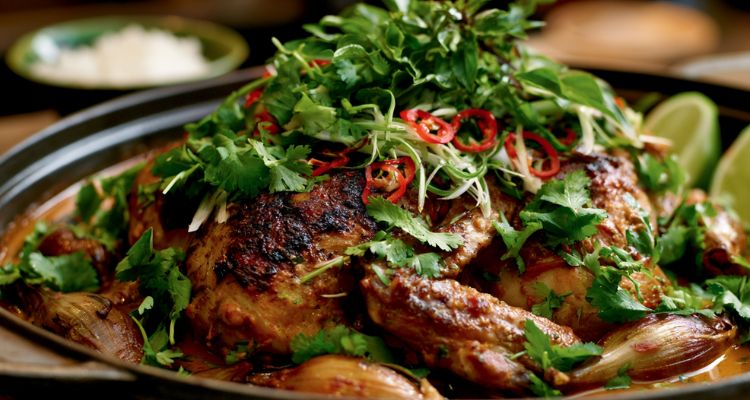
Hairy Bikers Thai Pot-roast Chicken
Course: DinnerCuisine: BritishDifficulty: Easy6
servings30
minutes2
hours520
kcal2
hours30
minutesA whole roast chicken braised in red curry paste, coconut milk and chicken stock from Si King and Dave Myers’ Our Family Favourites. The pot does the work while the aromatics do the talking.
Ingredients
- For the chicken:
1 whole chicken
1 Thai basil sprig
A few coriander sprigs
1 lemongrass stalk, bruised
2 lime leaves, bruised
A pared piece of lime zest
3 garlic cloves, bruised
Salt
- For the pot:
2 tbsp olive oil
8 banana shallots, peeled
4 tbsp Thai red curry paste
200ml coconut milk
200ml chicken stock
1–2 tbsp fish sauce
2 lime leaves, shredded
Juice of ½ lime
- To serve:
Roughly torn coriander leaves
Roughly torn Thai basil
3 spring onions, halved and shredded
2 red chillies, finely sliced
Lime wedges
Directions
- Preheat: Set the oven to 200°C/Fan 180°C/Gas 6.
- Stuff the chicken: Sprinkle the inside and outside of the chicken with salt. Stuff with the herbs, lemongrass, lime leaves, lime zest and garlic.
- Sear the shallots: Heat half the oil in a large flameproof casserole dish. Add the shallots and sear them until lightly browned all over, then remove and set aside.
- Bloom the paste: Add the rest of the olive oil to the dish with the red curry paste. Stir for a few minutes until the paste has darkened a little and the aroma has strengthened, then add the chicken, breast-side down, and leave to sear for a couple of minutes.
- Build the sauce: Remove the chicken and set it aside, then add the coconut milk, stock, a tablespoon of the fish sauce, the lime leaves and lime juice to the dish. Stir to make sure the base of the casserole dish is deglazed, then place the chicken back in the dish, this time breast-side up.
- Pot-roast: Cover the casserole dish and place it in the oven. Leave for 40 minutes or so, until the chicken is almost cooked through, then remove the lid. Add the seared shallots to the dish, then put it back in the oven for about 20–25 minutes, until the sauce has reduced a little and both the shallots and chicken are tender. You can check the chicken for doneness by inserting a probe thermometer into the thickest part of the thigh, which should reach 72°C. Alternatively, check that the juices run clear when you insert a skewer and that the legs feel loose.
- Rest and serve: Remove the casserole dish from the oven. Taste the sauce and add more fish sauce if necessary. Leave the chicken to rest for 10 minutes, then serve garnished with the herbs, spring onions, chillies and the lime wedges on the side.
Notes
- This is good with rice or perhaps some noodles with some fresh root ginger stirred through them.
FAQs
Why do you sear the chicken breast-side down first?
Searing breast-side down does two things at once. It browns the breast skin in the curry paste oil, adding colour and flavour to the most visible part of the bird. It also protects the breast meat during the long oven time because the skin has already sealed.
When you flip the chicken breast-side up for the oven, the legs and thighs sit lower in the sauce. They cook faster in that position, which is exactly what you want. Thigh meat needs more time than breast, so this stops the breast drying out.
Can I use chicken thighs or legs instead of a whole bird?
You can, though the cooking time drops significantly. Bone-in thighs need about 40–45 minutes at 200°C in the same sauce, so you’d skip the covered stage entirely and just roast uncovered. The sauce won’t reduce as much because of the shorter time, so use slightly less stock.
A whole bird gives the sauce something that pieces can’t: the carcass releases collagen and fat into the liquid, which thickens and enriches it naturally. If you use pieces, the sauce will be thinner and lighter. Adding the shallots from the start rather than halfway through compensates, since they’ll break down more and add body.
What can I use instead of Thai basil?
Regular Italian basil works but tastes different. Thai basil has a liquorice and anise note that Italian basil lacks entirely. A mix of regular basil with a small pinch of crushed star anise gets closer to the right flavour.
Coriander is the more important herb here because it’s used both inside the bird and as a garnish. If you’re short on Thai basil, make sure you have plenty of coriander instead. Most Asian supermarkets sell Thai basil, and it’s often labelled as holy basil or horapa.
How do I know when the chicken is properly cooked?
Si and Dave give you two methods in the recipe. A probe thermometer in the thickest part of the thigh should read 72°C, which is the safe internal temperature. The second check is piercing the thigh with a skewer: the juices should run completely clear with no pink tinge.
The leg test works too: give one leg a gentle wiggle. If it feels loose in the socket and moves freely, the connective tissue has broken down. I always use a thermometer because it removes the guesswork, especially with a pot-roast where the sauce hides visual clues.
Can I make this ahead and reheat it?
The pot-roast reheats well because the coconut sauce keeps the meat moist. Let it cool, cover, and refrigerate for up to 2 days. Reheat at 160°C (140°C fan) for 25–30 minutes with the lid on, adding a splash of stock if the sauce has thickened.
Freezing is trickier because a whole bird dries out when thawed. Strip the meat, portion it into containers with plenty of sauce, and freeze for up to 3 months. If you enjoy make-ahead chicken dishes, the chicken tikka masala also reheats brilliantly.
What’s the best way to carve and serve this?
Lift the whole chicken onto a board and rest it for the full 10 minutes. Cutting too soon means the juices run onto the board instead of staying in the meat. Pull the stuffing herbs from the cavity and discard them.
Carve the legs off first, then the breasts. The meat is softer than a Sunday roast, so it falls away from the bone easily. Ladle the coconut sauce and shallots over the pieces, then pile on fresh herbs, chillies and a lime wedge.
For a Thai-inspired side, try the egg fried rice with fresh ginger stirred through.