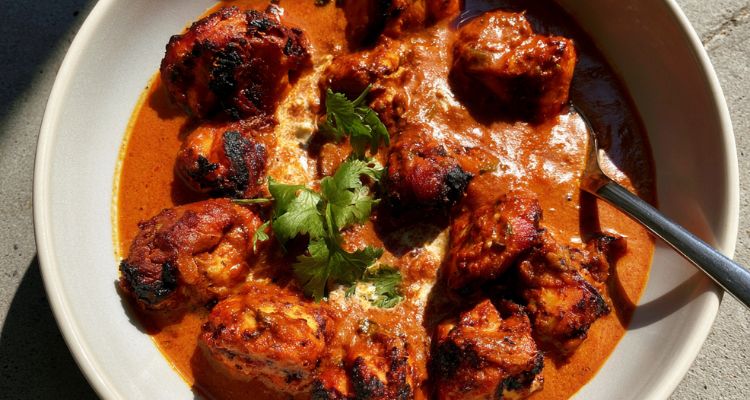
Hairy Bikers chicken tikka masala marinates diced chicken breast in a freshly ground spice paste with yoghurt, grills it on skewers until charred, then folds it into a smooth onion and tomato sauce finished with double cream. The recipe serves 4 at around 380 kcal per serving without rice.
This comes from The Best of The Hairy Bikers. Si and Dave say “it really is worth making your own masala paste instead of using a jar,” and the headnote is right, because toasting whole cumin seeds, coriander seeds, cloves, peppercorns, and cinnamon before grinding them gives a depth that no shop-bought paste can match.
The step that makes or breaks this dish is the grilling. Si and Dave want the chicken as close to the heat as possible on its hottest setting, which chars the outside while the yoghurt marinade keeps the inside moist. Five minutes each side under a screaming grill gives you those blackened edges that define a proper tikka, and without them the dish just tastes like chicken in a curry sauce.
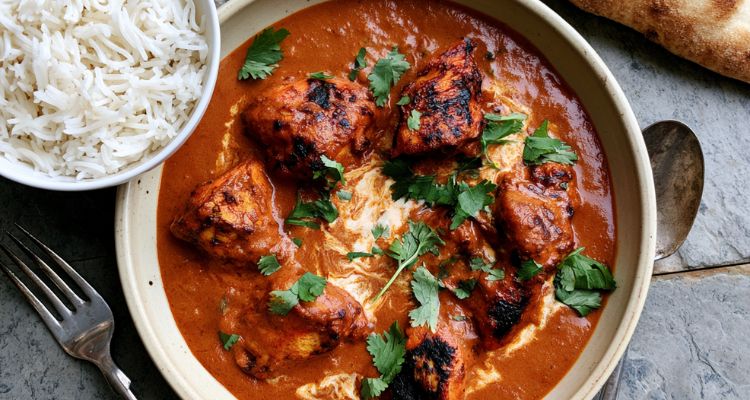
Hairy Bikers Chicken Tikka Masala
Course: DinnerCuisine: BritishDifficulty: Easy4
servings30
minutes25
minutes380
kcal1
hourA from-scratch chicken tikka masala where whole spices are toasted and ground, chicken is marinated in spiced yoghurt for at least 4 hours then grilled on skewers until charred, and the sauce is built from softened onions, tomato purée, and a splash of double cream blitzed smooth. Allow time for marinating, ideally overnight.
Ingredients
- For the spice mix:
2 tbsp cumin seeds
2 tbsp coriander seeds
2 whole cloves
1 tsp black peppercorns
Small piece of cinnamon stick
½ tsp ground fenugreek
1½ tsp ground turmeric
2 tsp ground paprika
½ to 1 tsp hot chilli powder
Salt
- For the chicken tikka:
3 tbsp of the spice mix (above)
2 garlic cloves, crushed
20g root ginger, peeled and finely grated
4 tbsp natural yoghurt
4 boneless, skinless chicken breasts, each cut into 7 or 8 pieces
Oil, for greasing skewers
- For the masala sauce:
4 tbsp ghee (or 2 tbsp softened butter and 2 tbsp sunflower oil)
3 medium onions, chopped
4 garlic cloves, crushed
25g root ginger, peeled and finely grated
½ tsp ground turmeric
3 tbsp tomato purée
2 tsp caster sugar
2 tbsp double cream
- To serve:
Rice
Directions
- Toast the spices: Put the cumin seeds, coriander seeds, cloves, peppercorns, and cinnamon stick in a dry frying pan over a medium heat. Cook for 1 to 2 minutes, stirring regularly until lightly toasted. Tip everything into a mortar or spice grinder, then add the fenugreek, turmeric, paprika, chilli powder, and a teaspoon of salt. Grind to a fine powder.
- Marinate the chicken: Spoon 3 tablespoons of the spice mix into a bowl and stir in the garlic, ginger, and yoghurt. Mix thoroughly, then stir the chicken pieces into the spiced yoghurt until well coated. Cover and leave in the fridge for at least 4 hours, or ideally overnight.
- Make the sauce: Heat the ghee (or butter and oil) in a large non-stick saucepan and add the onions, garlic, and ginger. Cover and cook over a low heat for 10 minutes, stirring occasionally. Remove the lid, increase the heat slightly, and stir in the rest of the spice mix plus the half teaspoon of turmeric. Fry for 3 minutes, stirring regularly.
- Finish the sauce: Stir in the tomato purée, sugar, and a teaspoon of salt and fry for 2 to 3 minutes, stirring constantly. Add 400ml of water, bring to a gentle simmer, and cook for 5 minutes more. Add the cream for the last 30 seconds, then remove from the heat and blitz with a stick blender until completely smooth. Pour into a bowl, cover, and chill until you are ready to cook the chicken.
- Grill the chicken: Thread the chicken pieces on to lightly greased long metal skewers, leaving 1 to 2cm between each piece. Preheat the grill to its hottest setting and place the skewers on a rack over a foil-lined grill pan. Slide the pan as close to the heat as possible and cook for 5 minutes. Turn each skewer using an oven cloth and cook the other side for another 4 to 5 minutes until cooked through and lightly charred.
- Combine and serve: While the chicken grills, tip the sauce into a large frying pan and bring to a gentle simmer for 2 to 3 minutes. Slide a fork down each skewer to release the chicken pieces into the hot sauce. Stir well, let it bubble for a few more seconds, then serve with rice.
FAQs
Why toast whole spices instead of using pre-ground?
Whole cumin seeds, coriander seeds, cloves, and peppercorns release their essential oils when heated in a dry pan, which gives the spice mix a depth and fragrance that pre-ground spices sitting in a jar cannot match. Once toasted, grinding them yourself means the powder is fresh and potent rather than stale.
Si and Dave actually have a simpler version in their British Classics cookbook that uses pre-ground spices or even a ready-made tandoori masala powder. The Best of The Hairy Bikers version is the more refined of the two, which is why it asks you to toast and grind from scratch. If you want the shortcut, the British Classics method works, but you will notice the difference.
Can I use butter and oil instead of ghee?
Si and Dave give you the option right in the recipe: 4 tablespoons of ghee, or 2 tablespoons of softened butter mixed with 2 tablespoons of sunflower oil. The butter gives you the dairy richness while the oil raises the smoke point, so the onions can soften without the butter burning.
Ghee is better if you can get it because it has a nutty, toasted flavour that butter alone does not have. Most large supermarkets stock it in the world food aisle, and a jar lasts for months because you only need a few tablespoons at a time. If you use the butter and oil blend, keep the heat low during the 10-minute covered cooking stage so nothing catches.
How long should I marinate the chicken?
Si and Dave say at least 4 hours, but overnight is ideal. The yoghurt and spice mix work together during that time, as the lactic acid in the yoghurt gently tenderises the chicken while the spices soak in.
Four hours gives you good flavour on the surface. Overnight lets the spice penetrate right through to the centre of each piece, which means the marinade taste is in every bite rather than just on the outside. Do not go beyond 24 hours though, because the acid in the yoghurt can start to break down the protein too much and make the chicken mushy.
What makes this different from a restaurant chicken tikka masala?
Most restaurant versions use tandoori ovens that reach 480°C, which chars the chicken in minutes. Si and Dave replicate this at home by using the grill on its highest setting and positioning the skewers as close to the element as possible. You will not get identical results, but those charred edges are what separate tikka masala from a generic chicken curry.
The sauce is the other difference. Many takeaway versions use food colouring, cream, and a generic base sauce. Si and Dave build theirs from scratch with slow-cooked onions, freshly ground spices, and just 2 tablespoons of cream added in the last 30 seconds. The result is lighter and more fragrant. Their chicken paprika uses a similar slow-cooked onion base if you enjoy this technique.
What is the best substitute for Kashmiri chilli powder?
The Best of The Hairy Bikers recipe uses paprika and hot chilli powder separately, but the British Classics version calls for Kashmiri chilli powder instead. Si and Dave note in that book’s headnote that you can substitute “two tablespoons of sweet paprika mixed with a teaspoon of medium chilli powder” for Kashmiri chilli.
Kashmiri chilli gives colour without extreme heat, which is why it is the traditional choice for tikka. If you are using the Best of recipe, the paprika and chilli powder split already mimics what Kashmiri chilli does. Either way, start with the lower end of the chilli range (half a teaspoon) and taste the sauce before adding more, because you can always increase the heat but cannot take it away.
What should I serve alongside chicken tikka masala?
Plain basmati rice is the traditional pairing, and it lets the sauce do the talking. Si and Dave simply say “serve hot with rice” without complicating things. Naan bread works well for scooping up the sauce, and a simple cucumber raita cools the heat between bites.
If you want to build a bigger spread, their egg fried rice adds more substance than plain rice, though it does shift the meal towards Chinese-British fusion rather than Indian. A simple side salad of sliced red onion, tomato, and fresh coriander with a squeeze of lemon is the most traditional accompaniment and takes two minutes to throw together.