Delia Smith’s Greek lamb baked with lemon and garlic is neck fillet slow-cooked in a foil parcel at 150°C (Gas 2) for 3 hours. It uses just four ingredients: lamb, lemons, garlic and parsley. It serves 4 with almost no hands-on work.
The recipe comes from Delia’s How to Cheat at Cooking (2008). Her headnote says it all: “How something so simple can taste so good may be difficult to understand, but it does!” That’s the whole philosophy of the book in one line.
Delia splits the garlic two ways here, which is the detail most people miss. Three cloves go into the meat raw before cooking. The fourth stays back for a fresh parsley and lemon zest mixture scattered over at the table.
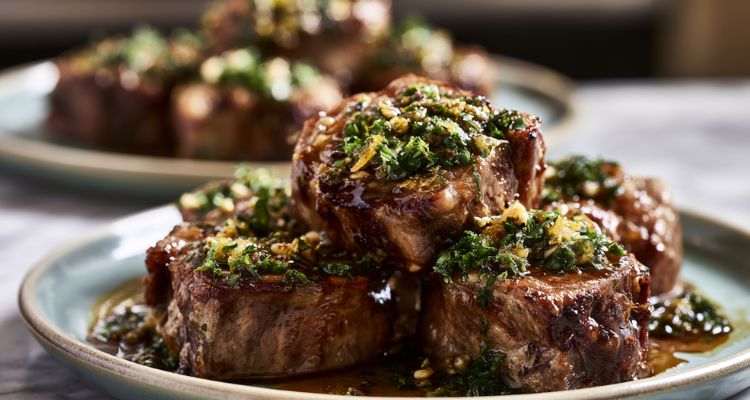
Delia Smith Greek Lamb Baked With Lemon And Garlic
Course: DinnerCuisine: BritishDifficulty: Easy4
servings10
minutes3
hours495
kcal3
hours10
minutesA four-ingredient lamb dish from Delia’s How to Cheat at Cooking that relies entirely on time, foil and lemon juice to turn neck fillet fork-tender. No browning, no stock, no fuss.
Ingredients
800g (1 lb 12 oz) neck of lamb fillet
2 medium lemons
4 cloves garlic, peeled
Large handful fresh flat-leaf parsley
Salt and freshly milled black pepper
Directions
- Preheat: Set your oven to 150°C (Gas Mark 2 / 300°F).
- Prepare the Lamb: Trim any excess fat from the meat and cut it into 2.5cm rounds.
- Set Up the Foil: Tear off a large sheet of foil and place it inside a roasting tin. Arrange the lamb pieces in the center of the foil.
- Insert the Garlic: Make small incisions in the lamb using a sharp knife and insert the slivered garlic cloves evenly throughout the meat.
- Add the Lemon: Pour the lemon juice over the lamb and season well with salt and pepper.
- Cook: Fold the foil up tightly to create a sealed parcel. Place in the center of the oven and cook for 3 hours.
- Make the Finishing Mixture: Just before serving, combine the remaining chopped garlic, the fresh parsley, and the reserved lemon zest in a mini-chopper.
- Serve: Carefully open the parcel, spoon the cooking juices over the lamb, and garnish generously with the parsley and lemon zest mixture.
Notes
- Delia says this is great served with a Greek salad (cucumber chunks, quartered tomatoes, black olives, red onion slices and crumbled feta tossed with olive oil, lemon and garlic) and her oven-sautéed potatoes with red onion, garlic and rosemary.
FAQs
Why does Delia use neck of lamb fillet for this recipe?
Neck fillet is one of the most flavourful cuts on the lamb because it carries more intramuscular fat than leg or loin. That fat breaks down over 3 hours of gentle heat, basting the meat from the inside. It stays moist without any added liquid beyond the lemon juice.
It’s also one of the cheapest cuts at the butcher’s counter, which fits the “Cheat” book’s philosophy of maximum flavour for minimum spend. Leg of lamb would dry out at this temperature over 3 hours. Neck fillet, though, becomes so tender you can pull it apart with a fork.
Can I use a different cut of lamb instead?
Lamb shoulder works well because it has a similar fat content and responds just as well to slow cooking. Cut it into 2.5cm chunks as Delia specifies and keep the timing at 3 hours. Bone-in shoulder pieces would need closer to 3½ hours.
Avoid loin chops or leg steaks, though. They’re too lean for this method and will turn dry and chewy long before the 3 hours are up. The whole point of Delia’s recipe is that the cut does the work, so you need something with enough connective tissue to break down slowly.
What does Delia suggest serving alongside this lamb?
Delia recommends a Greek salad of cucumber, tomatoes, black olives, red onion and crumbled feta dressed with olive oil and lemon. She also suggests her oven-sautéed potatoes with red onion, garlic and rosemary from the same book.
If you’re looking for other lamb dishes from the site, Delia’s baked lamb with rosemary takes a whole leg and wraps it in foil too, though at a higher temperature for a shorter time. Her shepherd’s pie from the same Cheat book is another good option if you want to use leftover lamb.
Why does the recipe wrap the lamb in foil?
The sealed foil parcel traps steam from the lemon juice and the lamb’s own juices. It turns the roasting tin into a braising environment where the liquid barely simmers at 150°C. That gentle heat dissolves the collagen without toughening the fibres.
Without the foil, the lemon juice would evaporate within the first hour and the lamb would roast rather than braise. You’d get a drier result with far less of those cooking juices that Delia wants you to spoon over. I keep the foil sealed tightly with no gaps so nothing escapes.
Can I prepare this ahead of time or freeze it?
You can assemble the lamb in its foil parcel up to a day ahead and keep it in the fridge. Bring it to room temperature for 30 minutes before putting it in the oven, then cook for the full 3 hours as written. The lemon juice actually works as a light marinade overnight, so the flavour deepens.
The cooked lamb freezes well for up to 3 months. Cool it completely in the cooking juices, then transfer everything to a freezer-safe container. Defrost overnight in the fridge and reheat gently in a covered dish at 150°C for about 30 minutes, or until piping hot throughout.
Do I need to brown the lamb before wrapping it in foil?
No, and that’s the beauty of this recipe. Delia doesn’t brown the meat at all, which is unusual for a lamb dish but entirely deliberate. The “Cheat” book is built around skipping every step that isn’t strictly necessary, and browning is one of them.
The lemon juice and long cooking time create their own depth of flavour through caramelisation inside the parcel. I’ve tested it both ways, and the difference is barely noticeable. Delia’s instinct is right: skip it and save yourself a frying pan.