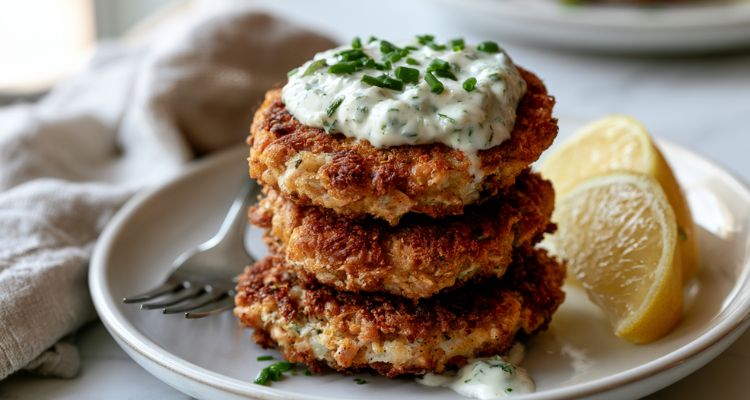
Mary Berry’s double salmon fishcakes are crisp, golden pan-fried cakes made with cooked salmon and hot-smoked salmon, bound with mashed potato, mayonnaise and creamed horseradish. They’re coated in breadcrumbs and fried for 3–4 minutes each side. The recipe serves 6.
Berry’s headnote in Cook Up a Feast (2010) explains the name. She says “so many people love fishcakes, which is why we always invent a new recipe for them for each of our books.” The “double” means two types of salmon: fresh cooked and hot-smoked.
The chilling step is where most people skip ahead. Berry says to coat them in egg and breadcrumbs, then chill for a minimum of one hour before frying. Cold fishcakes hold together in the hot pan, so they won’t crumble when you flip them.
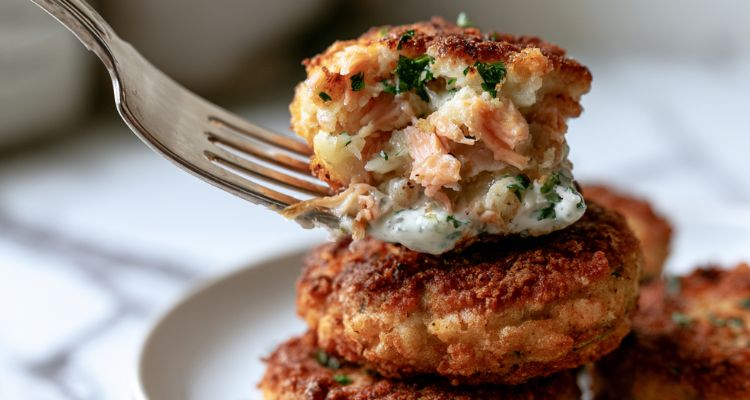
Mary Berry Double Salmon Fishcakes with Horseradish Sauce
Course: AppetizersCuisine: BritishDifficulty: Easy6
servings20
minutes8
minutes420
kcalFrom Cook Up a Feast (2010) by Mary Berry and Lucy Young, these two-salmon fishcakes pair fresh poached salmon with hot-smoked for a deeper flavour. Served cold horseradish sauce on the side.
Ingredients
- For the fishcakes:
350g (12 oz) cooked salmon, skin and bones removed
100g (3½ oz) hot-smoked salmon
450g (1 lb) mashed potato
3 tablespoons mayonnaise
2 tablespoons creamed horseradish
2 heaped tablespoons freshly snipped chives
2 heaped tablespoons freshly chopped parsley
Salt and freshly ground black pepper
1 egg, beaten
50g (1¾ oz) fresh breadcrumbs
1 tablespoon olive oil
1 lemon, cut into 6 wedges, to garnish
- For the horseradish sauce:
150ml (5 fl oz) soured cream or full-fat crème fraîche
3 tablespoons creamed horseradish
2 tablespoons mayonnaise
2 tablespoons freshly snipped chives
Directions
- Put both kinds of salmon, the mashed potato, mayonnaise, horseradish and herbs into a mixing bowl, season with salt and freshly ground black pepper, and stir well to combine.
- Divide the mixture into 12 and shape into fishcakes. They shouldn’t be too thick. Brush with beaten egg, coat with breadcrumbs, and chill for a minimum of 1 hour.
- Meanwhile, make the sauce: put all the ingredients into a bowl, season with salt and freshly ground black pepper, and mix together well. Set aside.
- Heat the oil in a non-stick frying pan and fry the fishcakes for 3–4 minutes on each side or until golden on the outside and hot in the middle. You may need to do this in batches and keep them warm in the oven.
- Serve the fishcakes hot with a spoonful of the cold sauce and a lemon wedge.
FAQs
Do I need to cook the salmon first?
Berry lists “cooked salmon, skin and bones removed” in the ingredients, so yes. She doesn’t specify the cooking method, which means you can poach, bake or steam it. Poaching in gently simmering water for 8–10 minutes gives the cleanest flake.
Let the salmon cool completely before flaking it into the bowl. Hot fish melts into the mash and you lose the chunky texture. Berry’s tip from her Very Posh Fishcakes in Everyday (2017) applies here too: “try to keep the fish in fairly chunky flakes.”
Can I use tinned salmon instead of fresh?
Berry uses tinned salmon in her sandwich fillings in the Complete Cookbook, listing “450g tinned salmon, drained and flaked, then mixed with mayonnaise.” It works in fishcakes because the mash and binding hold everything together, though the texture is softer than fresh.
Drain the tin thoroughly and press the salmon gently in a sieve to remove as much liquid as possible. Wet tinned salmon makes the mixture too loose to shape. You’ll still want the 100g of hot-smoked salmon for the smoky hit, since that’s what lifts these above a basic fishcake.
What potato works best for the mash?
Floury potatoes like Maris Piper or King Edward break down into a smooth, dry mash that binds well. Berry uses floury potatoes for her Very Posh Fishcakes in Everyday (2017), listing “325g floury potatoes, peeled and cubed.” Waxy varieties like Charlotte hold too much moisture and make the mix sticky.
Berry’s general mash advice matters here. In her Cookery Course she says to “return the potatoes to the heat after straining to help dry them out.” A wet mash means soft fishcakes that fall apart in the pan, so cook off the excess moisture before mixing.
Can I bake these instead of frying?
Berry doesn’t offer an oven method for these fishcakes. She does bake her Very Posh Fishcakes at 200°C (180°C fan/Gas 6) for 15 minutes after an initial pan-fry. A two-stage approach works: fry for 2 minutes each side, then finish on a baking tray at 200°C for 12–15 minutes.
Pure oven baking without any frying gives a paler crust. To skip the pan entirely, brush the coated fishcakes with melted butter. Bake at 200°C (180°C fan/Gas 6) for 20–25 minutes, turning once halfway.
What should I serve alongside these?
Berry serves these with the cold horseradish sauce and a lemon wedge. For a fuller meal, her cauliflower cheese makes a rich side, or a simple green salad with mustardy dressing cuts through the richness.
New potatoes aren’t needed here because the mash is already inside the fishcakes. A handful of watercress on the side adds peppery bite, which Berry pairs with salmon across several books including her salmon terrine. If you’re serving these as a starter, two fishcakes per person with sauce is plenty.
How are these different from Berry’s Very Posh Fishcakes?
Completely different recipes. The double salmon fishcakes use salmon with mashed potato and horseradish, shaped simply and fried. Berry’s Very Posh Fishcakes from Everyday (2017) use smoked haddock, not salmon, and hide a Parmesan and mustard fondant sauce inside each one.
The Posh version takes longer because you make a thick cheese sauce, chill it, then encase it inside the fishcake before coating in panko breadcrumbs. Berry finishes them in the oven at 200°C for 15 minutes after frying. These double salmon ones are the simpler option, closer to her quiche Lorraine in ease.