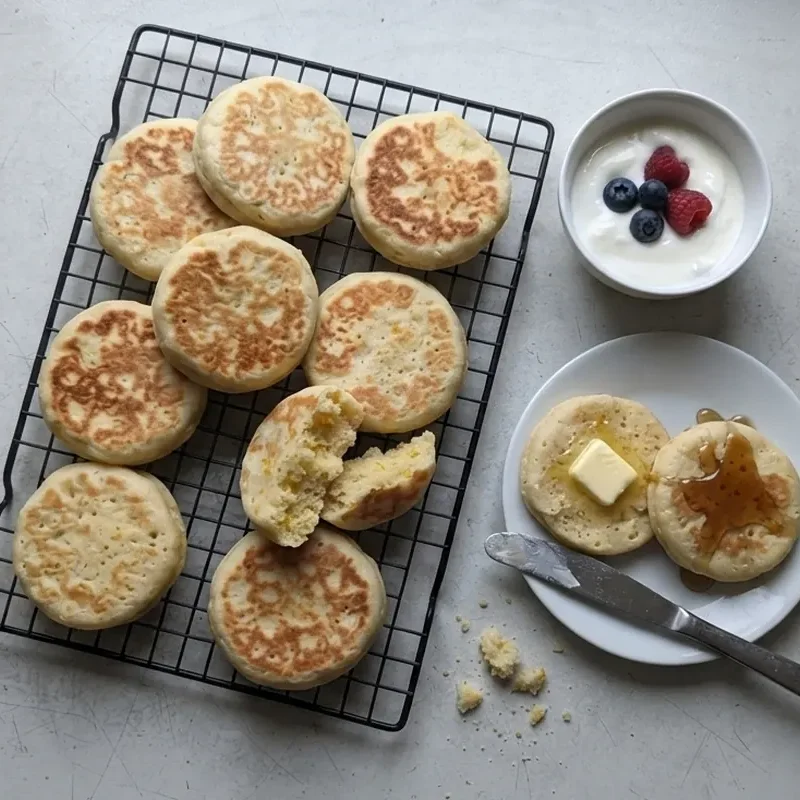
These Mary Berry drop scones are small, thick Scotch pancakes made from self-raising flour, caster sugar, egg, milk and a little orange zest. And her Classic recipe makes 18 to 24 in about 25 minutes, at roughly 55 calories a scone before toppings.
Mary writes that they “were classically made on a solid metal griddle on an open fire”, but a non-stick frying pan works now. And unlike her older plain recipe, this one mixes a little orange zest into the flour before the egg and milk go in.
The batter is ready when it reaches “the consistency of thick pouring cream”, so I add the remaining milk a little at a time. Then each scone gets turned only once bubbles appear on the surface, which takes about 2 minutes in a hot pan.

Mary Berry Drop Scones
Course: BreakfastCuisine: BritishDifficulty: Easy20
servings10
minutes15
minutes55
kcal25
minutesFlour, baking powder, sugar and zest are whisked with egg and milk into a smooth batter, then dropped in dessertspoonfuls into a hot oiled pan. After flipping, they rest under a clean tea towel to stay soft and warm, ready for butter, syrup or fruit.
Ingredients
175g (6oz) self-raising flour
1 tsp baking powder
40g (1½oz) caster sugar
finely grated zest of 1 small orange
1 egg
200ml (7fl oz) milk
sunflower oil, for frying
- To serve:
maple syrup or honey
natural Greek yoghurt and blueberries or raspberries
Directions
- Make the batter: Measure the flour, baking powder and sugar into a large bowl and add the orange zest. Then mix, make a well in the centre and add the egg and half the milk.
- Thin it down: Beat well with a whisk until you have a smooth, thick batter. Then beat in enough of the remaining milk to make a batter the consistency of thick pouring cream.
- Cook the first side: Heat a little oil in a large non-stick frying pan over a high heat. Then drop in dessertspoonfuls of batter, well apart, and cook for about 2 minutes until bubbles appear.
- Flip: Turn them over with a non-stick blunt-ended palette knife or spatula. Then cook for 30 to 60 seconds more, until lightly golden brown on both sides.
- Keep warm: Lift the scones onto a wire rack and cover with a clean tea towel to keep them soft and warm. Then cook the rest, adding a splash more oil if the pan gets dry.
- Serve: Serve at once with butter, maple syrup or honey, or with Greek yoghurt and blueberries, raspberries or other seasonal fruit.
FAQs
Are drop scones the same as Scotch pancakes?
Yes, and Mary uses both names herself, since her 2003 Ultimate Cake Book calls them Scotch Pancakes while Classic calls them Drop Scones. So the name changes but the basic method doesn’t, and both books beat the batter until it is like thick cream.
How has Mary Berry’s drop scone recipe changed?
The basic recipes in her Ultimate Cake Book and Baking Bible are plain, with no zest, and she serves them with butter and golden syrup. But the Classic recipe from her BBC series adds orange zest, then suggests Greek yoghurt and berries as well as butter and syrup.
And the older books make about 21 from the same flour and milk, while Classic makes 18 to 24. And Ultimate Cake Book asks for an extra large egg and Baking Bible a large one, while Classic just says 1 egg.
Can you make orange drop scones?
Yes, and 100 Sweet Treats and Puds uses the zest of 2 oranges, with their juice made up to 200ml with milk. Then she cooks them over a medium heat rather than a high one, and serves them with a little extra grated zest, if liked.
The same orange recipe, making about 24, also sits in her 2010 Baking Bible.
Can you make drop scones ahead or freeze them?
Classic says they can be made up to 6 hours ahead, then reheated in a single layer on a baking tray, tightly covered with foil. Then warm them through in a moderate oven for about 10 minutes.
They freeze well too if wrapped in greaseproof paper and packed in a freezer-proof box, which stops the edges getting damaged. So I cook them in the morning and warm them for tea, alongside her very best scones or old-fashioned rock cakes.
Can you use plain or wholemeal flour?
Her Classic book says to turn plain flour into self-raising by adding 2 to 3 teaspoons of baking powder to every 200g. And Cooking with Mary Berry has a wholemeal version, where she says to use a little less milk if you use white self-raising flour instead.
For a fruitier tea-time bake from the same storecupboard, her fruity scones go in the oven instead of the pan.