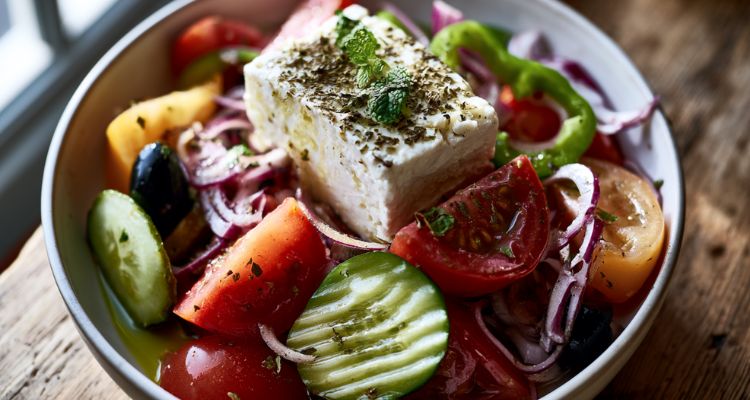
Jamie Oliver Olives Greek salad uses three types of tomatoes, cucumber, green pepper, red onion, olives, dill, mint and a whole block of feta on top. It takes 10 minutes, serves four, and needs no cooking. Everything gets tossed by hand in the bowl.
This is Oliver’s Greek salad from his Jamie Does… cookbook (2010). His version stands out because he squeezes the olives over the veg before dropping them in, so their brine seasons the whole bowl. He also insists on three tomato shapes for texture.
The detail most people miss is the cucumber. Oliver scratches a fork down the skin before slicing to leave deep grooves that trap the dressing. It’s a tiny step that changes how much flavour each piece holds.
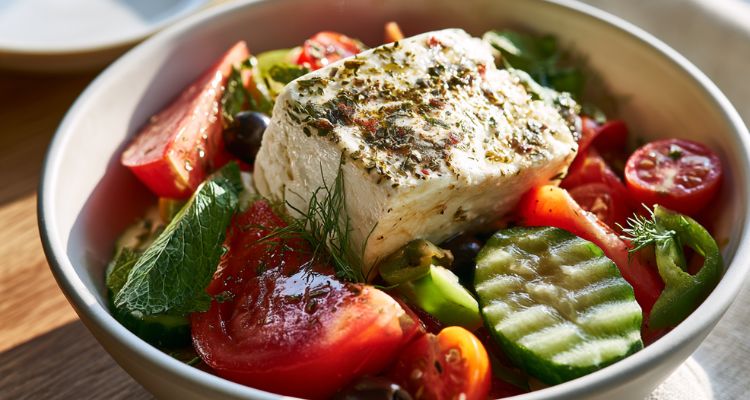
Jamie Oliver Olives Greek salad
Course: SaladsCuisine: BritishDifficulty: Easy4
servings10
minutes340
kcal10
minutesFrom Jamie Does… (2010), Oliver’s take on the classic Greek salad with three tomato varieties and a whole block of feta placed on top, never crumbled. Blitz the leftovers into a chilled gazpacho.
Ingredients
1 medium tomato
A handful of cherry tomatoes
1 beef tomato
1 cucumber
1 green pepper
1 red onion
A handful of black olives
A few sprigs of fresh dill
A few sprigs of fresh mint
1 x 200g block of feta cheese
Extra virgin olive oil
Red wine vinegar
Sea salt
Dried oregano
Directions
- Cut the tomatoes: Cut the medium tomato into wedges, halve the cherry tomatoes and slice the beef tomato into large rounds. Put all the tomatoes into a large salad bowl.
- Slice the onion: Slice the red onion very finely so it’s wafer thin and add to the tomatoes
- Prepare the cucumber: Scratch a fork down the sides of the cucumber so it leaves deep grooves in the skin, then cut it into thick slices. Add to the bowl.
- Add the pepper: Deseed the green pepper, slice it into rings and add to the salad.
- Chop the herbs: Roughly chop the dill and most of the mint leaves, reserving the smaller mint leaves for garnish. Add the chopped herbs to the bowl.
- Season with olives: Squeeze your handful of olives over the salad so they season the vegetables, then drop them in.
- Dress: Add a pinch of sea salt, a splash of red wine vinegar and a good glug of extra virgin olive oil. Quickly toss everything together with your hands.
- Top with feta: Place the whole block of feta right on top of the salad. Sprinkle with dried oregano and the reserved mint leaves, then finish with a final drizzle of olive oil.
FAQs
Why does Oliver use three types of tomato?
The beef tomato gives thick, meaty slices that anchor each serving, while cherry tomatoes burst with concentrated sweetness. The medium tomato falls between the two, adding variety in shape and juice. Together they give each forkful something different.
Oliver says he likes “different shapes and sizes” because they make the salad more interesting to eat. A bowl of identical tomato chunks looks flat and tastes one-note, while a mix of wedges, halves and rounds gives each forkful something different.
Why does Oliver squeeze the olives before adding them?
Most recipes just throw olives in whole, but Oliver squeezes them over the salad first. That pressure releases their brine and oil, which drips down and seasons the tomatoes and cucumber underneath. The olives then go in on top as well.
It’s a clever way to build dressing without making a separate vinaigrette. The olive brine, the red wine vinegar and the extra virgin olive oil combine naturally in the bowl. You’re tossing with your hands, so everything gets coated evenly.
Should I crumble the feta or leave it whole?
Oliver places the whole block on top and doesn’t crumble it. The feta sits there like a centrepiece, and each person breaks off what they want at the table. It looks more dramatic and stops the cheese from dissolving into the dressing before serving.
If you crumble it too early, the feta absorbs the vinegar and oil and turns soft and mushy. A whole block holds its shape and gives you that clean, salty bite against the softer vegetables. Crumble it at the table if you prefer, but only once everyone is served.
What is Oliver’s Greek gazpacho trick?
He suggests blitzing leftover Greek salad in a liquidiser with a splash of extra virgin olive oil and a few ice cubes. The result is a chilled soup with all the same flavours, just in drinkable form. It’s his answer to the question of what to do with day-old salad.
It works because every ingredient in the bowl is already seasoned and dressed. The tomatoes break down into a base, the feta thickens it, and the herbs carry through. Add ice to keep it properly cold and adjust the salt after blending.
Why does Oliver scratch the cucumber with a fork?
Those grooves cut through the waxy skin and create channels that trap the dressing. A smooth-skinned cucumber slice sheds oil and vinegar, so you end up chewing bland cucumber with the dressing pooled at the bottom of the bowl.
It also gives each slice a rough, ridged edge that catches herbs and olive pieces as you toss. The texture change is subtle but visible, and it takes five seconds. Oliver uses the same fork trick on courgettes in other recipes too.
How does this compare to Oliver’s other Greek salad?
Oliver has a second Greek salad on his website, the “Gorgeous Greek Salad,” which adds flowering oregano and uses a simpler herb mix. That version is more traditional and closer to what you’d get in a Greek taverna.
The Jamie Does… version is bolder. Three tomato types instead of one, dill alongside the mint, and the olive-squeezing technique all make it more layered. If you want quick and classic, go with the Gorgeous version. If you want to show off at a barbecue, this one does the job. Either way, both prove that a great salad doesn’t need a complicated dressing.