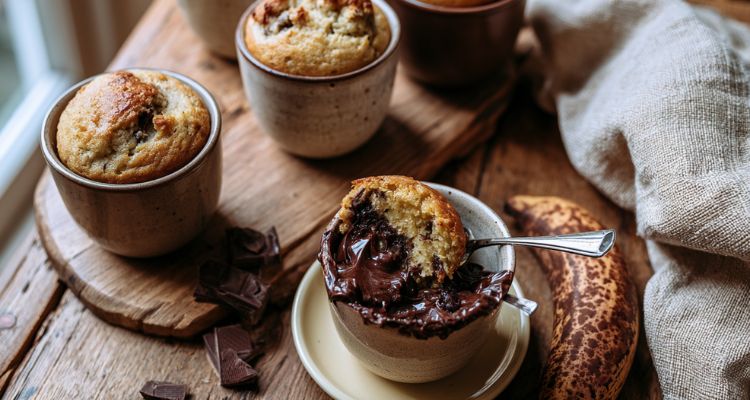
Jamie Oliver’s mug cake is a banana and chocolate cake in a mug, made with self-raising flour, soft brown sugar, olive oil and a free-range egg, microwaved for 1 minute 30 seconds until risen and gooey in the middle. The recipe makes 4 and takes about 10 minutes from start to finish.
Oliver published this microwave mug cake recipe on his official website (jamieoliver.com) and calls it “the easiest, most reliable cake in minutes.” He uses mashed banana as the base, which keeps the sponge moist without needing butter or milk. The olive oil is the other surprise — it gives a lighter crumb than melted butter and you don’t need to wait for it to soften.
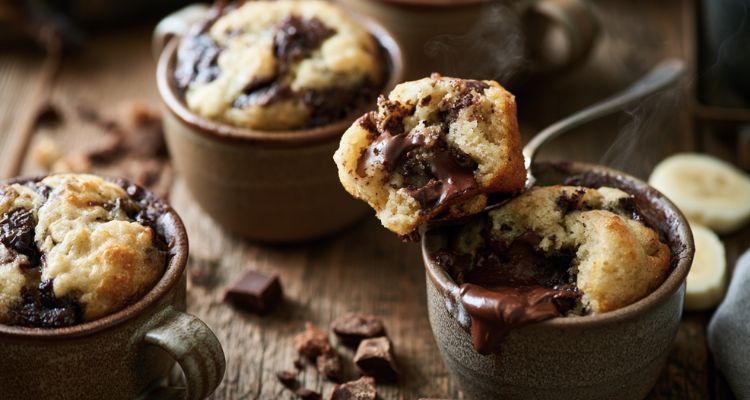
The chocolate goes in last, pushed into the batter in chunks rather than melted and mixed through. That’s why the centre stays gooey while the sponge around it sets. If you stir the chocolate in, it blends into the batter and you lose that molten pocket that makes a mug cake worth eating.
Jamie Oliver Mug Cake
Course: DessertCuisine: BritishDifficulty: Easy4
servings5
minutes2
minutes345
kcal7
minutesOliver suggests making the batter the night before and leaving it in the cups in the fridge, then microwaving to order. That means fresh cake in 90 seconds with zero prep, which is about as close to instant pudding as you can get.
Ingredients
1 small ripe banana
75g self-raising flour
Pinch of sea salt
50g soft brown sugar
4 tablespoons olive oil
1 large free-range egg
A handful of leftover Christmas chocolates, your favourite chocolate bar, or chocolate chips
Directions
- Blend the batter: Peel the banana and place in the bowl of a food processor and blitz, or mash by hand in a large bowl. Add the flour with a pinch of sea salt, along with the sugar and 4 tablespoons of olive oil. Crack in the egg and pulse or whisk until smooth.
- Fill the mugs: Divide the mixture between 4 small microwave-proof cups, roughly 200ml each.
- Add the chocolate: Break the chocolate bar into chunks and push into the mixture.
Notes
- Calories: 1 banana (89) + 75g SR flour (259) + 50g brown sugar (190) + 4 tbsp olive oil (540) + 1 egg (78) + ~40g chocolate (218) = 1,374 ÷ 4 = 345 kcal per mug
FAQs
Is this the same as Jamie Oliver’s chocolate mug cake?
Oliver has two mug cake recipes on his website. This banana-based version uses olive oil and pushes chocolate chunks into the batter. His other recipe, the Choccy Microwave Mug Cake, is richer: 100g melted dark chocolate, 100g butter, honey, bananas or raspberries, and makes 6 mugs instead of 4. That one was developed by his son Buddy and takes 15 minutes rather than 10.
This banana version is the simpler of the two and the one most people land on when they search for Jamie Oliver’s cake in a mug. The chocolate version is closer to a fondant pudding, while this one is lighter and more of a banana sponge with a gooey chocolate centre.
Can I make this without banana?
The banana is doing structural work here, not just adding flavour. It binds the batter and adds moisture, which is why Oliver doesn’t need butter or milk. Without it, the mug cake would be dry and crumbly. If you genuinely don’t like banana, mash 75g of ripe avocado instead — it gives the same binding and moisture without the taste.
Oliver’s Choccy Mug Cake offers a banana-free option using 200g of raspberries instead, though that recipe has a completely different ingredient list with butter and melted dark chocolate. If you want a mug cake that doesn’t rely on fruit at all, his Microwave Chocolate Puddings from £1 Wonders uses dark chocolate, butter, sugar, egg and self-raising flour with no fruit whatsoever.
Why does Oliver use olive oil instead of butter in this mug cake?
Olive oil is liquid at room temperature, so it blends instantly into the batter without needing to be melted or softened first. That’s what keeps this recipe genuinely under 10 minutes. Butter would need microwaving or leaving out to soften, and it solidifies again when it hits the cold banana, making the batter lumpy.
The flavour is milder than you’d expect. The banana and chocolate dominate, so you don’t taste the olive oil in the finished cake. Oliver uses olive oil in several of his quick bakes, including his Speedy Steamed Pudding Pots from 5 Ingredients, where he calls it a reliable swap for butter in any recipe where speed matters.
Can I make a carrot mug cake using Oliver’s method?
Oliver doesn’t publish a carrot mug cake, but his technique adapts well. Replace the mashed banana with 75g of finely grated carrot, keep the flour, sugar, oil and egg the same, and add a pinch of cinnamon and a pinch of ground ginger. Skip the chocolate chunks and fold in a tablespoon of sultanas instead.
The carrot won’t bind the batter as firmly as banana does, so the texture will be slightly more crumbly. I’d add an extra half tablespoon of olive oil to compensate. Microwave for the same 1 minute 30 seconds and check — carrot releases less moisture than banana, so it might need an extra 15 seconds.
How do I make this cake in a mug ahead of time?
Oliver gives a specific get-ahead tip: “The day before, decant the batter into cups and leave covered in the fridge overnight, so you can cook them to order.” That means you do the 5 minutes of prep once, then have fresh mug cakes on demand for the next day. The batter thickens slightly in the fridge, which actually gives a denser, fudgier result.
Push the chocolate into the batter before refrigerating, not after. Cold batter holds the chunks in place better, so they stay in the centre where they melt into that gooey pocket during microwaving. I prep four cups on Sunday evening and microwave one each night — they’re fine in the fridge for up to 3 days.
Does the microwave wattage matter for this mug cake recipe?
Oliver specifies 800W for 1 minute 30 seconds, which is important because every microwave is different. If yours runs at 1000W or higher, start with 1 minute and check — the cake should be risen and set around the edges but still gooey in the centre. Overcooking by even 15 seconds turns the chocolate from molten to solid and dries out the sponge.
If your microwave is lower than 800W, add 15 to 20 seconds. The cake is done when it’s puffed up above the rim of the cup and springs back lightly when touched at the edges. The middle should still wobble slightly because it firms up as it cools. Oliver says to microwave in pairs rather than all four at once, because four cups slow the cooking down unevenly.