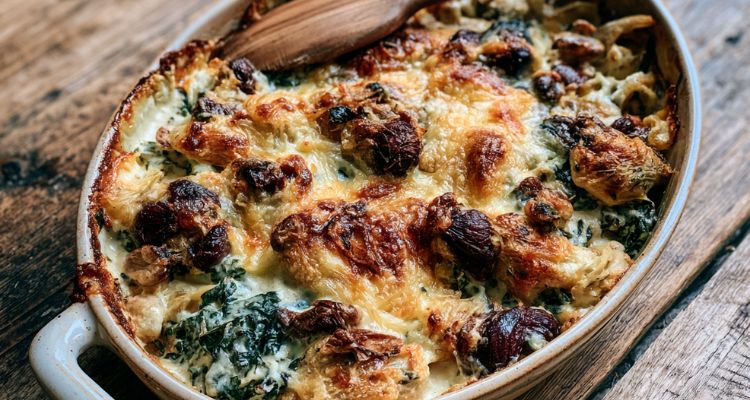
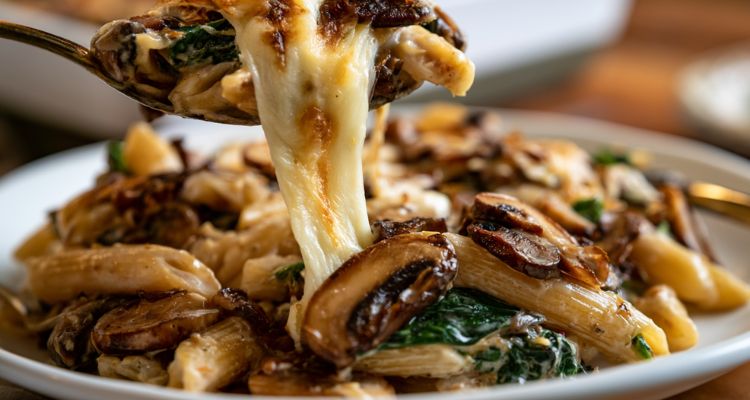
Hairy Bikers mushroom pasta bake is a creamy, oven-finished pasta dish made with mixed mushrooms, mascarpone, white wine, spinach and melted Taleggio cheese. It serves 4 with under 10 minutes of prep and about an hour total including baking.
This comes from Our Family Favourites (2024), the tribute cookbook Si King completed after Dave’s passing. They call it “a simple favourite with both the King and Myers families,” and you can tell this is proper midweek comfort food. The sauce uses mascarpone instead of a béchamel, so there’s no roux to make.
The step that lifts this above a basic pasta bake is browning the mushrooms properly. Si and Dave say to fry them over a high heat and keep cooking even after they release liquid, until they’re dry again. That concentrated flavour is what carries the whole dish.
Hairy Bikers Mushroom Pasta Bake
Course: DinnerCuisine: BritishDifficulty: Easy4
servings10
minutes55
minutes825
kcal1
hour5
minutesA family pasta bake from one of the last books Si and Dave worked on together, with Taleggio melted over the top instead of cheddar and a hit of lemon zest and thyme through the mascarpone sauce. Baked at 200°C until bubbling and golden.
Ingredients
300g short-form pasta
1 tbsp olive oil
1 onion, finely chopped
400g mixed mushrooms, such as button and chestnut, thickly sliced
3 garlic cloves, finely chopped
leaves from a large thyme sprig
zest of ½ lemon
1 tsp porcini powder (optional)
100ml white wine
250g mascarpone cheese
100g baby leaf spinach
50g Parmesan, finely grated
200g Taleggio cheese
truffle oil (optional)
salt and black pepper
Directions
- Cook the pasta: Cook the pasta in plenty of salted boiling water. Set aside 200ml of the cooking water, then drain the pasta. Preheat the oven to 200°C/Fan 180°C/Gas 6.
- Fry the mushrooms: While the pasta is cooking, heat the olive oil in a large sauté pan and add the onion. Fry until translucent and lightly coloured, then add the mushrooms. Fry them over a high heat until browned. If they give out any liquid, continue to cook until they are dry.
- Build the sauce: Stir in the garlic and cook for a minute, then add the thyme leaves, lemon zest and porcini powder, if using. Season with salt and black pepper and stir to combine. Pour in the white wine. Bring to the boil and let it reduce down, then stir in the mascarpone. When it has melted into a sauce, add the reserved cooking water, a little at a time, until you have a sauce the consistency of single cream. Add the spinach, pushing it into the sauce until it has completely wilted down, then add half the Parmesan and the pasta. Stir again to combine.
- Assemble and bake: Transfer everything to an ovenproof dish. Cut the Taleggio into slices and arrange them over the pasta. Top with the rest of the Parmesan. Bake in the oven until the cheese has started to bubble and brown around the edges. For an extra touch of luxury, add a drizzle of truffle oil, if you have some, before serving.
FAQs
Why use mascarpone instead of a béchamel?
A béchamel needs a butter and flour roux, then careful whisking as you add milk. Si and Dave skip all that and stir mascarpone straight into the pan, where it melts into a rich sauce in about 30 seconds. It’s faster, uses fewer pans, and gives a silkier texture.
The pasta cooking water is the clever part. Adding it gradually thins the mascarpone to the right consistency without diluting the flavour the way plain milk would. Si and Dave say to aim for “the consistency of single cream,” which coats the pasta without pooling at the bottom.
What is Taleggio and can I substitute it?
Taleggio is an Italian washed-rind cheese that melts into sticky, golden patches on top of the bake. It’s softer and funkier than cheddar, with a stronger flavour that stands up to the mushrooms. Most large supermarkets stock it near the Brie.
If you can’t find it, a good substitute is Fontina or even ripe Brie with the rind removed. Mozzarella melts well but doesn’t add much flavour. I’d avoid mature cheddar here because it fights the Italian character of the dish rather than complementing it.
What does the porcini powder do?
Si and Dave list it as optional, but I’d always include it. The powder adds a deep, savoury earthiness that amplifies the flavour of the fresh mushrooms without adding extra bulk or liquid.
You can buy porcini powder in most supermarkets now, or make your own by blitzing 5g of dried porcini in a spice grinder. Si and Dave mention this shortcut in their headnote. A teaspoon stirred in with the garlic and thyme disappears into the sauce but the difference in depth is noticeable.
Which pasta shape works best?
Si and Dave say “short-form pasta,” which means penne, rigatoni, fusilli or similar. These shapes have ridges or tubes that trap the mascarpone sauce and hold it through baking. Long pasta like spaghetti won’t work here.
I use rigatoni because the wide tubes catch pieces of mushroom inside them, which means every forkful has sauce and filling. Penne is the safest choice if you’re not sure. Whatever you pick, cook it a minute less than the packet says since it finishes cooking in the oven.
Can I make this ahead?
You can assemble the full dish up to the point of baking, cover it and refrigerate for up to 24 hours. Add an extra 10 minutes to the baking time since it’s going into the oven cold.
The Hairy Bikers tiramisu from the same book is another good make-ahead option if you’re planning a dinner. Both recipes benefit from sitting, though for different reasons: the pasta bake lets the flavours merge while the tiramisu needs time to set.
How do I store leftovers?
Cover the dish and refrigerate for up to 2 days. Reheat portions in the microwave or in a hot oven at 180°C for 15 minutes until piping hot through the centre. The Taleggio won’t re-crisp perfectly, but the sauce underneath stays creamy.
Don’t freeze this one. The mascarpone sauce splits when thawed and the pasta goes mushy. It’s a cook-and-eat dish that works well for a weeknight four, though you could scale the recipe up by half for a bigger crowd.