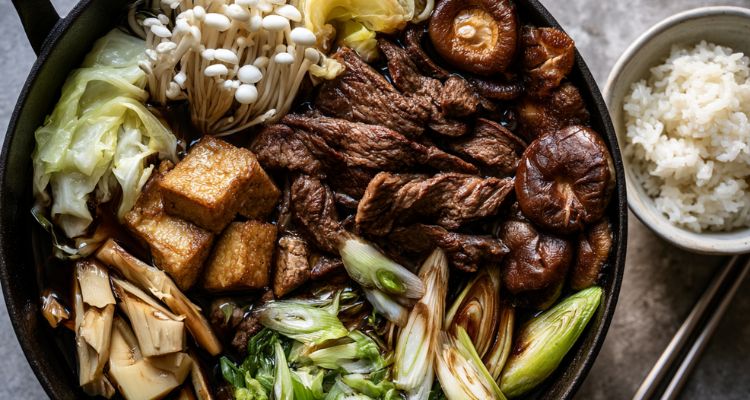
This Hairy Bikers beef sukiyaki from the Asian Adventure cookbook simmers thin-sliced fillet with four mushroom types, tofu, and Chinese cabbage in a dashi broth. Since most of the work goes on slicing, the whole dish takes just 35 minutes for around 415 kcal a serving.
This recipe comes from the Asian Adventure cookbook, and Si and Dave say “if you like steak tartare this’ll blow your socks off.” Their Korean twist swaps the usual mustard and capers for soy, sesame oil, and gochugaru, which takes this into completely different territory.
P3: The crucial step is searing the beef with sugar before anything else hits the pan, since that brief caramelisation gives every slice a sweet, savoury crust. Add the vegetables after that and keep them moving for just two minutes, because overcooked cabbage and mushy mushrooms will ruin the dish.

Hairy Bikers Beef Sukiyaki
Course: DinnerCuisine: British, JapaneseDifficulty: Medium4
servings25
minutes10
minutes415
kcal35
minutesA Japanese one-pan dish where thin beef meets button, brown cap, enoki, and shiitake mushrooms with firm tofu, bamboo shoots, and Chinese cabbage, all bathed in a soy, mirin, and dashi sauce. Pop the beef in the freezer for an hour or two before slicing if you want cleaner, thinner cuts.
Ingredients
- For the sukiyaki sauce:
175ml liquid dashi
150ml soy sauce
50ml mirin
- For the beef:
450g beef fillet or well-trimmed rib-eye
2 tbsp groundnut oil
2 tsp sesame oil
1½ tbsp sugar
- For the vegetables and tofu:
12 button mushrooms, sliced
4 brown cap mushrooms, sliced
100g enoki mushrooms, split into 4
6 fresh shiitake mushrooms, cut in half and stalks removed
½ Chinese cabbage, cut into 2.5cm thick slices
1½ celery sticks, sliced at an angle into 1.25cm slices
160-175g block of firm tofu, cut into cubes
200g bamboo shoots, sliced (preferably vacuum-packed, but canned will do)
6 spring onions, cut at an angle into 3cm pieces
- To serve:
Japanese rice
Directions
- Slice the beef: Cut the beef into thin slices, a little thicker than carpaccio and about the size of a slice of ham. If you have time, put the beef in the freezer for an hour or two beforehand, since firmer meat is much easier to slice thinly.
- Make the sauce: Mix the liquid dashi with 175ml of water in a small bowl or jug, then add the soy sauce and mirin. Set the sauce aside while you prepare the pan.
- Sear the beef: Heat the groundnut oil and sesame oil in a large non-stick frying pan or sauté pan with a lid. Once hot, add the beef and sprinkle it with the sugar, which will help caramelise the meat. Turn the slices over after about 30 seconds, since the beef cooks very quickly when cut this thin.
- Add the vegetables: Push the meat to the sides of the pan, then add all the mushrooms, Chinese cabbage, celery, tofu, and bamboo shoots. Cook for another 2 minutes, just long enough to brown the tofu slightly and wilt the cabbage, but take care not to overcook anything because you want to keep the different textures.
- Simmer in the sauce: Pour the sukiyaki sauce into the pan, put the lid on, and simmer for 2 minutes. Remove the lid, turn the vegetables and tofu over, then stir the beef back into the vegetables and add the spring onions. Simmer for another 2 minutes without the lid.
- Serve: Take the pan straight to the table so everyone can help themselves, or serve in individual bowls with Japanese rice alongside.
FAQs
What cut of beef works best for sukiyaki?
Beef fillet gives the most tender slices since it has almost no gristle to get in the way. Well-trimmed rib-eye also works and has slightly more flavour from the marbling, though you need to remove any thick seams of fat yourself. Whichever cut you pick, pop the steak in the freezer for an hour or two before slicing, because firmer meat is much easier to cut thinly and evenly. If you have leftover fillet, their beef stifado is another great way to use quality beef in a completely different style.
What is dashi and where can I buy it?
Dashi is a Japanese stock made from kombu seaweed and dried bonito flakes, and it gives sukiyaki a clean, savoury depth you cannot get from a regular stock cube. Most Asian supermarkets stock it as a liquid or an instant powder, and the powder version dissolves straight into hot water. If you cannot find either, a light chicken stock with a splash of extra soy sauce works as a rough substitute, though the flavour will not be quite the same.
Can I use different mushrooms?
Si and Dave suggest shimeji or oyster mushrooms as alternatives, and both bring a different flavour to the broth. The key is keeping a mix of textures, so pair something meaty like king oyster with something delicate like enoki. Button and brown cap mushrooms soak up the sauce well though, which is why they work as the backbone even if you swap the others.
Do I need a special pan for sukiyaki?
A large non-stick frying pan with a lid is all you need, and Si and Dave suggest picking one you can bring straight to the table. The idea is that everyone helps themselves from the same pan, which is how sukiyaki is traditionally eaten in Japan. If you want the full traditional setup, a shallow cast-iron pot called a sukiyaki nabe does the job, but an ordinary frying pan works just as well.
What should I serve alongside beef sukiyaki?
Japanese short-grain rice is the traditional side, because its sticky texture soaks up the broth and balances the salty-sweet sauce. You could also simmer udon noodles directly in the leftover broth once the beef and vegetables are gone, which is a common Japanese way to finish the meal.
If you are building a bigger Asian spread, their sweet and sour chicken or sweet and sour pork from the same cookbook family would round things out nicely, and their salmon with chilli and ginger sauce works well as a lighter fish course beforehand.