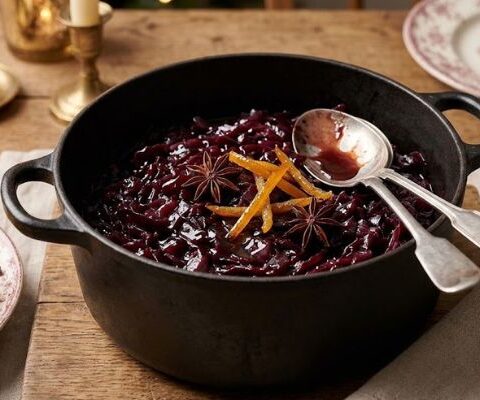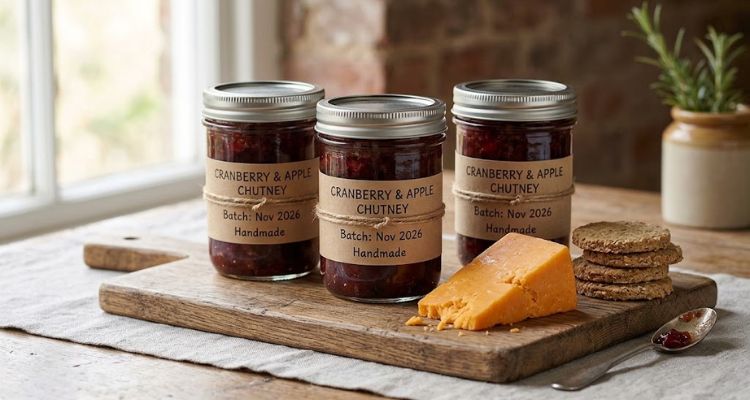
This Christmas chutney recipe is a sticky, spiced preserve made with Bramley apples, cranberries, red onion and orange, simmered in cider vinegar with ginger and cinnamon. It takes about an hour on the hob and fills five jars.
Make it now rather than next month. Mary Berry says chutney is best left for at least a month in a cool, dark place so the flavour can mature, and that rule shaped my whole plan for this recipe.
The step that decides everything is knowing when to stop. Drag a wooden spoon across the bottom of the pan: if it leaves a clear channel for a second before the chutney closes over, it’s ready to jar.
Christmas Chutney Recipe
Course: SidesCuisine: BritishDifficulty: Easy5
servings25
minutes1
hour30
kcal1
hour25
minutesOur own make-ahead chutney for the cheese board and the Boxing Day leftovers. Jar it in November, forget about it, and open it when the cold cuts come out.
Ingredients
750g (1lb 10oz) Bramley cooking apples, peeled, cored and chopped
2 red onions (about 350g/12oz), finely chopped
150g (5oz) sultanas
250g (9oz) light muscovado sugar
250ml (9fl oz) cider vinegar
finely grated zest and juice of 1 orange
1 tbsp grated fresh root ginger
1 cinnamon stick
½ tsp ground allspice
½ tsp chilli flakes
1 tsp yellow mustard seeds
1 tsp salt
300g (10oz) fresh or frozen cranberries
Directions
- Start the base: Put everything except the cranberries into a large, heavy-based pan. Stir over a low heat until the sugar has dissolved.
- Simmer: Bring to the boil, then lower the heat and simmer uncovered for about 40 minutes, stirring now and then, until the apples have broken down.
- Add the cranberries: Stir in the cranberries and simmer for another 15 to 20 minutes, until they’ve burst and the chutney is thick.
- Test: Drag a wooden spoon across the base of the pan. When it leaves a clear channel for a second, it’s done. Stir often at this stage so it doesn’t catch.
- Jar: Remove the cinnamon stick. Ladle the hot chutney into warm sterilised jars and seal straight away.
- Mature: Label with the date and store in a cool, dark place for at least a month before opening.
FAQs
Why do I have to wait a month to eat it?
Freshly made chutney tastes sharp, because the vinegar hasn’t softened into the fruit and sugar yet. Berry’s advice to leave it at least a month is what turns it from harsh to mellow.
That’s why I’d make this before mid-November. Jarred now, it’s at its best right when the Christmas cheese board comes out.
How do I sterilise the jars?
Berry’s method is simple: wash the jars and lids in soapy water, rinse but don’t dry them, then put them in the oven at 150°C/130°C fan/Gas 2 for 10 minutes. A hot dishwasher cycle works too, as long as you use the jars straight away.
Either way, fill them while both jars and chutney are still warm. Berry also suggests a jam funnel, and after one batch of sticky jar rims, I’d say it’s worth buying one.
How long does Christmas chutney keep?
Unopened, Berry says chutney stored in a cool, dark place keeps for six months to a year. So a batch made this November will easily see you through to next summer.
Once you open a jar, keep it in the fridge. The sealed, airtight jar is what protected it in the cupboard, and that ends the moment the lid comes off.
Can I use frozen cranberries?
Yes, and you can add them straight from frozen in step 3. They’ll take a few minutes longer to burst, so judge it by the spoon test rather than the clock.
Frozen cranberries are often easier to find than fresh ones in November, which makes them my first choice anyway. They also stop the chutney bubbling too hard just as it starts to thicken.
What do I serve Christmas chutney with?
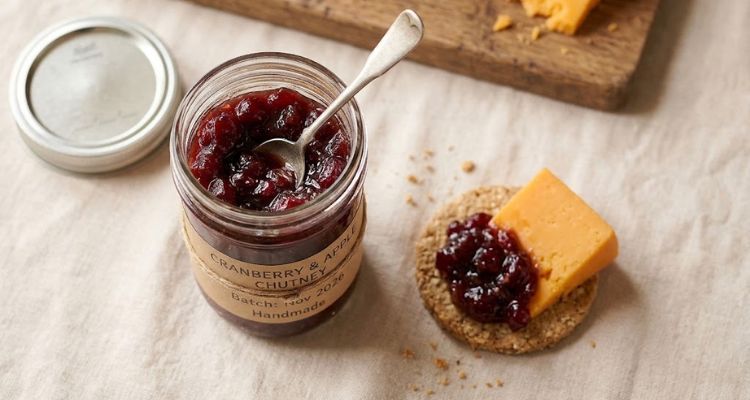
It’s built for a cheese board, especially a sharp Cheddar or a creamy blue. It’s also the jar I’d open on Boxing Day with cold turkey, ham and crusty bread.
Spread a little under the topping on Nigella’s panettone stuffing squares for a quick canapé. Or serve a spoonful beside Jamie Oliver’s Christmas salad when you want something lighter between the big meals.
Does it make a good Christmas gift?
It’s one of the best, because it’s cheap to make and has to be made ahead anyway. Five jars from one batch covers teachers, neighbours and anyone who’s hard to buy for.
Write the date on each label, so people know when it’s ready to open. If you’re giving baking too, it sits nicely next to a slice of our Christmas cake with apricots and dates.